Bridging conservation and breeding: collection and characterization of Nepalese garlic (Allium sativum L.) landraces
Pradip Thapaa,*, Sandip Boharab, Aarati Kunwarc, Promise Shresthad, Ram Prasad Mainalia, Sujan Subedie, Bal Krishna Joshia
a National Agriculture Genetic Resources Centre, Lalitpur, Nepal
b Far Western University, Tikapur, Nepal
c Institute of Agriculture and Animal Science, Tribhuvan University, Nepal
d Agriculture and Forestry University, Chitwan, Nepal
e National Horticulture Research Centre, Lalitpur, Nepal
*Corresponding author: Pradip Thapa (pradip.thapa876@gmail.com)
Abstract: Garlic (Allium sativum L.) is a major horticultural crop in Nepal, but breeding efforts are constrained due to limited information on phenotypic traits among native landraces. Seventy garlic landraces, including a local check (NGRV0565), collected from 29 districts of Nepal, were characterized and evaluated at the research field of the National Agriculture Genetic Resources Centre from November 2023 to May 2024 using an augmented block design. Agromorphological traits, including 18 quantitative and 15 qualitative traits, were recorded following the standard descriptors of the International Plant Genetic Resources Institute. Shannon-Weaver diversity indices revealed a high diversity index for bulb skin thickness, neck type, foliage attitude, clove anthocyanin, and all quantitative traits. The first three principal components accounted for 76.51% of the total variation, with yield, bulb size, and plant biomass characteristics being the most important factors. The cluster dendrogram grouped garlic landraces into four clusters. Correlation and path analyses identified biomass yield, fresh plant weight, and bulb weight as the primary determinants of bulb yield, collectively explaining 95% of its phenotypic variation. Landrace NGRV0573 (18.98t/ha) was identified as the most promising based on yield, while NGRV0571 and NGRV0572 (141 days) were identified as early-maturing landraces. Furthermore, these landraces require molecular and multi-environment evaluations to refine selection and enhance garlic breeding efforts.
Keywords: Agromorphological traits, Landraces, Multivariate analysis, Phenotypic diversity
Introduction
Garlic (Allium sativum L.) is an important remunerative bulbous crop belonging to the family Amaryllidaceae and the second most important cultivated Allium species after onion (Yebirzaf et al, 2018; Salahuddin et al, 2019). The name garlic originates from the Old English word ‘gar’, which means ‘spear’, referring to its clove shape. It is a monocotyledonous diploid (2n = 16) that primarily reproduces through clonal propagation (Sultan and Raina, 2020). Garlic is believed to have originated in the northwestern region within the arid and semiarid areas of Central Asia from its wild relative Allium longicuspis (Batth et al, 2013). It is sexually sterile and propagated vegetatively through cloves (Chotaliyaand Kulkarni, 2017). However, it exhibits significant phenotypic variation due to the accumulation of mutations, human selection, and the historical dissemination of diverse clones from its centre of origin (Hirata et al, 2016; Hoogerheide et al, 2017). Garlic is classified into two main categories based on its ability to produce scape: soft-neck (var. sativum) and hard-neck (var. ophioscorodon) varieties (Volk and Stern, 2009). Soft-neck garlic, also known as artichoke, silver skin, or Italian type, is a partial bolter that results in the development of a weak flower stalk. Each bulb contains 10 to 20 smooth, white or pinkish cloves arranged in at least three layers (Benke et al, 2020). In contrast, hard-neck garlic, also known as topsetting or serpent, develops a sturdy, tall, initially coiled woody scape that eventually produces flowers.
China dominates global garlic production, producing 21.70 million tonnes from 838,317ha with an average yield of 25.88t/ha, and remains the largest garlic-producing country in the world, followed by India and Bangladesh (FAOSTAT, 2024). In Nepal, local landraces of garlic have been grown as spice crops for a long period of time. The total area under garlic cultivation was 9,558ha, with an average yield of 7.57t/ha, resulting in a total production of 72,359 tonnes (FAOSTAT, 2024). Nepal's diverse geography and topography create ideal conditions for garlic cultivation, with a variety of native landraces and some exotic types introduced from neighboring countries (Giri et al, 2023). Although garlic has been grown in Nepal for a long period of time, its commercial production remains limited because the growers have limited access to improved varieties, depends on traditional cultivation practices, and are further challenged by persistent diseases and pests such as garlic rust, downy mildew, basal rot, white rot, purple blotch, and onion thrips (Thapa et al, 2021; Giri et al, 2023). In Nepal, vegetatively propagated crops are improved through the introduction of new varieties and clonal selection (Joshi, 2017). To date, the National Seed Board of Nepal has officially registered two garlic varieties developed by introduction and clonal selection (AITC, 2026).
Garlic leaves and cloves are widely used both raw and cooked in cuisines around the world. It is also consumed in powdered form after processing. Garlic serves multiple purposes and is valued for its aroma and its use in traditional medicine (Arreola et al, 2015). Garlic has a strong flavour, primarily due to sulfur-containing compounds that give it its distinctive smell and pungency (Kumar et al, 2017). Garlic is commonly used to help prevent heart diseases such as atherosclerosis, high cholesterol, and high blood pressure, as well as to boost the immune system. Additionally, garlic oil is often recommended by doctors for conditions such as pulmonary tuberculosis, rheumatism, sterility, cough, and red eyes (Kumar, 2015). Garlic is highly valued in the pharmaceutical industry and is a natural remedy for plant diseases and pests. Economically, it offers higher returns than other Allium crops, such as onion and leek (Yeshiwas et al, 2018). Garlic is an essential ingredient in the Nepalese kitchen, and its demand and consumption are steadily rising. However, domestic production remains nearly stagnant and falls far short of meeting local needs. Because domestic garlic is harvested only in March–April, Nepal experiences a seasonal supply gap that is largely met through imports, primarily from China. As a result, Nepal continues to import large quantities of garlic from neighbouring countries, leading to a significant outflow of money from the national economy (Giri et al, 2023). Because domestic garlic is harvested only in March–April, Nepal experiences a seasonal supply gap that is largely met through imports, primarily from China. In the fiscal year 2023/2024, Nepal imported 2.22 million metric tonnes of garlic worth NPR 574 million, and it increased markedly in the fiscal year 2024/25, up to 6.74 million metric tonnes, coinciding with the harvesting season in China, the country's principal source of imported garlic (Department of Customs, 2025). Developing early-maturing, high-yielding cultivars could reduce import dependence and improve domestic market competitiveness. Although garlic cultivation is well suited to the mountain regions, productivity in areas such as Jumla (6.00t/ha) remains below the national average (7.41t/ha), highlighting the need for systematic evaluation and improvement of local germplasm (Giri et al, 2023). Garlic exhibits considerable morphological variation in traits such as leaf number, bulb and clove size, bulb and clove colour, bulb architecture, clove-to-bulb ratio, bulb diameter, scape length, and inflorescence development (Kamenetsky et al, 2007; Polyzos et al, 2019). Genetic variation among cultivated garlic populations is valuable for the efficient utilization of crop improvement. However, despite this phenotypic variation, cultivated garlic generally possesses a narrow genetic base because of its vegetative mode of propagation and the absence of sexual reproduction, which restrict genetic recombination. So, the selection of conserved germplasm is a crucial step for breeders to create genetic variation among garlic populations. Collection and evaluation of garlic landraces can help to identify promising accessions for cultivar development through clonal selection, supporting breeding programmes (Kumar et al, 2017).
Breeding is limited by insufficient knowledge of the phenotypic diversity of native landraces. Only a few studies have assessed Nepalese garlic landraces for agromorphological traits, with few accessions and traits evaluated (Panthee et al, 2006; Thapa et al, 2021; Shrestha et al, 2022), leaving much of their genetic potential unexplored. Multivariate analyses, including principal component analysis, cluster dendrogram, correlation, and path coefficient analysis, offer powerful tools to summarize complex trait data, identify key contributors to diversity, and guide selection of high-yielding and early-maturing accessions. Thus, this study aimed to characterize 70 Nepalese garlic landraces collected from different regions of the Terai, mid-hills, and high hills of Nepal using qualitative and quantitative agromorphological traits, to assess phenotypic variation, and to identify elite landraces with high yield potential and early maturity.
Materials and methods
Experimental site and study materials
A total of 70 garlic landraces collected from 29 districts of Nepal (Figure 1, Supplemental Table 1) were studied in the research field of the National Agriculture Genetic Resources Centre (NAGRC), Lalitpur, Nepal, during the main cropping season of 2023/2024. It is located at 1,368masl at a latitude of 27°40'N and a longitude of 85°20'E. The experimental site received total rainfall of 108.1mm, with an average temperature of 16.2°C, ranging from a minimum average of 8.9°C to a maximum average of 23.6°C (Figure 2). The landraces were originally collected from farmers’ fields and local growing areas representing diverse agroecological regions of Nepal, ranging from the Terai to high-hill environments. Among the 70 landraces, 22 were collected from the Terai, 43 from the mid-hills, and 5 from the high-hill regions of Nepal (Supplemental Table 1).
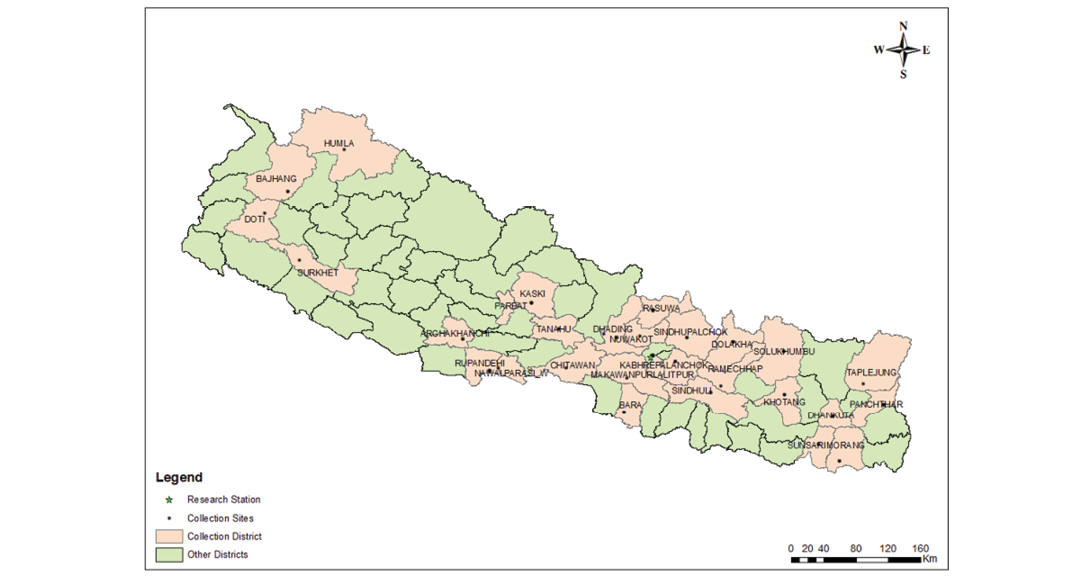
Figure 1. Collection sites of the 70 Nepalese garlic landraces used in the experiment. Details are available in Supplemental Table 1.
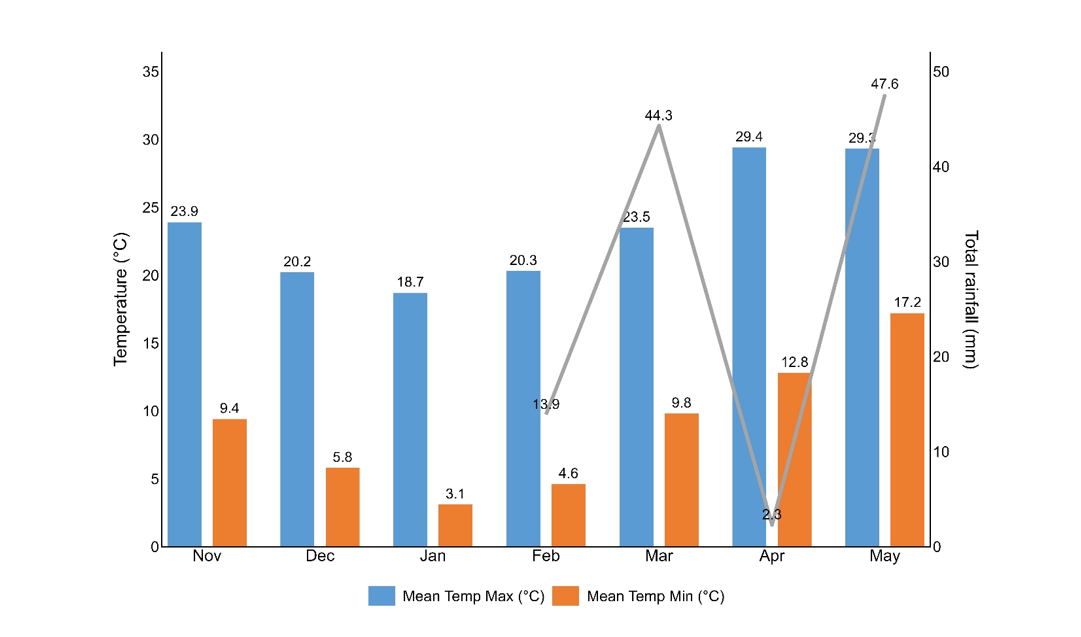
Field layout and experimental design
The experiment was conducted from November 2023 to May 2024 using an augmented block design. The 70 garlic landraces were randomly allocated into two blocks, with the local check (NGRV0565) replicated in each block. One hundred healthy cloves of each accession were planted in 3 × 1m² plots at a spacing of 20 × 15cm. Fertilizers were applied at a rate of 100:50:60kg N:P2O5: K2O ha-1. Phosphorus and potassium were applied entirely as a basal application prior to planting, along with 50% of the recommended nitrogen. The remaining nitrogen was applied as a top-dressing in two equal splits at 30 and 45 days after planting (DAP), coinciding with intercultural operations.
Data collection and analysis
A total of 18 quantitative traits were measured, and 15 qualitative traits were observed at various growth stages, based on the descriptors developed by the International Plant Genetic Resources Institute (IPGRI, 2001). Qualitative traits were recorded on a whole-plot basis, while quantitative traits were measured from ten randomly selected plants per landrace per plot. The plants were harvested when the neck fell, and 75% of the leaves turned brown. The descriptions of both qualitative and quantitative traits are described in Supplemental Table 3 and Supplemental Table 2.
The collected quantitative and qualitative datasets were analyzed via diverse analytical packages in R Studio V. (4.4.2) (R Core Team, 2023). For quantitative traits, descriptive statistics such as the mean, maximum, minimum, standard deviation (SD), standard error (SE), and coefficient of variation (CV) were computed, whereas qualitative traits were summarized on the basis of their frequency distribution and relative percentage. Phenotypic diversity was assessed via the Shannon-Weaver diversity index (H′), following the methods of Shannon and Weaver (1949). For both quantitative and qualitative traits, the data were classified into nine intervals, and the resulting diversity indices were categorized into four classes: low (0.1–0.4), intermediate (0.4–0.6), high (0.6–0.8), and very high (> 0.8), as described by Eticha et al (2005). The optimum number of clusters was determined via the elbow method in R, after which hierarchical clustering was performed with the UPGMA algorithm in OriginPro (version 10.2). Cluster analysis was performed using standardized quantitative trait data in OriginPro software (OriginLab Corporation, USA) employing Euclidean distance measures and hierarchical clustering. Qualitative clustering was done using Ward's D2 linkage method in RStudio. Cluster centroids were computed as the arithmetic means of all accessions within each cluster for the studied traits. In addition, multivariate analyses, including principal component analysis (PCA), correlation, and phenotypic path analysis of quantitative traits, were conducted in R.
Results
Qualitative traits-based diversity assessment
The diversity indices of 15 qualitative traits ranged from a very high index value (H' = 0.84) for bulb skin thickness to a low index value (H' = 0.18) for anthocyanin content in the pseudo-stem (Figure 3). The highest diversity indices were recorded for bulb skin thickness (H' = 0.84), neck type (H′ = 0.83), and foliage attitude (H' = 0.81), whereas the remaining highly diverse traits are presented in Figure 3.
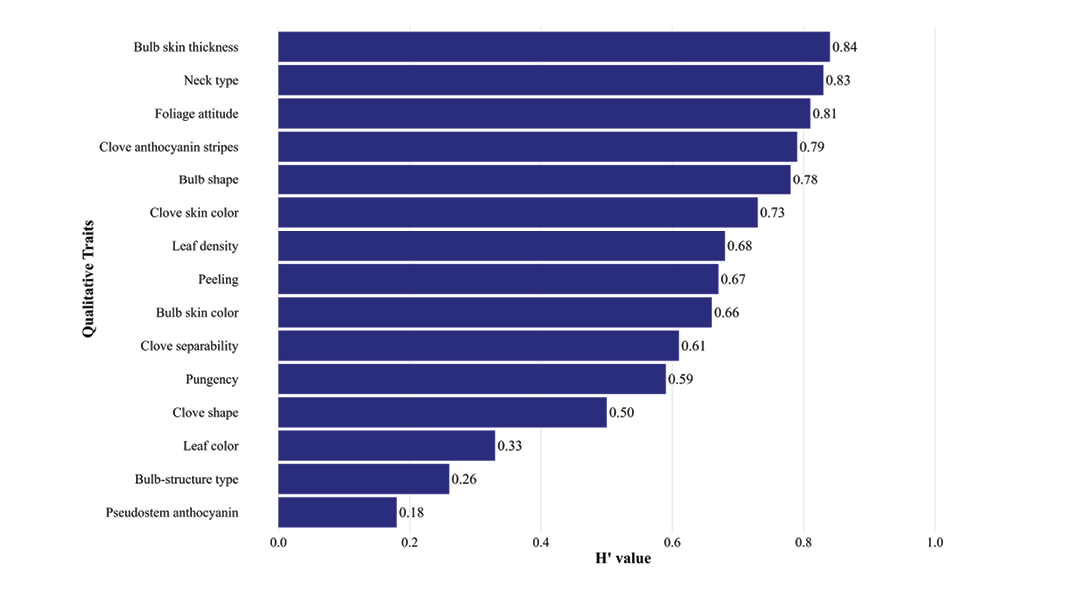
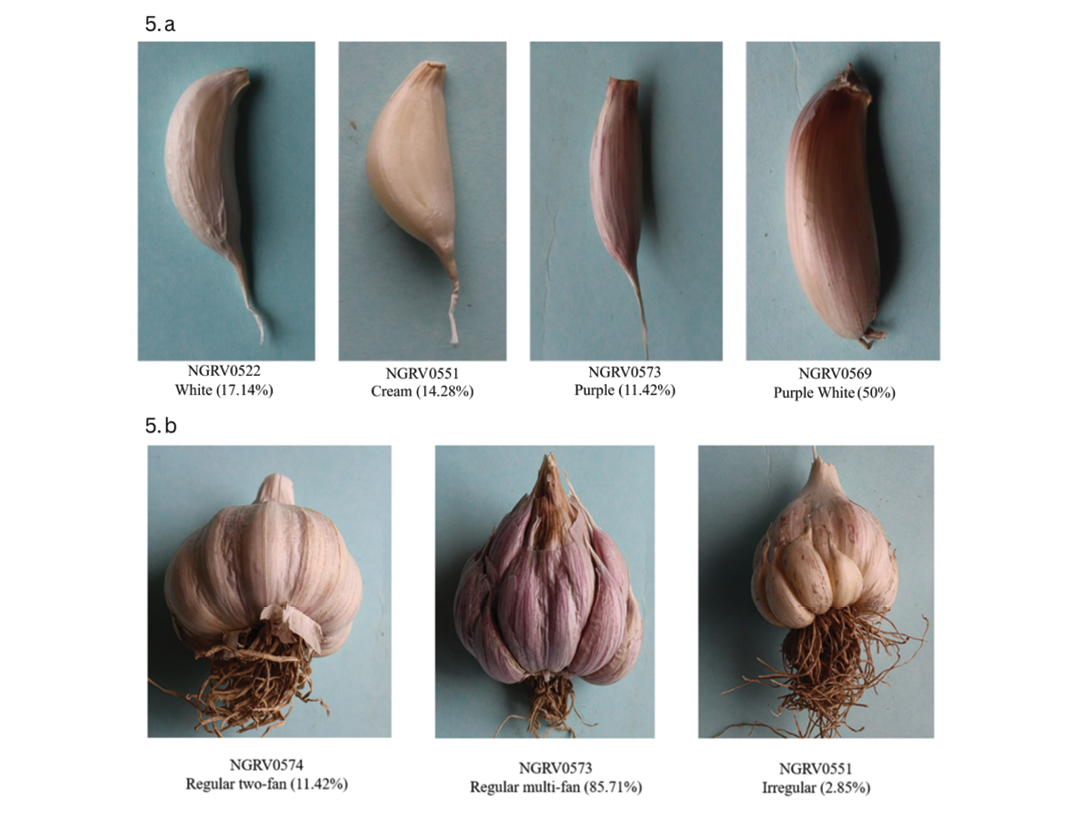
The majority of the landraces had thick skin, which made up 64.3% of the studied landraces, while medium skin was found in 21.4% and thinner skin in 14.3% of landraces (Figure 4). Most of the accessions had an erect foliage appearance (60%), followed by intermediate (30%) and prostrate (10%). The shape of the bulbs varied widely, with 71.4% of the bulbs being ovate. The landrace had a lower incidence of circular (20%) and heart-shaped (8.6%) bulb forms. The landraces were classified by ease of peeling as intermediate (32.9%), easy (31.4%), and hard (28.7%), with moderate diversity indicating that they are slightly easier than hard. Pungency levels were moderately distributed, with the majority of landraces having medium pungencies (50%); there was little variation between high (32.9%) and low (17.1%) levels (Figure 4). The variation in clove skin color was significant, with purplish white being the most prevalent type (50%), followed by white (17.1%), cream (14.3%), purple (11.4%), and pinkish white (4.4%) (Figure 5). Most of the landraces (81.71%) had a regular multi-fan structure, followed by regular two-fan (11.42%) and irregular bulb structures (Figure 6).
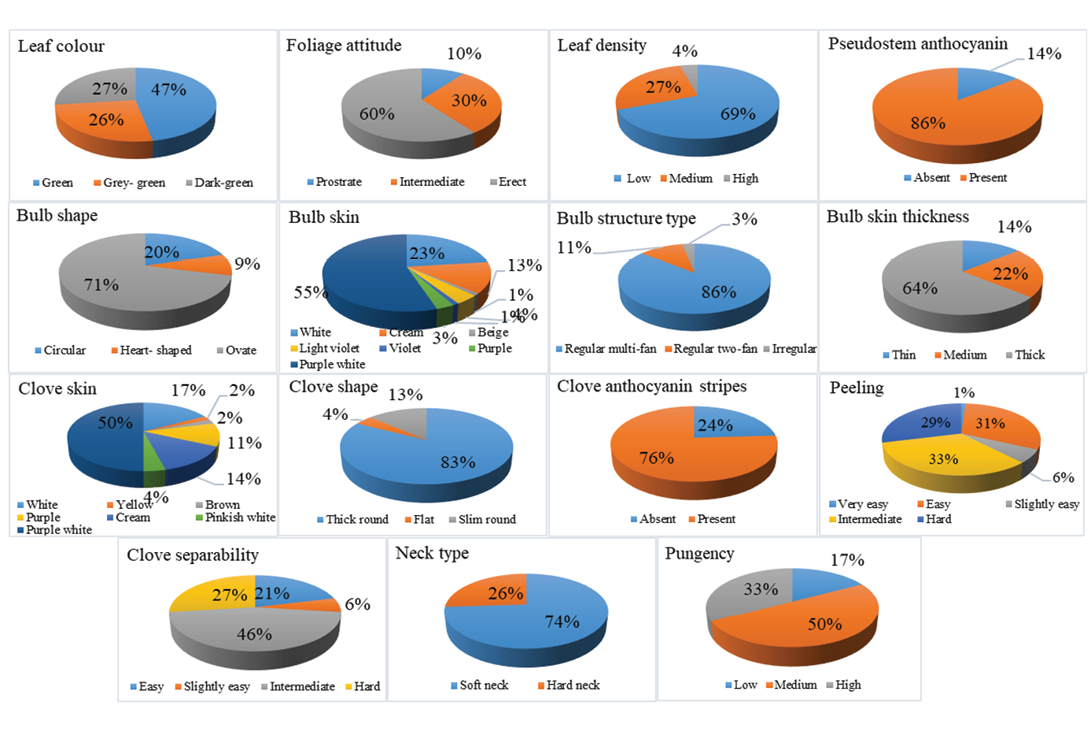
Figure 4. Qualitative traits-based diversity among 70 garlic landraces. Detailed data are summarized in Supplemental Table 3.
Quantitative traits-based diversity assessment
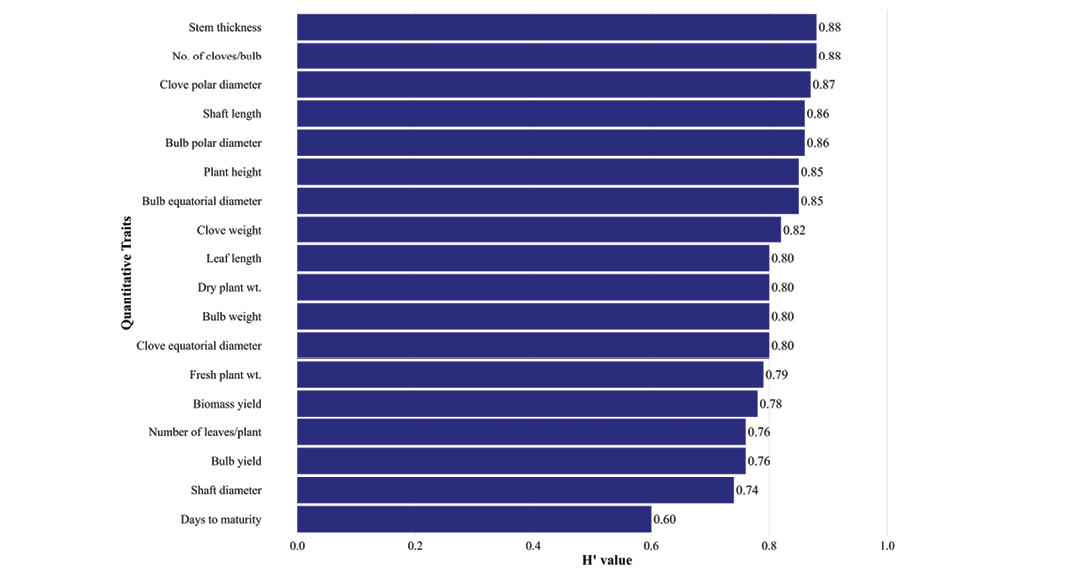
Mean values of quantitative traits are summarized in Table 1. The quantitative traits exhibited high Shannon–Weaver diversity indices (H′ = 0.60–0.88), indicating substantial phenotypic variation among the garlic landraces (Figure 7). The highest diversity was observed for stem thickness and number of cloves per bulb (H′ = 0.88), whereas days to maturity had the lowest diversity index (0.6).
Descriptive statistics of the quantitative characteristics revealed a wide range of variation among the garlic landraces (Table 1). Shaft length ranged from 7.70 to 38.02cm, with a mean of 17.15cm, whereas shaft diameter varied from 5.39 to 16.10mm, averaging 8.76 mm. The number of leaves averaged seven per plant. Leaf length exhibited considerable variation, ranging from 9.21 to 43.77cm, with a coefficient of variation (CV) of 25.9%, nearly twice that of leaf number. Plant height varied from 20.83 to 71.07cm, with a mean of 37.74cm and a CV of 25.82%. Days to maturity ranged from 141 to 190 days, with a mean of 176.1 days and the lowest CV (5.59%), indicating limited variation among accessions. The earliest-maturing accessions were NGRV0571 and NGRV0572, both maturing in 141 days. In contrast, biomass-related traits showed substantially greater variability: fresh plant weight ranged from 8.47 to 82.25g (CV = 47.91%), while dry plant weight varied from 4.53 to 56.42g (CV = 50.84%). Yield and yield-associated traits exhibited the greatest diversity among all traits, with the highest CV observed for bulb yield (55.9%), followed by biomass yield (54.8%), bulb weight (51.6%), and clove weight (50.4%). The highest bulb yield was observed in NGRV0573 (18.98t/ha), followed by NGRV0569 (17.13t/ha) and NGRV0574 (16.67t/ha) (Supplemental Table 2). In terms of clove traits, the number of cloves per bulb ranged from 9.33 to 28.17, with a mean of 17.2 and a CV of 26.29%, with polar and equatorial diameters of 21.17mm and 11.08mm, respectively.
Table 1. Descriptive statistics of 18 quantitative traits evaluated on 70 garlic landraces. SE, standard error; SD, standard deviation; CV, coefficient of variation.
|
Traits |
Min |
Max |
Mean ± SE |
SD |
CV% |
|
Days to maturity |
141 |
190 |
176.1 ± 1.17 |
9.84 |
5.59 |
|
Shaft length (cm) |
7.70 |
38 |
17.15 ±1.25 |
6.63 |
38.9 |
|
Shaft diameter (mm) |
5.39 |
16.1 |
8.76 ± 0.27 |
2.27 |
25.8 |
|
Number of leaves/plants |
4.83 |
11.2 |
7.36 ± 0.12 |
1.02 |
13.9 |
|
Leaf length (cm) |
9.21 |
43.8 |
29.87 ± 0.92 |
7.73 |
25.9 |
|
Plant height (cm) |
20.83 |
71.1 |
37.74 ± 1.14 |
9.61 |
25.8 |
|
Stem thickness (mm) |
2.08 |
8.56 |
4.74 ± 0.14 |
1.21 |
25.6 |
|
Fresh plant weight (g) |
8.47 |
82.3 |
28.76 ±1.64 |
13.78 |
47.9 |
|
Dry plant weight (g) |
4.53 |
56.4 |
20.69 ±1.25 |
10.51 |
50.8 |
|
Biomass yield (t/ha) |
2.24 |
30.4 |
9.87 ± 0.06 |
0.56 |
54.8 |
|
Bulb weight (g) |
3.28 |
51.1 |
18.69 ± 1.15 |
9.65 |
51.6 |
|
Bulb equatorial diameter (mm) |
20.01 |
50.5 |
34.84 ± 0.71 |
5.95 |
17.1 |
|
Bulb polar diameter (mm) |
18.65 |
42.7 |
30.88 ± 0.58 |
4.88 |
15.8 |
|
Clove weight (g) |
0.32 |
4.3 |
1.53 ± 0.09 |
0.77 |
50.4 |
|
No. of cloves/bulb |
9.33 |
28.2 |
17.2 ± 0.54 |
4.52 |
26.3 |
|
Clove polar diameter (mm) |
14.87 |
30.7 |
21.17 ± 0.4 |
3.36 |
15.9 |
|
Clove equatorial diameter (mm) |
4.99 |
19.2 |
11.08 ± 0.3 |
2.54 |
23 |
|
Bulb yield (t/ha) |
1.16 |
18.98 |
5.72 ± 0.04 |
0.39 |
55.9 |
Cluster analysis
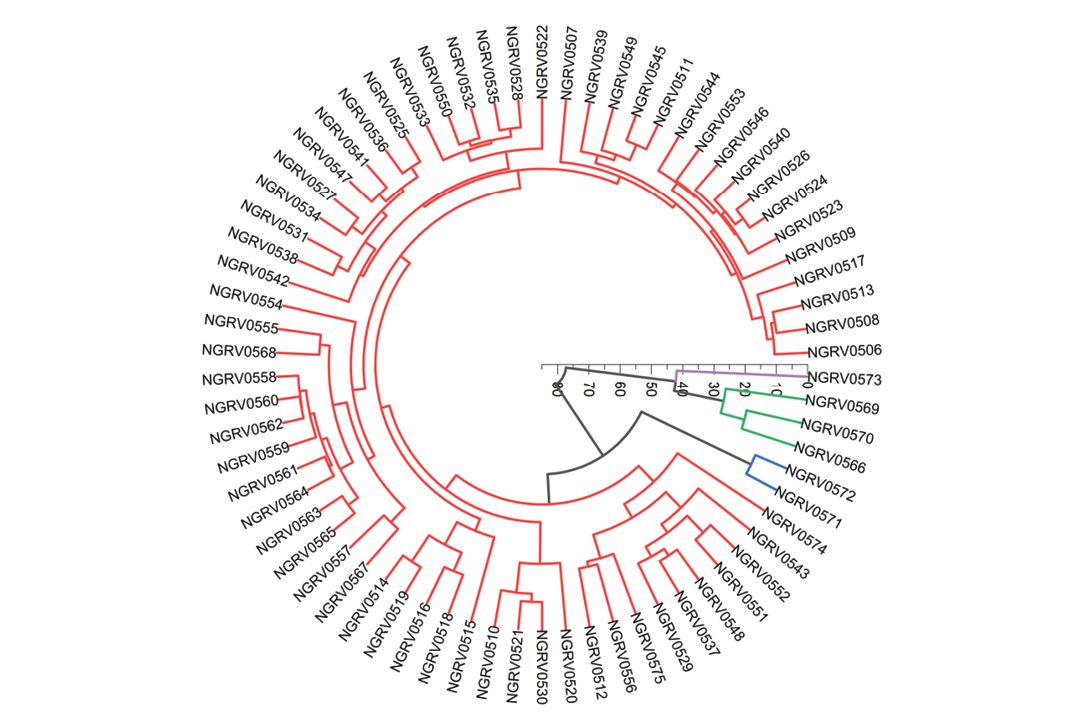
Hierarchical clustering was used to reveal natural groupings among landraces on the basis of their phenotypic similarity, facilitating the understanding of diverse patterns on the basis of multiple traits. A dendrogram was constructed using the unweighted pair group method with arithmetic mean (UPGMA) clustering method on the basis of average linkage and Euclidean distance. The cluster analysis grouped the landraces into four clusters for 18 quantitative traits determined through the elbow method. Clusters I, II, III and IV are indicated by red, green, blue and cyan colours, respectively (Figure 7). Cluster I was the largest cluster, with 64 (91.42%) accessions, whereas Cluster IV had only 1 (1.42%) landrace (Table 2).
Table 2. Mean values of 18 quantitative traits for the four clusters identified among 70 garlic landraces based on UPGMA clustering.
|
Variables |
Cluster I |
Cluster II |
Cluster III |
Cluster IV |
|
No. of accessions |
64 |
3 |
2 |
1 |
|
Shaft length (cm) |
17.48 |
12.10 |
8.2 |
29.65 |
|
Shaft diameter (mm) |
8.50 |
16 |
5.57 |
10.09 |
|
No. of leaves/plant |
7.22 |
10.28 |
6.41 |
9.33 |
|
Leaf length (cm) |
29.54 |
36.85 |
23.35 |
43.68 |
|
Plant height (cm) |
36.94 |
55.62 |
24.26 |
64.15 |
|
Stem thickness (mm) |
4.69 |
6.15 |
3.08 |
6.8 |
|
Fresh plant weight (g) |
26.85 |
63.90 |
10.51 |
82.25 |
|
Dry plant weight (g) |
34.7 |
46.8 |
41.65 |
38.7 |
|
Days to maturity |
176.62 |
189.66 |
141 |
172 |
|
Bulb equatorial diameter (mm) |
34.25 |
49.23 |
27.25 |
44.92 |
|
Bulb polar diameter (mm) |
30.39 |
40.75 |
27.74 |
38.69 |
|
Bulb weight (g) |
17.20 |
50.59 |
8.62 |
38.22 |
|
No. of cloves/bulb |
17.48 |
12.10 |
8.2 |
29.65 |
|
Clove polar diameter (mm) |
20.78 |
28.89 |
19.31 |
26.58 |
|
Clove equatorial diameter (mm) |
10.85 |
18.14 |
8.15 |
10.66 |
|
Clove weight (g) |
1.43 |
4.02 |
0.84 |
1.67 |
|
Biomass yield (t/ha) |
9.34 |
22.23 |
3.16 |
30.10 |
|
Bulb yield (t/ha) |
5.42 |
14.53 |
1.78 |
18.98 |
Cluster III contained landraces of lower bulb yield with shorter days to maturity (141 days) than the remaining clusters. In contrast, Cluster II consisted of late-maturing landraces, i.e. NGRV0566 (190 days), NGRV0569 (190 days), and NGRV0570 (189 days) (Supplemental Table 2). Cluster II was superior in terms of shaft diameter, number of leaves/plants, dry plant weight, bulb equatorial diameter, bulb polar diameter, bulb weight, clove polar diameter, clove equatorial diameter, and clove weight. Similarly, Cluster IV consisted of the highest-yielding landrace, i.e. NGRV0573 (18.98t/ha), among the clusters. Cluster III was superior in terms of days to maturity, whereas Cluster IV was superior in terms of shaft length, leaf length, plant height, stem thickness, fresh plant weight, number of cloves/bulbs, biomass yield and bulb yield. Cluster IV and Cluster III were superior in terms of higher yield and early maturity (Table 2), and had greater cluster distances (Table 3), which could be considered when developing earlier-maturing and high-yield varieties.
Table 3. Distances between cluster centroids
|
Cluster I |
Cluster II |
Cluster III |
Cluster IV |
|
|
Cluster I |
0.00 |
71.71 |
46.06 |
78.59 |
|
Cluster II |
71.71 |
0.00 |
108.23 |
39.66 |
|
Cluster III |
46.06 |
108.23 |
0.00 |
111.08 |
|
Cluster IV |
78.59 |
39.66 |
111.08 |
0.00 |
Qualitative cluster analysis
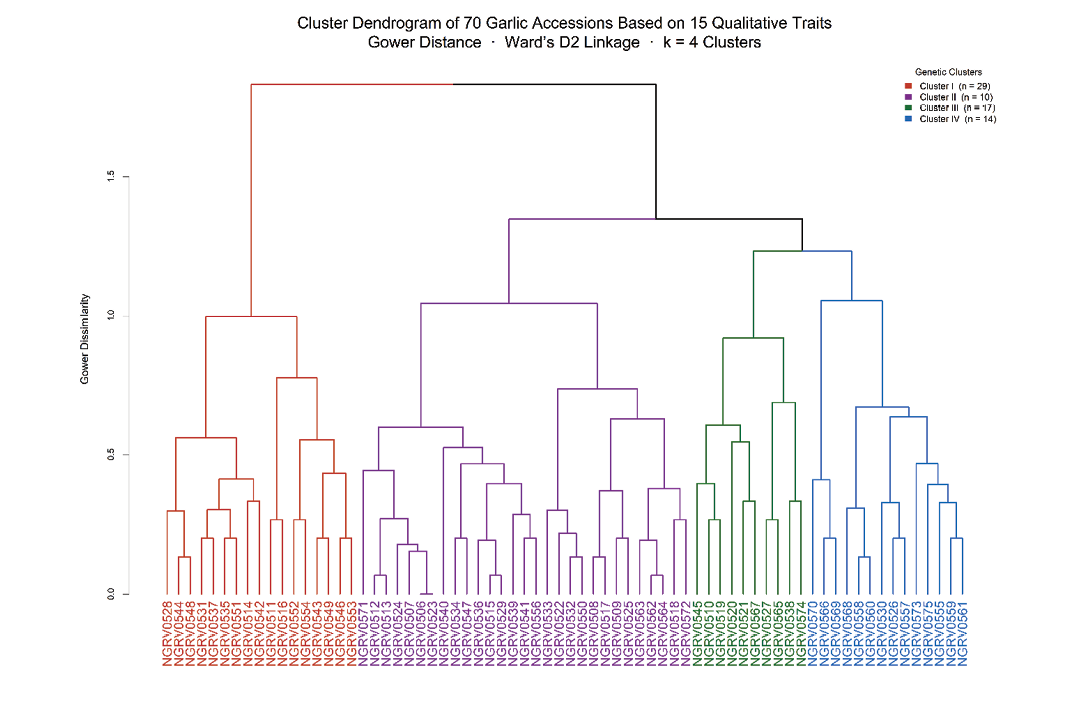
Hierarchical cluster analysis of the 70 garlic accessions based on 15 qualitative morphological traits using Gower’s distance and Ward's D2 linkage method revealed four distinct genetic clusters (Figure 8, Table 4, Supplemental Table 3).
Cluster I was the largest, comprising 29 accessions (41.4%), followed by Cluster III with 17 accessions (24.3%), Cluster IV with 14 accessions (20.0%), and Cluster II with 10 accessions (14.3%). Cluster I was predominantly characterized by grey-green leaves (44.8%), broadly ovate bulbs (82.8%), thick round cloves (96.6%), hard-neck type (62.1%), and medium pungency (72.4%). Cluster II was distinguished by green leaves (90.0%), circular bulbs (70.0%), slim round cloves (60.0%), easy peeling (60.0%), and hard-neck type (60.0%). Cluster III was characterized by dark-green leaves (58.8%), absence of clove anthocyanin stripes (82.4%), hard clove separability (58.8%), soft-neck type (82.4%), and high pungency (47.1%). Cluster IV was mainly characterized by intermediate foliage (71.4%), thick bulb skin (78.6%), purple-white clove skin (85.7%), easy peeling (85.7%), and soft-neck type (64.3%).
Table 4. Morphological trait profiles of four genetic clusters identified among 70 garlic accessions based on 15 qualitative descriptors. For each qualitative trait, the predominant descriptor state observed within each cluster is presented, and the value in parentheses denotes the percentage (%) of accessions expressing that descriptor state.
|
Variables |
Cluster I |
Cluster II |
Cluster III |
Cluster IV |
|
No. of accessions |
29 |
10 |
17 |
14 |
|
Leaf colour |
Grey-green (44.8%) |
Green (90%) |
Dark-green (58.8%) |
Green (35.7%) |
|
Foliage attitude |
Erect (69%) |
Erect (80%) |
Erect (82.4%) |
Intermediate (71.4%) |
|
Pseudostem anthocyanin |
Present (93.1%) |
Present (70%) |
Present (70.6%) |
Present (100%) |
|
Leaf density |
Low (65.5%) |
Low (80%) |
Low (94.1%) |
Medium (42.9%) |
|
Bulb shape |
Broadly ovate, basal plate even (82.8%) |
Circular, basal plate prominent (70%) |
Broadly ovate, basal plate even (88.2%) |
Broadly ovate, basal plate even (64.3%) |
|
Bulb skin |
Others (Purple white) (89.7%) |
White (50%) |
White (47.1%) |
Cream (35.7%) |
|
Bulb structure type |
Regular multi-fan groups (96.6%) |
Regular multi-fan groups (100%) |
Regular multi-fan groups (70.6%) |
Regular multi-fan groups (71.4%) |
|
Bulb skin thickness |
Thick (72.4%) |
Medium (40%) |
Thick (58.8%) |
Thick (78.6%) |
|
Clove shape |
Thick round (96.6%) |
Slim round (60%) |
Thick round (100%) |
Thick round (71.4%) |
|
Clove skin |
Other (Purple white) (69%) |
Purple (30%) |
Cream (47.1%) |
Other (Purple white) (85.7%) |
|
Peeling |
Intermediate (48.3%) |
Easy (60%) |
Hard (58.8%) |
Easy (85.7%) |
|
Clove anthocyanin stripes |
Present (96.6%) |
Present (80%) |
Absent (82.4%) |
Present (100%) |
|
Clove separability |
Intermediate (62.1%) |
Easy (50%) |
Hard (58.8%) |
Easy (57.1%) |
|
Neck type |
Hard neck (62.1%) |
Hard neck (60%) |
Soft neck (82.4%) |
Soft neck (64.3%) |
|
Pungency |
Medium (72.4%) |
Medium (50%) |
High (47.1%) |
Medium (57.1%) |
Principal component analysis
Principal component analysis (PCA) of quantitative traits was performed using 18 quantitative data to reduce the dimensionality of the traits and to identify the major traits contributing to the observed variation among accessions. The first three components (PC1–PC3) accounted for 76.51% of the total variation (Table 6). PC1 explained the highest proportion of variance (62.09%), followed by PC2, which accounted for 8.53% of the variance and PC3 (5.89%).
Table 6. Eigenvalue, variance, and cumulative variance of principal components based on 18 quantitative traits.
|
Principal components |
Eigenvalue |
Variance (%) |
Cumulative variance (%) |
|
PC1 |
11.18 |
62.09 |
62.09 |
|
PC2 |
1.54 |
8.53 |
70.62 |
|
PC3 |
1.06 |
5.89 |
76.51 |
PC1 was predominantly associated with traits related to yield performance, bulb size, and plant vigour, with the largest loadings for dry plant weight, bulb weight, bulb yield, bulb equatorial diameter, clove polar diameter, biomass yield, plant height, number of leaves per plant, stem diameter, bulb polar diameter, and clove weight. PC2 was mainly associated with clove number and bulb organization, being characterized by high loadings for number of cloves per bulb, clove equatorial diameter, shaft length, clove weight, and leaf length. PC3 was primarily influenced by phenological and stem structural traits, with the highest loadings for days to maturity, shaft length, shaft diameter, stem thickness, and number of leaves per plant. Overall, PC1 to PC3 explained that dry plant weight, bulb weight, fresh plant weight, bulb equatorial diameter, number of leaves per plant, clove polar diameter, and biological yield were the major variables that contributed to the observed variation, which were the major traits of Nepalese garlic landraces (Figure 9).
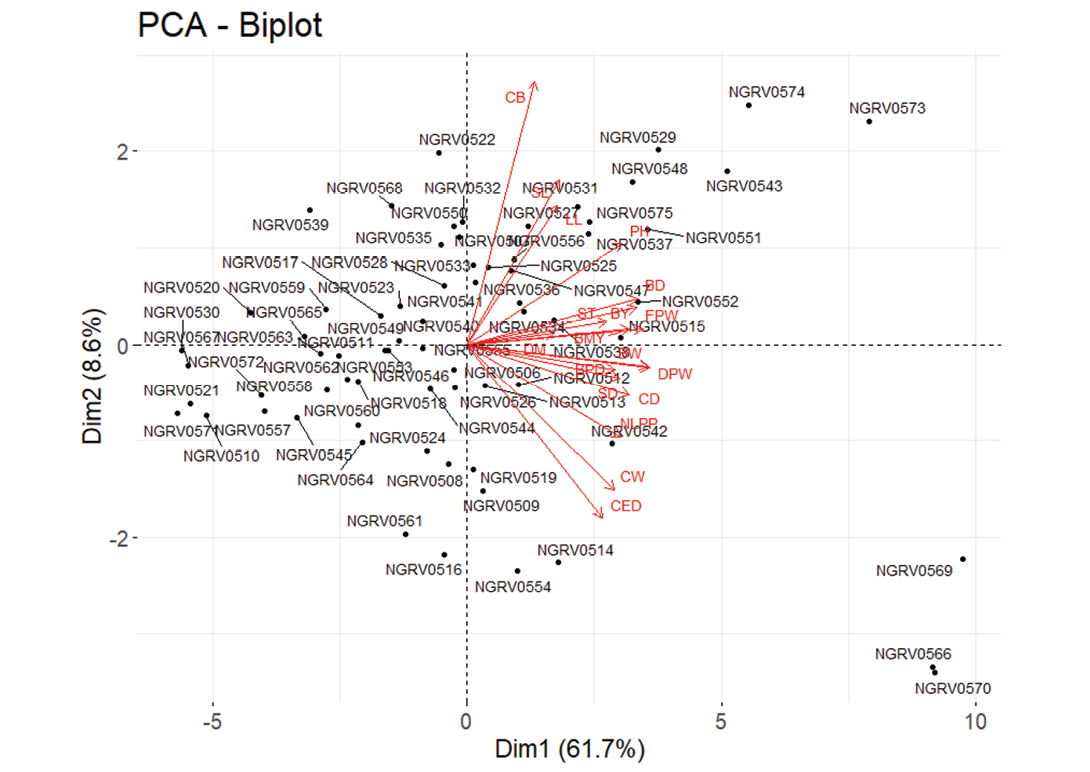
Figure 9. PCA biplot of 70 garlic landraces based on 18 quantitative traits. Trait abbreviations: SL, shaft length; SD, shaft diameter; NLPP, number of leaves per plant; LL, leaf length; PH, plant height; ST, stem thickness; FPW, fresh plant weight; DPW, dry plant weight; DM, days to maturity; BED, bulb equatorial diameter; BPD, bulb polar diameter; BW, bulb weight; NCB, number of cloves per bulb; CPD, clove polar diameter; CED, clove equatorial diameter; CW, clove weight; BY, bulb yield; and BMY, biomass yield. (The lengths of the red arrows represent the cos2 value of traits that reflect their representation on the respective principal component)
Correlation analysis
Pearson's correlation analysis was performed among the 18 quantitative agromorphological traits of the garlic accessions. The results revealed significant and strong positive correlations among many economically important traits, particularly those related to yield performance in garlic (Figure 10). Notably, bulb yield exhibited a strong and highly significant positive correlation with biomass yield (r = 0.94), fresh plant weight (r = 0.94), and plant height (r = 0.93). Similarly, dry plant weight also showed significant associations with bulb yield (r = 0.83) and biomass yield (r = 0.87). Among the yield components, bulb weight was significantly and positively correlated with both bulb yield (r = 0.90) and biomass yield (r = 0.83), emphasizing its direct role in yield determination. In addition, bulb equatorial diameter and bulb polar diameter were positively associated with bulb weight (r = 0.84 and r = 0.73, respectively), suggesting their influence on overall bulb development. Clove-related traits such as clove polar diameter and clove equatorial diameter were moderately correlated (r = 0.66), and both were positively associated with clove weight. Vegetative traits, including shaft diameter, had moderate correlations with bulb yield (r = 0.68) and biomass yield (r = 0.71), indicating indirect yield contributions (Figure 9). However, days to maturity and number of cloves per bulb showed weak correlations with yield traits. Overall, traits like fresh plant weight, Plant height, bulb weight, and dry plant weight emerged as strong indicators of yield and can be prioritized in selection strategies for garlic breeding programmes.
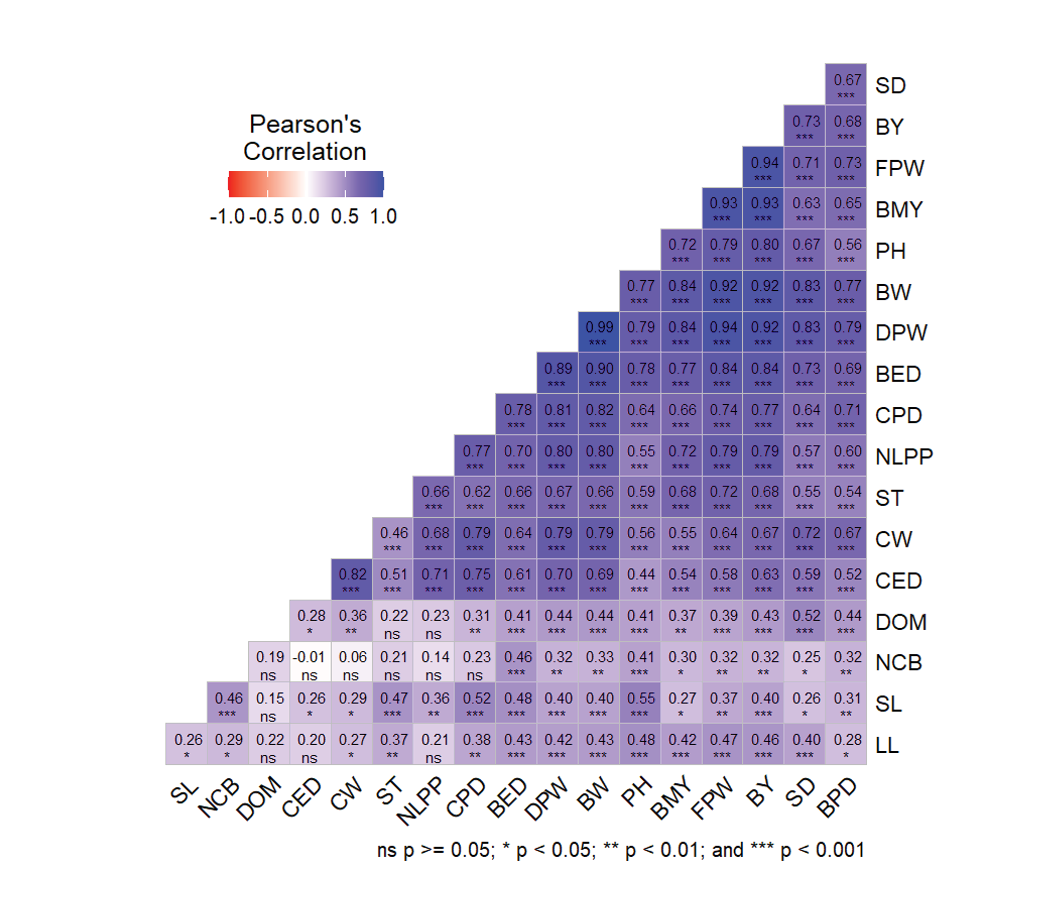
Figure 10. Correlation analysis of garlic landraces among 18 quantitative traits. Significance levels: *, significant (p ≤ 0.05); **, highly significant (p ≤ 0.01); ***, very highly significant (p ≤ 0.001); ns, not significant (p > 0.05). SL, shaft length (cm); SD, shaft diameter (mm); NLPP, number of leaves per plant; LL, leaf length (cm); PH, plant height at harvest (cm); ST, stem thickness (mm); FPW, fresh plant weight (g); DPW, dry plant weight (g); DOM, days to maturity; BMY, biomass yield (t/ha); BY, bulb yield (t/ha); BW, bulb weight (g); BED, bulb equatorial diameter (mm); BPD, bulb placental diameter (mm); NCB, number of cloves/bulb; CPD, clove polar diameter (mm); CED, clove equatorial diameter (mm); CW, clove weight (g).
Phenotypic path analysis
Phenotypic path coefficient analysis was performed to partition the correlation coefficients into direct and indirect effects, thereby identifying the most influential traits affecting yield. It was performed using bulb yield (BY) as the dependent variable to partition the direct and indirect effects of the associated 17 traits (Table 7). Biomass yield exerted the greatest positive direct effect on bulb yield (0.580), followed by fresh plant weight (0.539), dry plant weight (0.488), and bulb weight (0.486), indicating that these traits are the principal determinants of yield and should therefore receive priority in selection programmes. Moderate positive direct effects were observed for bulb equatorial diameter (0.446), plant height (0.418), and bulb polar diameter (0.374), suggesting that plant vigour and bulb size also contribute substantially to yield improvement. Clove polar diameter and clove equatorial diameter exhibited comparatively smaller positive direct effects (0.383 and 0.312, respectively). In contrast, stem thickness and clove weight showed slight negative direct effects (−0.069 and −0.097, respectively), indicating limited value as independent selection criteria. The high coefficient of determination (R2 = 0.95) and low residual effect (0.209) demonstrate that the traits included in the model adequately accounted for the observed variation in bulb yield.
Table 7. Direct and Indirect effects of 17 quantitative traits on the total yield of garlic landraces. Direct effects are diagonal and indirect effects are off-diagonal, with values above the diagonal reflecting indirect effects of the row trait, while values below the diagonal reflect indirect effects of the column traits. Abbreviations as in Figure 9. R2 = 0.95, residual value = 0.209.
|
|
SL |
SD |
NLPP |
LL |
PH |
ST |
FPW |
DPW |
DOM |
BMY |
BW |
BED |
BPD |
NCB |
CPD |
CED |
CW |
linear |
|
SL |
0.048 |
0.011 |
0.057 |
0.009 |
0.079 |
-0.032 |
-0.051 |
0.054 |
0.006 |
0.158 |
0.105 |
-0.042 |
-0.012 |
-0.006 |
0.036 |
0.008 |
-0.028 |
0.399 |
|
SD |
0.013 |
0.041 |
0.090 |
0.015 |
0.097 |
-0.038 |
-0.097 |
0.112 |
0.020 |
0.366 |
0.217 |
-0.064 |
-0.027 |
-0.003 |
0.045 |
0.017 |
-0.069 |
0.735 |
|
NLPP |
0.018 |
0.024 |
0.156 |
0.008 |
0.080 |
-0.046 |
-0.108 |
0.108 |
0.009 |
0.415 |
0.208 |
-0.061 |
-0.024 |
-0.002 |
0.054 |
0.021 |
-0.065 |
0.793 |
|
LL |
0.013 |
0.017 |
0.033 |
0.036 |
0.069 |
-0.025 |
-0.064 |
0.057 |
0.009 |
0.246 |
0.112 |
-0.038 |
-0.011 |
-0.004 |
0.027 |
0.006 |
-0.027 |
0.456 |
|
PH |
0.026 |
0.028 |
0.086 |
0.017 |
0.145 |
-0.041 |
-0.108 |
0.106 |
0.016 |
0.418 |
0.201 |
-0.068 |
-0.022 |
-0.005 |
0.045 |
0.013 |
-0.054 |
0.803 |
|
ST |
0.022 |
0.023 |
0.103 |
0.013 |
0.086 |
-0.069 |
-0.099 |
0.090 |
0.008 |
0.395 |
0.172 |
-0.057 |
-0.021 |
-0.003 |
0.043 |
0.015 |
-0.045 |
0.677 |
|
FPW |
0.018 |
0.029 |
0.123 |
0.017 |
0.114 |
-0.050 |
-0.137 |
0.127 |
0.015 |
0.539 |
0.240 |
-0.073 |
-0.029 |
-0.004 |
0.052 |
0.017 |
-0.062 |
0.935 |
|
DPW |
0.019 |
0.034 |
0.125 |
0.015 |
0.114 |
-0.046 |
-0.129 |
0.135 |
0.017 |
0.488 |
0.258 |
-0.078 |
-0.031 |
-0.004 |
0.057 |
0.020 |
-0.076 |
0.919 |
|
DOM |
0.007 |
0.022 |
0.036 |
0.008 |
0.059 |
-0.015 |
-0.054 |
0.059 |
0.039 |
0.216 |
0.116 |
-0.036 |
-0.017 |
-0.002 |
0.022 |
0.008 |
-0.035 |
0.433 |
|
BMY |
0.013 |
0.026 |
0.112 |
0.015 |
0.105 |
-0.047 |
-0.128 |
0.114 |
0.015 |
0.580 |
0.218 |
-0.067 |
-0.026 |
-0.004 |
0.046 |
0.016 |
-0.054 |
0.934 |
|
BW |
0.019 |
0.035 |
0.125 |
0.016 |
0.112 |
-0.046 |
-0.127 |
0.134 |
0.017 |
0.486 |
0.260 |
-0.078 |
-0.031 |
-0.004 |
0.057 |
0.020 |
-0.076 |
0.919 |
|
BED |
0.023 |
0.030 |
0.110 |
0.016 |
0.113 |
-0.046 |
-0.116 |
0.121 |
0.016 |
0.446 |
0.234 |
-0.087 |
-0.028 |
-0.006 |
0.054 |
0.018 |
-0.062 |
0.838 |
|
BPD |
0.015 |
0.028 |
0.094 |
0.010 |
0.081 |
-0.037 |
-0.101 |
0.106 |
0.017 |
0.374 |
0.201 |
-0.060 |
-0.040 |
-0.004 |
0.049 |
0.015 |
-0.065 |
0.683 |
|
NCB |
0.022 |
0.010 |
0.022 |
0.011 |
0.059 |
-0.015 |
-0.045 |
0.044 |
0.007 |
0.174 |
0.085 |
-0.040 |
-0.013 |
-0.013 |
0.016 |
0.000 |
-0.006 |
0.318 |
|
CPD |
0.025 |
0.026 |
0.121 |
0.014 |
0.093 |
-0.043 |
-0.102 |
0.110 |
0.012 |
0.383 |
0.213 |
-0.068 |
-0.028 |
-0.003 |
0.070 |
0.022 |
-0.077 |
0.769 |
|
CED |
0.013 |
0.025 |
0.112 |
0.007 |
0.064 |
-0.036 |
-0.079 |
0.094 |
0.011 |
0.312 |
0.180 |
-0.054 |
-0.021 |
0.000 |
0.053 |
0.029 |
-0.079 |
0.631 |
|
CW |
0.014 |
0.030 |
0.106 |
0.010 |
0.081 |
-0.032 |
-0.088 |
0.107 |
0.014 |
0.321 |
0.205 |
-0.055 |
-0.027 |
-0.001 |
0.055 |
0.024 |
-0.097 |
0.666 |
Elite line selection
Elite garlic landraces were identified based on bulb yield and major yield-contributing traits, including bulb weight, clove weight, and number of cloves per bulb. Earliness in maturity was considered as an additional agronomic trait for selecting potentially adaptable genotypes. Landraces exhibiting superior performance in one or more economically important traits were categorized as elite lines (Table 8, Supplemental Table 2).
Among the evaluated landraces, NGRV0566, NGRV0569, and NGRV0570 recorded superior bulb and clove weights, indicating their potential for yield improvement programmes. Similarly, NGRV0569, NGRV0573, and NGRV0574 exhibited high bulb yield performance. The highest number of cloves per bulb was observed in NGRV0507, NGRV0551, and NGRV0529. Although the average maturity period of the evaluated landraces was 176 days, two accessions (NGRV0571 and NGRV0572) matured earlier at 141 days, suggesting their potential utility in developing early maturing varieties. Overall, accession NGRV0569 demonstrated superior performance across multiple yield-related traits, highlighting its potential as a promising genetic resource for garlic improvement and breeding programmes.
Table 8. Promising trait-specific landraces identified for important traits
|
S.N. |
Traits |
Accessions |
|
1 |
Maturity (< 150 days) |
NGRV0571, NGRV0572 |
|
2 |
Bulb weight |
NGRV0566, NGRV0569, NGRV0570 |
|
3 |
Clove weight |
NGRV0566, NGRV0569, NGRV0570 |
|
4 |
Number of cloves/Bulb |
NGRV0507, NGRV0551, NGRV0529 |
|
5 |
Bulb yield |
NGRV0573, NGRV0569, NGRV0574 |
Discussion
The phenotypic characterization of landraces is necessary for identifying the types of crops planted by farmers to maintain landrace diversity for conservation and breeding purposes (Bammite et al, 2018). For vegetatively propagated crops such as garlic, characterization of morphological traits, such as early maturation and high yield, is a great tool for the identification of elite lines to develop improved varieties.
The observed ranges of diversity indices and coefficients of variation highlighted the wide extent of variability, indicating the significant potential for future improvement of landraces with highly diverse desired traits. The highest variability was found for bulb yield and yield-attributing traits, which is attributed to characteristics such as biomass yield, bulb weight, clove weight, and the number of cloves per bulb. The maximum bulb yield observed in our study was 18.98t/ha, with an average number of cloves/bulbs of 17, which closely aligns with the findings of Dev et al (2025), although it was lower than the yields reported by Panthee et al (2006) and Giri et al (2023). This variation in yield, resulting from polygenic inheritance, may be influenced by genotypic and environmental factors, and can vary across different geographical locations (Hoogerheide et al, 2017; Polyzos et al, 2019). Among the individual landraces, NGRV0566 had the heaviest bulbs (51.12g) and cloves (4.34g), whereas NGRV0507 had the greatest number of cloves per bulb (28), which is consistent with the findings of Ayed et al (2019) in Tunisian garlic landraces. The variation observed among garlic landraces is generally due to genetic differences, as they are cultivated through a vegetative propagation method that maintains uniformity in further generations. Multiple factors, particularly non-sexual mechanisms, are responsible for the tremendous phenotypic variation among garlic clones. Garlic being sexually sterile, the variation is not attributed to traditional sexual reproduction. Instead, Panthee et al (2006) stated that morphological variation is the result of residual genetic variation inherited from sexually reproducing ancestors that has been retained and conserved through ongoing vegetative reproduction. The accumulation of spontaneous somatic mutations during generational cloning, localized environmental adaptations, and the modest impact of microbial activity on phenotypic expression all contribute to this variety throughout time. Vegetative traits such as leaf number and plant height presented high diversity indices and considerable variation. These traits are highly important in Asian cuisines, as leaves are used for culinary purposes and contain phytochemical compounds similar to those found in bulbs, highlighting the wide use of garlic for its medicinal properties (Jędrszczyk and Fira, 2024). This study's key drawback is that the fundamental planting material's health state was not officially confirmed. The 70 landraces were taken from the NAGRC genebank without passing PCR-based molecular diagnostic screens for bacterial or viral contamination. Therefore, in addition to anticipated genetic and environmental factors, we cannot completely rule out the possibility that different pathogen loads in the seed cloves contributed to the observed phenotypic variability.
The qualitative characterization revealed considerable variability among the landraces, particularly in bulb shape, bulb structure, leaf colour, leaf density, foliage attitude, bulb skin and clove skin. The abundance of ovate bulbs with even basal plates and regular multi-fan clove arrangements suggests a broadly conserved morphological pattern across the collection sites. However, the presence of radial multiclove types, despite being limited, holds practical importance as these forms are generally preferred in markets due to their uniform clove arrangement and ease of processing. In garlic, the development of external cloves might be due to unfavourable climatic conditions that distort their regular shape, degrading their market value (Kıraç et al, 2022). In Nepal, Shrestha et al (2022), Thapa et al (2021), and Giri et al (2023) reported significant variation in qualitative traits such as leaf colour, leaf density, bulb shape, clove shape, bulb skin colour, clove skin colour, and ease of peeling among landraces. Polyzos et al (2019) examined 27 qualitative traits across 34 genotypes at two different locations, and their findings align with those of our study, which suggest that qualitative traits are relatively stable and largely governed by genetic factors. Furthermore, Polyzos et al (2019) reported that variations in qualitative traits can be triggered by different environmental conditions, soil types, and cultivation practices. A recent study that was carried out in different environmental conditions reported significant genotype-by-environment (G×E) interactions in garlic, concluding that expression of qualitative traits depends on location, soil fertility, and agroclimatic conditions (Belay et al, 2020). Even though qualitative traits are highly heritable and remain stable compared to quantitative traits, phenotypic variations observed in one geographical location cannot always be replicated in other locations (Polyzos et al, 2019). According to Kıraç et al (2022), unfavourable environmental conditions cause the existence of external cloves, proving that the environment even influences the manifestation of genetically stable qualitative features. This implies that although the qualitative parameters in our study provide valuable selection criteria for these landraces, the diverse agroclimatic regions in Nepal, varying from the Terai to the high hills, can alter genotypic expression. This study was conducted in a single location at NAGRC, and results from a single growing season were observed. Therefore, multi-location and multi-year research trials should be conducted across different regions of Nepal to improve the credibility of the breeding programme and provide a robust foundation for future variety recommendation. The identified elite landraces (NGRV0573, NGRV0571, and NGRV0572), if evaluated in varied environmental conditions to determine whether they maintain a consistent pattern across all locations, will confirm their suitability for Nepal’s diverse cultivation environments.
Cluster analysis based on morphological traits performed on genetic resources makes it easier to understand the germplasm and select the potential material among a large number of accessions for breeding programmes (Piyusha and Jaiswal, 2013). In our study, landraces were grouped into a total of four clusters consisting of 64, 3, 2, and 1 garlic landrace, based on quantitative traits. The early-maturing garlic landraces were grouped into Cluster III, and the late-maturing landraces were from Cluster II, while the highest-yielding landraces were grouped into Cluster IV, followed by Cluster II. These findings are closely aligned with those of Panthee et al (2006), who reported three clusters for 179 Nepalese garlic germplasm; these clusters were based on short maturity and low yield for the first cluster and high yield and late maturity for the third cluster. Panthee et al (2006) reported that obtaining a few clusters from a large number of accessions might be due to the duplication of landraces and the limitation of variation being clonally reproduced, or the flow of planting materials from one place to others. The large centroid distance between Clusters III and IV indicates substantial phenotypic and potential genetic divergence. The complementary traits of early maturity in Cluster III and high yield in Cluster IV highlight their potential utility in garlic improvement through clonal selection, somatic hybridization, and marker-trait association studies. The PCA identified bulb yield, biomass yield, fresh plant weight, dry plant weight, bulb weight, and bulb equatorial diameter as the principal discriminatory traits for grouping the Nepalese garlic landraces. This study distinguished bulb and clove parameters along with dry plant weight, plant height, number of leaves, and stem diameter in the first principal component, with 62.09% variance. This highlights the importance of both vegetative and bulb characteristics in the direct selection of landraces to increase garlic yield potential. A similar conclusion was reached by Yebirzaf et al (2018) for 50 garlic germplasm, and parameters such as plant height, physiological maturity, bulb weight, leaf length, and total bulb yield contributed to high genetic variability.
Almost all the traits were significantly correlated, revealing how closely they are associated with each other and providing practical implications of the relationships between traits, such as selection for breeding programmes. For example, traits that are strongly correlated with bulb yield and yield-related traits such as bulb weight and clove weight are given more emphasis for increasing garlic production from landraces. The bulb yield was positively related to fresh plant weight, biomass yield, bulb weight, dry plant weight, plant height, and number of leaves per plant, indicating the prioritization of these traits in selection for varietal development or yield improvement. A plant with well-developed vegetative structures produces bulbs with high mass because the carbohydrate reserves are well utilized during the development phases of the vegetative parts, especially the pseudostem, and initiate bulb formation (Albuquerque et al, 2017). Furthermore, the accumulation of photoassimilates by a plant is directly proportional to the number of leaves per plant, which is required for bulb development and validates the strong positive relationship between bulb yield and the number of leaves per plant. Moreover, the elite lines identified in this study need to be screened for resistance or tolerance to disease and pests to be introduced as a new variety. Also, these lines should be further assessed in multi-environment trials to check the stability of the traits and the interaction of genotypes in different environments.
Conclusion
This study confirms the wide morphological diversity among Nepalese garlic landraces and identified several landraces with promising attributes. The accession NGRV0573 was identified as the highest-yielding landrace (18.98t/ha), making it a promising variety for yield improvement. Out of 70 landraces, NGRV0571 and NGRV0572 exhibited shorter maturity days (141) compared to the population average of 176 days. These landraces can play a significant role in extending Nepal’s domestic garlic supply season. In addition, essential market qualities like bulb weight and clove weight were found in NGRV0566, NGRV0569, and NGRV0570. To address the challenges of low production and fulfil demand, these landraces represent potential genetic resources for developing improved varieties of early maturing types, ensuring high yields. The collection and evaluation of these garlic germplasms provide breeders with opportunities to further expand research at multiple levels, including the molecular level, to assess genetic diversity. The findings from this study provide valuable insights for farmers, enabling them to identify landraces with high yield potential for clonal selection.
Supplemental Table 1. Collection locations of the characterized garlic landraces
Supplemental Table 2. Description of the quantitative traits observed
Supplemental Table 3. Description of the qualitative traits observed
Acknowledgements
We would like to express sincere gratitude to the Nepal Agricultural Research Council, Government of Nepal, for providing funding and support for this research. The team of the National Agriculture Genetic Resources Center, Khumaltar, is duly acknowledged for their valuable contribution to carrying out this experiment.
Conflict of interest statement
The authors declare that they have no known competing financial interests or personal relationships that could have appeared to influence the work reported in this paper.
Author contributions
Pradip Thapa contributed to the conceptualization and methodology of the study and was responsible for project administration, as well as reviewing and editing the manuscript. Sandip Bohara performed data curation and formal analysis, developed visualizations, and prepared the original draft of the manuscript, in addition to contributing to review and editing. Aarati Kunwar was involved in the investigation and supervision of the research and contributed to writing the original draft. Promise Shrestha contributed to data curation and formal analysis and participated in writing the original draft and reviewing and editing the manuscript. Ram Prasad Mainali contributed to the conceptualization and methodology of the study and participated in manuscript review and editing. Sujan Subedi contributed to the conceptualization and methodology. Bal Krishna Joshi contributed to the conceptualization, methodology, and validation of the study and reviewed and edited the manuscript. All authors read and approved the final manuscript.
Data availability
The datasets generated during and/or analyzed during the current study are included in Supplemental Data.
Agriculture Information and Training Center. (2026). Agriculture and Livestock Diary 2026/2027. Ministry of Agriculture, Forestry and Environment, Government of Nepal. Available at: https://aitc.gov.np/
Albuquerque, J. de R. de A., Monteiro, H. N. B., Bezerra, A. A. de C., Filho, C. H. A. M., Lopes, Â. C. de A., & Gomes, R. L. F. (2017). Agromorphological performance of garlic landraces in Piauí, Brazil. Ciencia Rural 47(6). doi: https://doi.org/10.1590/0103-8478cr20160017
Arreola, R., Quintero-Fabián, S., López-Roa, R. I., Flores-Gutiérrez, E. O., Reyes-Grajeda, J. P., Carrera-Quintanar, L., & Ortuño-Sahagún, D. (2015). Immunomodulation and Anti-Inflammatory effects of garlic compounds. Journal of Immunology Research, 1–13. https://doi.org/10.1155/2015/401630
Ayed, C., Mezghani, N., Rhimi, A., & Dridi, B. A. M. (2019). Morphological evaluation of Tunisian garlic (Allium sativum L.) landraces for growth and yield traits. Journal of Horticulture and Postharvest Research. 2, 43–52. doi: https://doi.org/10.22077/jhpr.2018.1838.1033
Bammite, D., Matthews, P. J., Dagnon, D. Y., Agbogan, A., Odah, K., Dansi, A., & Tozo, K. (2018). Agro morphological characterization of taro (Colocasia esculenta) and yautia (Xanthosoma mafaffa) in Togo, West Africa. African Journal of Agricultural Research, 13, 934-945. doi: https://doi.org/10.5897/AJAR2018.13043
Batth, G. S., Kumar, H., Gupta, V., & Brar, P. S. (2013). GGE biplot analysis for characterization of garlic (Allium sativum L.) germplasm-based traits. International Journal of Plant Breeding 7, 106–110.
Belay, F., Tekle, G., &Chernet, S. (2020). Evaluation of genotype × environment interaction effect on performance of garlic (Alliun sativum L.) genotypes in Tigray region, Northern Ethiopia using AMMI and GGE biplot analysis. African Journal of Agricultural Research 16(5), 691-701. Doi: https://doi.org/10.5897/AJAR2019.14562
Benke, A. P., Khar, A., Mahajan, V., Gupta, A., & Singh, M. (2020a). Study on dispersion of genetic variation among Indian garlic ecotypes using agro-morphological traits. Indian Journal of Genetics and Plant Breeding 80, 94–102. doi: https://doi.org/10.31742/IJGPB.80.1.12
Chotaliya, P., & Kulkarni, G. U. (2017). Character association and path analysis for quantitative traits in garlic (Allium sativum L.). International Journal of Current Microbiology and Applied Sciences 6, 175–184. doi: https://doi.org/10.20546/ijcmas.2017.608.025
Department of Customs. (2026). Foreign Trade Statistics (FY 2024/2025). Ministry of Finance, Government of Nepal, Tripureshwor, Kathmandu. Available at: https://customs.gov.np/
Dev, R., Hedau, N., Santhiya, S., Pal, R., Paschapur, A., & Kant, L. (2025). Agro-morphological characterization of Indian garlic (Allium sativum L.) germplasm under mid hill of Northwest Himalaya. Advances in Horticultural Science. 39, 137–148. doi: https://doi.org/10.36253/ahsc-17277
Eticha, F., Bekele, E., Belay, G., & Börner, A. (2005). Phenotypic diversity in tetraploid wheats collected from Bale and Wello regions of Ethiopia. Plant Genetic Resources 3, 35–43. doi: https://doi.org/10.1079/PGR200457
FAOSTAT. (2024). Crop Production Data 2024. Available at: http://www.fao.org/faostat/en/#data (accessed 19 July 2026).
Figliuolo, G., Candido, V., Logozzo, G., Miccolis, V., & Zeuli, P. L. S. (2001). Genetic evaluation of cultivated garlic germplasm (Allium sativum L. and A. ampeloprasum L.). Euphytica 121, 325–334. Doi: https://doi.org/10.1023/A:1012069532157
Hoogerheide, E. S. S., Azevedo Filho, J. A., Vencovsky, R., Zucchi, M. I., Zago, B. W., & Pinheiro, J. B. (2017). Genetic variability of garlic accessions as revealed by agro-morphological traits evaluated under different environments. Genetics and Molecular Research 16, 1–15. doi: https://doi.org/10.4238/gmr16029612
Giri, R. K., Bhusal, Y., Poudel, B., Subedi, G. D., & Chalise, B. (2023). Evaluation of garlic genotypes under farmer’s field condition of Jumla, Nepal. Asian Journal of Agricultural and Horticultural Research 10, 57–64. doi: https://doi.org/10.9734/ajahr/2023/v10i3231
Hirata, S., Abdelrahman, M., Yamauchi, N., &Shigyo, M. (2016). Diversity evaluation based on morphological, physiological and isozyme variation in genetic resources of garlic (Allium sativum L.) collected worldwide. Genes and Genetic Systems 91, 161–173. doi: https://doi.org/10.1266/ggs.15-00004
IPGRI. (2001). Descriptors for Allium (Allium spp.). Rome: International Plant Genetic Resources Institute. https://hdl.handle.net/10568/72700
Jędrszczyk, E., & Fira, A. (2024). The content of active substances in various useful parts of three garlic species. Modern Medicine, 30, 343–365. Doi: https://doi.org/10.4467/12311960mn.24.023.20016
Joshi, B. K. (2017). Plant breeding in Nepal: past, present and future. Journal of Agriculture and Forestry University 1, 1–33.
Kamenetsky, R., Khassanov, F., Rabinowitch, H. D., Auger, J., & Kik, C. (2007). Garlic biodiversity and genetic resources. Medicinal and Aromatic Plant Science and Biotechnology 1, 1–5. Available: https://www.researchgate.net/publication/40099088
Kaur, J., Dogra, B. S., Thakur, N., & Kumar, R. (2025). Genetic potential and trait analysis of garlic (Allium sativum L.) landraces from the lower western Himalayas. Bangladesh Journal of Botany 54, 319–324. doi: https://doi.org/10.3329/bjb.v54i2.82026
Kirac, H., Dalda Şekerci, A., Coşkun, Ö. F., & Gülşen, O. (2022). Morphological and molecular characterization of garlic (Allium sativum L.) genotypes sampled from Turkey. Genetic Resources and Crop Evolution 69, 1833–1841. doi: https://doi.org/10.1007/s10722-022-01343-4
Kumar, M. (2015). Morphological characterization of garlic (Allium sativum L.) germplasm. Journal of Plant Development Sciences 7, 473–474.
Kumar, V. M., Henley, A. K., Nelson, C. J., Indumati, O., Rao, Y. P., Rajanna, S., & Rajanna, B. (2017). Protective effect of Allium sativum aqueous extract against lead-induced oxidative stress in rat brain, liver and kidney. Environmental Science and Pollution Research 24, 1544–1552. doi: https://doi.org/10.1007/s11356-016-7923-3
Morales, R. G. F., Resende, J. T. V., Resende, F. V., Delatorre, C. A., Figueiredo, A. S. T., & Da-Silva, P. R. (2013). Genetic divergence among Brazilian garlic cultivars based on morphological characters and AFLP markers. Genetics and Molecular Research 12, 270–281. doi: https://doi.org/10.4238/2013.February.4.1
Panthee, D. R., Kc, R. B., Regmi, H. N., Subedi, P. P., Bhattarai, S., & Dhakal, J. (2006). Diversity analysis of garlic (Allium sativum L.) germplasms available in Nepal based on morphological characters. Genetic Resources and Crop Evolution 53, 205–212. doi: https://doi.org/10.1007/s10722-004-6690-z
Pasupula, K., Verma, P., Zimik, M., Kaur, C., Vasudev, S., & Khar, A. (2024). Morphological, biochemical and molecular characterization of short-day tropical Indian garlic (Allium sativum L.). Heliyon 10, e37553. doi: https://doi.org/10.1016/j.heliyon.2024.e37553
Pathak, C. S. (1994). Allium crop situation in Asia. In International Symposium on Edible Alliaceae 433, 53–74. doi: https://doi.org/10.17660/ActaHortic.1997.433.3
Piyusha, S., & Jaiswal, J. P. (2013). Assessment of genetic diversity in bread wheat (Triticum aestivum L. em. Thell) genotypes using Mahalanobis D² statistics. Environmental and Ecology 31, 679–682.
Polyzos, N., Papasotiropoulos, V., Lamari, F. N., Petropoulos, S. A., &Bebeli, P. J. (2019). Phenotypic characterization and quality traits of Greek garlic (Allium sativum L.) germplasm cultivated at two locations. Genetic Resources and Crop Evolution 66, 1671–1689. doi: https://doi.org/10.1007/s10722-019-00831-4
Pooler, M. R., & Simon, P. W. (1993). Characterization and classification of isozyme and morphological variation in a diverse collection of garlic clones. Euphytica 68, 121–130. doi: https://doi.org/10.1007/BF00024161
R Core Team (2025). R: A Language and Environment for Statistical Computing. R Foundation for Statistical Computing, Vienna, Austria. https://www.R-project.org/
Rifat, M. (2018). Character association and path analysis based on morphogenic traits in onion (Allium cepa L.) genotypes. Ph.D. dissertation, Sher-e-Bangla Agricultural University, Dhaka.
Salahuddin, M., Rahim, M. A., Alam, S. M. J. B., Rahman, M. M., & Rahman, J. (2019). Morphological characterization of garlic (Allium sativum L.) germplasm. Malaysian Journal of Halal Research 2, 46–52. doi: https://doi.org/10.2478/mjhr-2019-0014
Shannon, C. E. (1948). A mathematical theory of communication. Bell System Technical Journal 27, 379–423. doi: https://doi.org/10.1002/j.15387305.1948.tb01338.x
Shrestha, D. S., Chaudhary, J. N., Ghimire, K. H., & Shrestha, J. (2022). Phenotypic characterization and diversity of Nepalese garlic (Allium sativum L.) landraces. Journal of Agriculture and Natural Resources 5, 228–238. doi: https://doi.org/10.3126/janr.v5i1.50834
Simon, P. W., Honan, R. M., Jenderek, M. M., & Voss, R. E. (2003). Environmental and genetic effects on garlic growth, flowering and bulb characters. Horticultural Science 38, 783–790.
Sultan, S. M., & Raina, S. K. (2020). Agro-morphological characterization of local garlic (Allium sativum L.) germplasm accessions collected from different regions of Jammu and Kashmir. Journal of Applied and Natural Science 12, 124–127. doi: https://doi.org/10.31018/jans.vi.2253
Thapa, P., Mainali, R. P., Karkee, A., Ghimire, K. H., Joshi, B. K., & Mishra, K. K. (2021). Characterization and diversity assessment of Nepalese garlic (Allium sativum L.) landraces. Journal of Agriculture and Environment 22, 80–93. doi: https://doi.org/10.3126/aej.v22i0.46807
Usman, M. G., Fagam, A. S., Dayi, R. U., & Isah, Z. (2016). Phenotypic response of two garlic varieties to different nitrogen fertilization under irrigation in Sudan Savannah. International Journal of Agronomy 2016, 2495828. doi: https://doi.org/10.1155/2016/2495828
Volk, G. M., & Stern, D. (2009). Phenotypic characteristics of ten garlic cultivars grown at different North American locations. HortScience 44, 1238–1247. doi: https://doi.org/10.21273/HORTSCI.44.5.1238
Wang, H., Li, X., Shen, D., Qiu, Y., & Song, J. (2014). Diversity evaluation of morphological traits and allicin content in garlic (Allium sativum L.) from China. Euphytica 198, 243–254. doi: https://doi.org/10.1007/s10681-014-1097-1
Yebirzaf, Y., Belete, N., Tegibew, W., Yohaness, G., Abayneh, M., & Kassahun, Y. (2018). Collection and characterization of garlic (Allium sativum L.) germplasm for growth and bulb yield at Debre Markos, Ethiopia. Journal of Horticulture and Forestry 10, 17–26. doi: https://doi.org/10.5897/jhf2017.0500
Yeshiwas, Y., Negash, B., Walle, T., Gelaye, Y., Melke, A., & Yissa, K. (2018). Collection and characterization of garlic (Allium sativum L.) germplasm for growth and bulb yield at Debre Markos, Ethiopia. Journal of Horticulture and Forestry, 10(3), 17-26. https://doi.org/10.5897/jhf2017.0500