A multidisciplinary framework for adding value to the indigenous cattle breed of Cyprus
Anna Spyroua,*, Andreas C. Dimitrioub,d, Valeria Mattiangelic, Deborah Diquelouc, Daniel G. Bradleyc, Victoria E. Mullinc, Georgia Hadjipavloud,*
a Science and Technology in Archaeology and Culture Research Center (STARC), The Cyprus Institute, 20 Konstantinou Kavafi Street 2121, Aglantzia, Nicosia
b Department of Veterinary Medicine, School of Veterinary Medicine, European University Cyprus, 2404, Engomi, Nicosia, Cyprus
c The Smurfit Institute of Genetics, School of Genetics and Microbiology, Trinity College Dublin, Dublin 2, D02 VF25, Ireland
d Department of Animal Production, Agricultural Research Institute, 1516 Nicosia, Cyprus
* Corresponding authors: Anna Spyrou (a.spyrou@cyi.ac.cy), Georgia Hadjipavlou (ghadjipavlou@ari.moa.gov.cy)
Abstract: The officially recognized Cyprus cattle breed is the island’s only native cattle breed, having evolved and adapted over millennia to local environmental conditions and rural traditions. During pre-industrial times, the island’s indigenous cattle were exclusively used in agricultural production and for the transportation of people and goods. Beyond their utilitarian roles, cattle held a special position in the island’s cultural sphere, as reflected in iconography, food taboos, human-cattle cohabitation, and the integration of cattle into major religious celebrations. The mechanization of agriculture along with the increasing demand for high-yielding breeds, followed by large-scale urban development, resulted in the sharp decline of the breed’s population, leading to its current endangered status. ‘Animals REsilient in TIme’ (ARETI) is a research project that aimed to decipher the economic, cultural and genetic history of the island’s indigenous cattle breed from antiquity to the present. Through a multidisciplinary research framework that integrates evidence from zooarchaeology, history, genomics, ethnography and folklore studies, the project deepened our understanding of the breed’s unique genetic traits and long-standing connection to people and local environments, strengthening the prospects for its valorization, conservation and sustainable use. In this article, we outline the project’s multidisciplinary framework and propose that similar approaches could be extended to support the conservation of other endangered animal breeds in Cyprus, the Eastern Mediterranean and beyond.
Keywords: Animal Genetic Resources (AnGR), Cyprus indigenous cattle breed, zooarchaeology, genetic characterization, cattle palaeogenomics, Bos taurus-Bos indicus hybrid
Introduction
Due to its proximity to the Middle East, the cradle of plant and animal domestication, the Mediterranean region is among the world’s richest in livestock breed diversity, harbouring animal genetic resources (AnGR) that have evolved during the last 10,000 years through a combination of natural selection, traditional farming practices and complex social and cultural processes (Boyazoglou and Hatziminaoglou, 2002; Ligda et al, 2022). As in many other local breeds, this complex evolutionary history, along with periods of genetic isolation, has led to the development of numerous distinct animal breeds with unique phenotypic traits and genetic structures (Hall, 2019). Local or indigenous livestock breeds play a crucial role in sustainable rural livelihoods and the utilization of marginal ecological areas (Köhler-Rollefson, 2003). Besides providing a wide variety of products, these breeds are well adapted to extreme environmental conditions such as high temperatures, limited water availability and low-quality forage. They also exhibit notable resistance to diseases, making them a vital genetic reservoir for addressing current and future challenges related to environmental stress and climate change (Mendelsohn, 2003; da Gama, 2006; Hadjipavlou and Ligda, 2022). The increasing frequency of wildfires driven by climate change, particularly in the region, further underscores the valuable potential of these livestock breeds. Through their natural grazing behaviour, they can help reduce wildfire risk and/or mitigate the extent of damage caused by such events (Pillar and Overbeck, 2025).
In recent decades, AnGR in the Mediterranean have been experiencing an alarming rate of erosion due to a range of socioeconomic factors, including the intensification of agricultural practices, after the Second World War, economic globalization, the widespread use of a few highly productive breeds, large-scale urbanization and the abandonment of rural areas (Rischkowsky and Pilling, 2007; Gandini et al, 2010). The loss of native animal breeds not only reduces biodiversity per se but also leads to the reduction of valuable genetic variability essential for future breeding programmes (Hoffman, 2010). However, the importance of AnGR extends beyond biology and genetics to encompass the symbolic and material ways in which they are connected to humans and regional environments (Ovaska et al, 2021). Pictorial records from dynastic Egypt suggest the existence of different dog (Thiringer, 2020) and cattle breeds (Redding, 2024) as early as the 4th millennium BCE, demonstrating that the development of domestic animal breed diversity is a long-standing process with roots in early prehistory (Köhler-Rollefson, 1997). Thus, domestic animal breeds are also repositories of cultural heritage, embodying centuries of human–animal coevolution and interaction and serving as living ‘monuments’ of local traditions and identities (Hall, 2019). As animals are deeply embedded in agricultural traditions and cultural practices (Gandini and Villa, 2003) and often linked to local myths and narratives (Haudricourt, 1962), their population decline threatens the continuity of long-standing husbandry systems, oral traditions, ecological knowledge and the collective cultural memory of rural communities.
Like many other indigenous cattle breeds in the Mediterranean region, the indigenous cattle breed of Cyprus has experienced a significant population size decline over the past century, leading to its current endangered status. According to the most recent census conducted by the Cyprus Ministry of Agriculture, Rural Development and the Environment, there are approximately 1,304 native cattle remaining on the island, of which only 709 are breeding females (DAG Report, 2024). These population figures place the indigenous cattle breed of Cyprus on the FAO’s list of ‘endangered farm animal breeds’ (Scherf, 2000). Cattle were introduced to Cyprus during the 9th millennium BCE, shortly after their domestication in the Fertile Crescent, more specifically, in northern Syria (Vigne et al, 2014). Since Cyprus is a truly oceanic island and has not been connected to the nearby mainland since at least the end of the Miocene (Dimitriou et al (2022), and references therein), the transportation of cattle to Cyprus must have occurred via sea, likely on dugout canoes (Vigne et al, 2014). Cyprus is the only island in the Eastern Mediterranean known to have experienced the disappearance of cattle during the Neolithic for reasons that remain unclear (Davis, 2003; Horwitz et al, 2004). After an absence of nearly three millennia, cattle were reintroduced to Cyprus at the dawn of the Early Bronze Age (mid-third millennium BCE) by migrant populations from Anatolia and Cilicia. From the third millennium BCE to the present day, cattle have maintained a continuous presence on the island. The fate of the contemporary indigenous cattle breed, particularly during the 20th century, has been interwoven with economic, social, political, environmental and other issues that transformed the relationship between people and production systems, as well as between people and the environment. Significant declines in the population of the breed have been recorded between the years 1960s and 2008, with numbers dropping by 97% during this period (Dimitriou et al, 2024a). The most significant shifts, however, occurred between 1965–1970 and 1973–1974, linked respectively to the introduction of high-yielding breeds (e.g. Holstein Friesian) and the abandonment of rural areas following the 1974 invasion. The breed’s population reached its lowest point in 2008, with only 746 individuals remaining (DAG Report, 2024).
Over the past decade, the population size of the Cyprus local cattle breed has increased and remained stable, thanks to the combined efforts of government subsidy programmes further supported by the European Union since 2004, and the Breeders' Association, established in 2010 and recognized as a Breeder Society in 2020. The breed is sporadically utilized for its ecosystem services, particularly in controlling reed expansion through traditional grazing practices. Its ecological value was recently highlighted by a Darwin Plus project, which demonstrated the breed’s effectiveness in managing the biodiversity-rich wetlands of the Akrotiri Peninsula and its contribution to maintaining a diverse mosaic of habitats (Vayanou et al, 2024). Additionally, small-scale meat production involving the breed is carried out by individual breeders, though it lacks branding and marketing efforts. Meanwhile, plans are underway to position meat from the indigenous cattle as a delicacy product targeted at niche markets, which may create new incentives for conservation through sustainable use (Ligda and Casabianca, 2013).
Despite the island’s narrow geographic limits and the relatively small population size of its livestock, the genetic resources of local breeds remain largely unexplored. Exceptions include the recently published comprehensive study on the Cyprus Chios sheep (Dimitriou et al, 2024b) and data representing only a few individuals regarding the local cattle breed. More specifically, genetic data from animals representing the Cyprus local cattle breed were generated within the framework of studies aiming at exploring the genetic diversity of locally adapted breeds across broader geographic and environmental scales (Flori et al, 2019; Papachristou et al, 2020; Papachristou, 2023). Yet, their scope did not allow for a comprehensive investigation of the focal breed, as they did not include an adequate number of individuals representing the full extent of the taxon’s distribution.
In 2022, a team composed by a zooarchaeologist, two animal biologists as well as geneticists and palaeogeneticists embarked on a multidisciplinary research project to decipher the genetic, economic and cultural history of the indigenous cattle breed of Cyprus through an innovative research methodology that blended cutting-edge scientific techniques with anthropologically oriented approaches. By weaving together evidence from zooarchaeology, genomics, ethnography and folklore studies, the project, known by the acronym ARETI (Animals REsilient in TIme) provided an opportunity to unearth vital information about the past, present and future of cattle in Cyprus and their interaction with human societies from antiquity to the present.
Materials and methods
The project has been developed around six key pillars, which also provided its methodological framework. These are briefly discussed below:
- Zooarchaeological research: Zooarchaeological data were extracted and compiled from existing literature, spanning from the Pre-Pottery Neolithic B (PPNB) to the Byzantine period, including faunal material from four key archaeological sites on the island. In addition to literature review, the same cattle bone assemblages were re-examined for taphonomic modifications to unravel patterns of human–cattle interaction. Key variables on the bones of cattle were examined, including age-at-death profiles, cut marks, pathological indicators, and other skeletal modifications, all of which offer valuable insights into the roles cattle played in subsistence economy, labour and ritual practices over time and across space.
- Ancient DNA analysis: To investigate the extent of Bos indicus introgression in ancient Cypriot cattle, we conducted ancient DNA (aDNA) analyses on a small sample of cattle bones (n = 16) recovered from the same assemblages examined under Pillar 1. DNA was extracted in clean-room facilities dedicated to ancient DNA research at Trinity College Dublin and was carried out following a combined protocol (Gamba et al, 2014; Boessenkool et al, 2017; Dabney et al, 2019). DNA extracts were treated with USER enzyme to reduce post-mortem deamination lesions, and double-stranded libraries were created for Illumina sequencing (Meyer and Kircher, 2010). Pair-end sequencing was carried out on a NovaSeq 6000 platform (S1, 100bp) in TrinSeq, Dublin.
- Modern DNA analysis: More than 120 animals from the extant local Cyprus cattle breed were sampled for DNA extraction and genotyping. All animals originated from 15 farms belonging to members of the local Cyprus Cattle Breeder Society and were part of the Breeder Society herdbooks (i.e. retained the basic phenotypic characteristics of animals belonging to the breed, even though no actual phenotyping recording took place within the current project). Total genomic DNA was isolated from all samples, while DNA extractions from Greece and Turkey were requested and kindly provided to us by colleagues. The inclusion of individuals representing neighbouring Greek island and Turkish cattle populations aimed to further investigate the postulated genetic connection of these populations with the Cyprus cattle breed (Flori et al, 2019; Papachristou et al, 2020). Genome-wide single nucleotide polymorphism (SNP) data for all available specimens were generated using the Illumina 777K BovineHD BeadChip. The final dataset was further enriched with genotypes for individuals from commercial breeds that are currently, or were historically, present on the island (i.e. Limousin, Charolais, Jersey, Holstein and Angus), with the aim of exploring possible gene flow between the focal breed and these latter populations. Non-model-based analyses, such as principal component analysis (PCA), as well as model-based methods including population structure and phylogenetic analyses, were employed to detect possible divergence within the Cypriot population and to assess the genetic influence of the local neighbouring and commercial breeds on the genetic profile of the Cyprus cattle. Finally, inbreeding indices and effective population size were calculated as indicators of population health and as tools for management planning.
- Archival research: Archival research was central to the project, enabling us to reconstruct the breed’s recent history and to contextualize how Cyprus’ indigenous cattle were perceived, bred and managed within broader historical, economic, sociocultural and political frameworks. We consulted a wide range of materials held at the Cyprus State Archives, including annual reports by Directors and other officials of the Department of Agriculture, agricultural censuses, property and land surveys, travellers’ accounts and memoirs, British colonial reports, historical magazines and agricultural journals. Our review focused primarily on the period from the beginning of British colonial rule (1878) to the early 1980s, allowing us to trace the breed’s trajectory across a pivotal era in Cyprus’ modern history. We also consulted selected historical sources relating to the island’s Lusignan era, including de Mas Latrie’s Histoire de l’île de Chypre (de Mas Latrie,1855).
- Ethnographic research: Ethnographic research was essential to the project for understanding the perceptions, practices and broader cultural frameworks through which traditional Cypriot society integrated animals into everyday life. The ethnographic component combined (1) a review of relevant ethnographic and historical literature with (2) primary qualitative data collection among cattle breeders and older farmers. Primary data were gathered through unstructured interviews, informal conversations (including discussions with cattle breeders in village coffee shops) and focus groups, alongside the collection of oral histories, including collective/group oral history sessions. These complementary methods enabled the project to explore the diverse ways in which cattle were embedded in the social life of the island’s inhabitants, including food taboos related to the consumption of cattle meat and the avoidance of milk – particularly among pregnant women (Ohnefalsch-Richter, 1913) – naming practices, human–cattle cohabitation (Panaretos 1967; Xioutas 1978), and the involvement of animals in the veneration of saints and major celebrations of the Christian Orthodox faith (Neophytou, 2014). In addition, the project examined the symbolic and imaginative roles of animals as reflected in oral traditions, folktales, songs and proverbs.
- Public engagement: An essential requirement for the conservation of native animal breeds is broad recognition and understanding of their importance within society (Mendelsohn, 2003). As has been recently emphasized, conservation strategies are more effective when initiated at the community level and employ participatory methods, rather than relying solely on top-down approaches (Soini et al, 2012). For the ARETI project, this has been implemented through various initiatives, including informative seminars for the breeders, interactive activities for schoolchildren, collaboration with local artists, and the production of a documentary film. The involvement of the Breeder Society at various stages of the project proved invaluable, ensuring their voices were heard and helping them recognize the importance of their role as custodians of genetic diversity.
In the sections that follow, we outline the main results of each pillar, highlighting how they shed light on different aspects of the breed’s ancient and historical background, while also contributing to its current valorization in both academic and public spheres.
Results
The Zooarchaeological work conducted during this project shed light on several interesting aspects of human-cattle interaction. A particularly notable practice in Late Bronze–Early Iron Age Cyprus, which is also attested in nearby regions (van Dijk, 2013) is linked to the modification of cattle skulls for the making of bucrania, reflecting the symbolic and potentially ritualistic significance of cattle in ancient Cyprus and the Eastern Mediterranean World (Averett, 2020). An interesting observation in the zooarchaeological assemblages dating to the Early-Middle Bronze Ages is the general absence of cut marks, in contrast to the frequent cut marks observed on the remains of smaller livestock species, particularly domestic caprine and pig. The absence of butchery marks from the bones of cattle may reflect a cultural choice, potentially linked to the animals’ primary role in agriculture, to religious or symbolic significance, or to a combination of both factors. In addition, age-at-death data suggests a management strategy in which cattle were kept until old age, likely due to their prolonged use in agricultural labour (Croft, 2006). This is further supported by the identification of pathologies (e.g. osteoarthritis) on cattle phalanges, suggesting that cattle were subjected to mechanical pressure during their use in agricultural activities (Thomas and Johanssen, 2011). However, a different pattern appears to emerge toward the end of the Late Bronze Age, with cut marks becoming more frequent and visible on cattle bones, potentially linked to urbanization and an increased demand for meat. Beyond their economic role, cattle may also have functioned as social capital, featuring in rites of passage such as funerary practices and bridewealth transactions. Additional insights into the role of cattle in prehistoric Cyprus have been gained through stable isotope analysis (Spyrou et al, 2024), which indicates that cattle were subject to more intensive human management than smaller livestock. This included practices such as restricted grazing and possible provisioning with fodder, self-fertilized hay, or silage. Combined with iconographic evidence, these findings suggest that cattle and oxen were valued more highly than other animals. Overall, the results from the zooarchaeological study help trace the deep historical roots of human–cattle relationships in Cyprus, highlighting the significant role of cattle and oxen in the island’s ancient economy, society and culture. These results will be published soon in a separate publication.
Cattle palaeogenomics
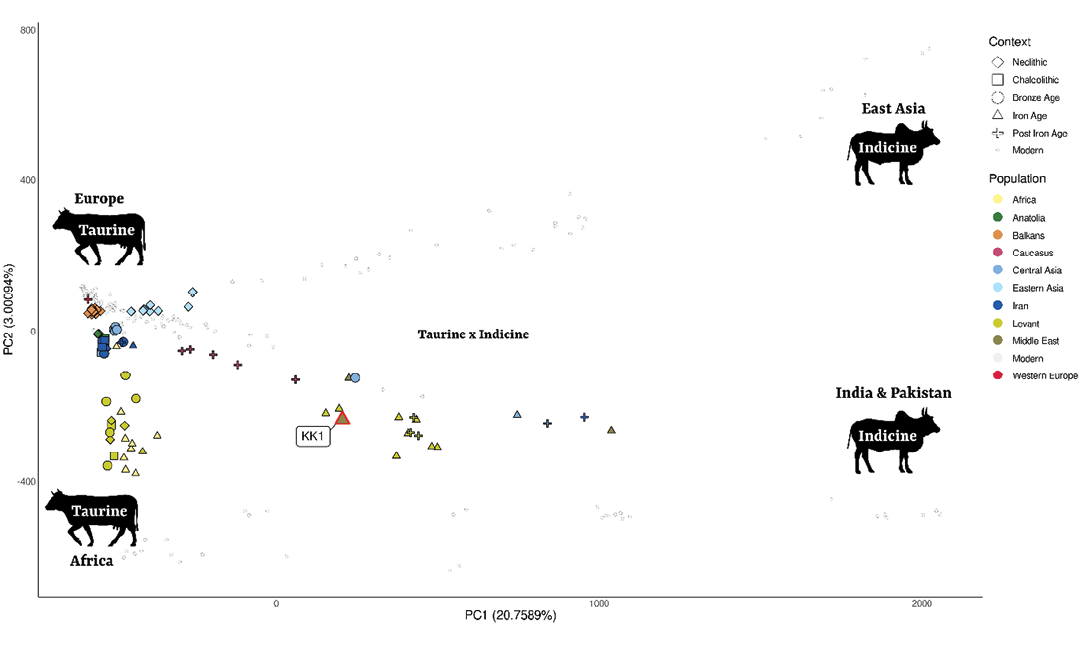
Due to the island’s environmental conditions, only one sample preserved sufficient genetic material to allow further investigation into the animal’s genetic identity (~6% endogenous content, coverage 0.02X). This sample, a petrous portion of the temporal bone from a male cow, was recovered from the monumental sanctuary at Kition Kathari (Karageorghis, 2005). Its earliest construction phase dates to the end of the second millennium BCE. Based on its archaeological context, the sample is dated to the 8th–7th century BCE, corresponding to the Early Cypro-Archaic period of the Iron Age. Mitochondrial DNA analysis (5.6X coverage, 20% missingness) indicates that the maternal line of the sample from ancient Kition belongs to haplogroup T3, one of the five major mitochondrial haplotype clusters in Bos taurus (T*, T1, T2, T3, T4). Haplogroup T3 is commonly found in taurine cattle populations across Europe and Southwest Asia today (Achilli et al, 2009). On the other hand, whole genomic analysis (admixture and D-statistics (Pritchard et al, 2000; Green et al, 2010)), where sample genetic variability was compared to both ancient and modern samples belonging to both Bos taurus and Bos indicus, revealed that the animal was a Bos taurus–Bos indicus hybrid (Figure 1). Admixed animals became common in Southwest Asia from the third millennium BCE onwards (Verdugo et al, 2019). The significance of this finding is discussed further below (Discussion).
Unfortunately, no genetic samples dating to the Early Neolithic and Early/Middle Bronze Age, when the new population of cattle was introduced to the island after three millennia of absence, have been recovered to date. It is possible that the hybrid animal identified at ancient Kition was introduced to Cyprus long before the first millennium BCE, but in the absence of genetic evidence, this remains a hypothesis.
Figure 1. Projection principal component analysis (PCA) analyses of cattle; ancient cattle are projected onto modern cattle diversity. The KK1 sample falls in the hybrid Bos taurus–Bos indicus zone. (Adapted from Verdugo et al, 2019)
Genetic characterization of the contemporary indigenous cattle population
Our preliminary findings showed that the Cyprus local cattle breed is genetically distinct from neighbouring indigenous breeds. Also, no significant gene flow was detected between commercial cow breeds and the Cyprus local cattle breed. Initial findings indicate the presence of two genetic subpopulations within Cyprus. However, further research is required to verify this finding and its potential connection with the previously reported geographic pattern distribution of the two morphotypes. With respect to the genetic findings relevant to conservation efforts, relatively high inbreeding was detected (mean FROH > 0.1), as expected given the major genetic bottleneck the breed had suffered in 2008, and indicating the need for better reproductive management to avoid mating highly related individuals. In addition, the effective population size appears to follow a declining trajectory, estimated at 112 individuals about 13 generations ago, indicating a constant loss of genetic variation associated with population size reduction. A publication compiling all modern DNA findings is currently in preparation.
Archival research
The wealth of archival data collected has allowed the project to establish the breed’s significance over time, understand breeding and management schemes, track past population sizes, and identify distribution trends and changes. According to historical sources, Cyprus had approximately 55,000 cattle during the Lusignan period (12th–15th centuries CE) (de Mas Latrie, 1852). This figure highlights the vital role of bovine labour in threshing, ploughing, and the transport of people and goods in medieval Cyprus. During the British period, the island’s cattle population was recorded at 28,919 in 1881 (The Cyprus Blue Book 1881), equivalent to approximately one animal for every five people living in rural areas (Rizopoulou-Egoumenidou 2009). These figures refer to the island’s native cattle, as the first dairy cattle were introduced only in 1912 (Constantinides, 1955). Furthermore, archival research has helped pinpoint key moments of decline, such as the mass slaughter and export of oxen in Egypt in 1870 due to a drought that severely affected agriculture (Savile, 1878). Additionally, historical photographs sourced from the Photographic Archive of the Cyprus Press and Information Office have played a key role in unravelling the recent history of the indigenous cattle breed of Cyprus. Beyond their aesthetic value, these images provided crucial historical context, as many depict the animals in association with official, political figures or significant historical events. Most importantly, they depict the animals in association with the Cyprus rural environment, providing a rather nostalgic image of a ‘lost’ past (Figure 2).
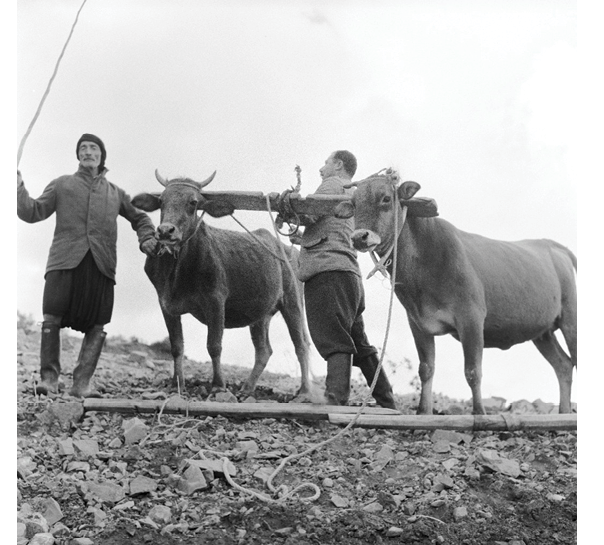
Archives played a dynamic role in the project that went beyond documentation, enrichment and research. Some of the older photographs were used as ‘triggers’ in discussions with local breeders, facilitating conversations about ancient and notably ‘primitive’ phenotypic traits of the breed, such as the distinctive white ring around some of the animals’ noses. Historical images depicting the breed engaged in agricultural tasks or interacting with humans in Cyprus’s rural landscape also proved to be powerful memory triggers, particularly for older breeders, who recalled key agricultural practices, customs, festivals and religious events in which the indigenous cattle breed had a strong participation. Furthermore, to make this material accessible to a wider audience, and to use it as a ‘living archive’ (Sabiescu, 2020) through which people can remember, reflect and (re) create new spaces for collective memory, the project is developing a documentary that will present the archival content to the broader public, encouraging a dialogue and allowing multiple layers connected to the breed to be visible.
Ethnographies of human-cattle interaction and collection of oral history
In pre-industrial Cyprus, cattle and oxen were integral to bride wealth transactions (personal communication with elderly breeders) and played a prominent role in major events of the Christian Orthodox religious calendar (Neophytou, 2014). On New Year’s Day, the villagers shared the joy and blessings of their faith with their most loyal companions in life – their oxen. They would light up the stable, rejoice with great delight, and consider it a good omen for the first being to enter their home that day to be an ox. They chose their finest ox and brought it into the house (Panaretos 1967; Xioutas 1978; Neophytou, 2014). They offered the animals koliva, a liturgical Eastern Orthodox dish made of barley, pomegranate seeds and almonds, and recited the following rhyme: “Eat, so we may eat from our common labour.” Another custom associated with New Year’s Eve or Epiphany in some villages involves placing lit candles on the horns of oxen. This ritual was believed to bring the animals a holy blessing, ensuring their health and prosperity during the agricultural season (Panaretos, 1967; Xioutas, 1978).
From the very beginning of the project, interviews have been conducted with the cattle breeders, aiming to understand their perspective relevant to the conservation of the breed. Several questions were raised, including the main motivations for keeping local cattle, their interaction with these animals, their main concerns as well as how they envision the future of the breed. Beyond financial support through subsidies, which most cattle breeders consider insufficient, the primary motivation for maintaining native cattle is deeply rooted in tradition, culture and a strong emotional connection between breeders and the animals. When asked how they would feel about the potential loss of the breed, most breeders referred to broader cultural losses, including the disappearance of vernacular dialect relating to traditional agriculture, as well as the erosion of our collective past that links us to the land and the animals. Many continue to raise native cattle because their fathers and grandfathers did so, expressing that it would be a profound loss for society to witness the extinction of an animal breed that supported so many generations of people on the island. The special bond between humans and their oxen is also reflected in the traditional avoidance of beef – a dietary taboo that persisted until the second half of the 20th century, when the importation of exotic beef breeds became more widespread on the island (Scott-Stevenson, 1880; Ohnefalsch-Richter, 1913). In some Cypriot villages, this avoidance is still observed. According to Panagiotis Gennadius, the first Director of the Department of Agriculture in Cyprus, “Almost all peasants considered the killing of a cow or an ox an act of sacrilege (Apostolou, 2018).” Similarly, it was considered a sin to burn old ploughs.
Another interesting aspect of this profound connection is the close cohabitation between humans and their oxen. In the 1930s, Brewster J. Surridge highlighted that during working times oxen were fed through the night and “[…] are kept in the room where their owner sleeps. They give warmth during the cold weather, and they are generally considered to be a source of health” (Surridge, 1930). The co-habitation aspect has also been raised by elderly breeders. In addition, the practice of naming animals based on their external characteristics demonstrates the emotional bond between humans and animals in small-scale farming societies. Today, cattle breeders often name their animals after the breeder from whom they received them, highlighting the social networks involved in the exchange of animals.
The role of cattle and oxen in the island’s oral traditions, including songs, myths, folktales, proverbs and folk-art paintings, constitutes another important archive of collective memory, which needs to be safeguarded and transmitted from generation to generation. Most proverbs about oxen are closely tied to agriculture and the figure of the farmer, consistently emphasizing both the immense value of oxen as working animals and the hardship of their labour, especially threshing, which is regarded as one of the most strenuous tasks for these animals. A particularly interesting proverb that reflects this reality is: “Would the young man not harvest, would the young woman not give birth, and would the ox not thresh, none of them would grow old” (Panaretos, 1967; Xioutas, 1978). Notably, a folktale about the ox and the ant (Kleridis, 2017) makes special reference to the hump of Cyprus's indigenous cattle, an observation that aligns with previous genetic studies indicating a high level of indicine ancestry (Papachristou, 2023). Ethnographic accounts and oral traditions assign deep cultural meaning to the island’s indigenous cattle, which were so deeply woven into everyday life that their presence in songs, myths and proverbs is both frequent and meaningful. This reinforces the notion that conserving an indigenous breed involves more than preserving its genetic material; it also requires safeguarding the traditional livestock systems, oral histories and cultural practices associated with it. Breeders may continue to keep native animals, but without these elements, the genetic value will be reduced (Hall, 2019).
Public engagement and citizen science initiatives
Aiming to reach out to the island’s wider community, the team prepared a documentary film that raises awareness of the long-standing history, cultural and ecological values of the island’s native cattle and brings to the forefront the main threats that the animals are currently facing. The involvement of different stakeholders – including breeders, researchers, public authorities, older generation farmers and NGOs – allowed multiple voices to be heard, providing a fruitful discourse concerning the urge for conservation. Beyond informing and raising awareness, the documentary can be understood as another, non-physical ‘space’ for preserving the breed and the collective memory surrounding it, helping to ensure that the many stories, oral traditions, and customs associated with it are safeguarded and passed down through generations.
As part of efforts to promote citizen science (e.g. Fraisl et al, 2022), a collaboration has been established with local artists to produce handcrafted candle figurines inspired by the history of the breed. Each figurine has been packaged in a box and accompanied by a small leaflet, prepared in collaboration with the breeders, featuring the cow’s name, a brief profile of the specific animal, and a miniature ear tag modelled after those used on living cows. The figurines were available during the screenings and fairs, with proceeds going to the Breeder Society to support ongoing conservation efforts. With each purchase, citizens were symbolically ‘adopting a local cow,’ actively contributing to the preservation of the indigenous cattle breed of Cyprus. Finally, the project’s long-term vision is to ensure that research, activism and education concerning the indigenous cattle breed of Cyprus will have a positive impact on the animals and the environment.
Discussion
Cattle were among the first wild terrestrial species meeting the conditions for successful domestication by humans, including an herbivorous diet, rapid growth, the ability to breed in captivity, a genetic predisposition toward reduced aggression in enclosed settings, and social behaviours that facilitated handling (Felius et al, 2014). The wide diversity of different cattle breeds, existing today in the world, is the product of biological processes and human interventions – including sociocultural breeding regimes and economic utilization patterns – that were initiated about 10,000 years ago in the Fertile Crescent (Köhler-Rollefson, 2001). As such, the huge diversity of cattle breeds reflects not only ecological but also cultural diversity or, as Köhler-Rollefson and Meyer (2014) have argued, these breeds reflect a form of biocultural heritage that needs to be safeguarded.
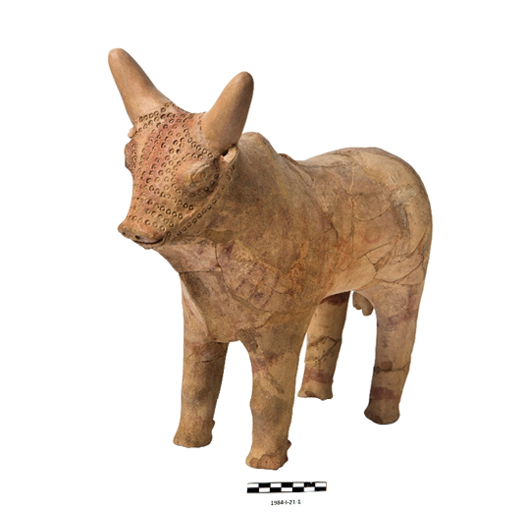
This article presents an inclusive framework for studying the indigenous cattle breed of Cyprus, stemming from a multidisciplinary approach that combines the humanities and life sciences. It also extends to other endangered animal breeds through the integration of diverse concepts and methodologies developed during the ARETI project. Like many other local breeds in the Mediterranean region, Cyprus indigenous cattle remain insufficiently acknowledged and valued within the island’s environmental, cultural and commercial contexts. To support the breed’s valorization in both academic and public domains and to further promote its conservation, the ARETI project employed a multidisciplinary research methodology, structured around six key pillars. These pillars revealed various dimensions of the breed’s ancient and historical presence, genetic value and legacy, as well as its socio-cultural significance, reinforcing its importance within Cyprus ecological and cultural landscape and further supporting its sustainable use. Zooarchaeology and palaeogenomics provided insights into past human–cattle interactions, including patterns of animal translocation in antiquity, and highlighted the deeply rooted tradition of cattle-keeping on the island. The identification of a Bos taurus–Bos indicus hybrid, dating to the first millennium BCE, not only supports earlier hypotheses been solely based on iconography (Spyrou, 2021; Figure 3) but also places Cyprus in the wider social and cultural networks during the Late Bronze-Early Iron Age. This genomic finding further highlights the zooarchaeological findings on the sociocultural value of cattle in Cyprus by linking it to historical processes of human mobility, animal exchange, adaptation, and human–animal interactions on the island. Indicine introgression into the Near Eastern cattle populations is estimated to have begun approximately 4,000 years ago (Verdugo et al, 2019). The fact that this gene flow was male driven suggests deliberate human selection (Verdugo et al, 2019), reflecting patterns of biological translocation across the region during the Bronze Age, alongside the exchange and trade of other key elements of material culture, such as copper, a main historical product of Cyprus. Human selection of Bos indicus males for breeding is thought to have been a strategic response by ancient farmers to the high temperatures affecting the region, including the island of Cyprus, at the end of the third millennium BCE (Kaniewski et al, 2019).
The genetic characterization of many individuals of the remaining contemporary population in this study demonstrated the breed’s genetic differentiation from exotic breeds on the island and from local cattle breeds in the eastern Mediterranean area. Most importantly, the highlighted genetic uniqueness of the local breed could serve as a strong incentive for the Breeder Society and local authorities to actively support efforts aimed at preserving the local population. Until recently, limited genetic data were available for Cyprus local cattle individuals, generated within the framework of comparative studies with other breeds (Flori et al, 2019; Papachristou et al, 2020; Papachristou, 2023). These studies reached different conclusions regarding the genetic affinity of Cyprus cattle with neighbouring breeds. More specifically, the results of Papachristou et al (2020) supported the grouping of the Cyprus population with individuals from other breeds in Greece. Morphologically, this appears to be a reasonable result, considering the similarities between local breeds in the southern and eastern Greek islands. However, this is not the case when comparing animals from Cyprus and northern Greece. On the other hand, the findings of Flori et al (2019) indicated a closer relationship between Cyprus individuals and individuals from breeds in Turkey. This outcome was also not surprising, given the subtle morphological differences between Cyprus local cattle and Turkey’s local breeds, such as the Anatolian Southern Yellow. We assume that these contrasting results could be attributed to the composition of the analyzed datasets, including, on one hand, populations from various/different neighbouring breeds and on the other hand, a limited number of individuals from Cyprus, probably not adequately representing the local genetic diversity. These results need to be further confirmed using a larger sample size.
The collection of archival material provided the socio-historical context for the research, while the ethnographic data offered insights into how the traditional Cypriot society integrated cattle and oxen into both everyday life and the island’s broader cultural landscape. The establishment of a dialogue with the Breeder Society proved especially valuable to the project not only because it facilitated access to samples for the breed’s genetic characterization, but also because breeders have shared many stories that helped to better understand livestock transaction systems, breeding techniques and local concepts of animal care.
Moreover, public engagement played a vital role in disseminating the project's findings to the wider community. The production of a documentary has further supported this goal, serving as both a repository and a non-physical space for preserving the breed and its unique biocultural heritage. Finally, the project’s multidisciplinary and collaborative approach enabled team members to contribute their specialized knowledge, share insights, and collectively interpret their findings within a broader context, demonstrating the strength of integrated interdisciplinary research in addressing complex conservation challenges.
Given the breed’s significant genetic, historical and sociocultural value, as demonstrated through this project, an in situ conservation strategy should be prioritized, with particular emphasis on preserving the intangible assets of the breed along with the conservation of its genetic diversity. The need for a better and more sustainable utilization of the breed within the island’s ecological and cultural landscape is essential. This includes greater utilization of the breed’s ecosystem services, as already demonstrated through its role in biodiversity maintenance at the Akrotiri Marshes. Moreover, targeted grazing by indigenous cattle could help reduce flammable biomass in forest-adjacent communities or high-risk areas, such as the island’s mountainous regions (e.g. Ruiz-Mirazo et al, 2011). This strategy has already been implemented by the Ministry of Agriculture, Rural Development and the Environment, in collaboration with the Department of Forests and the Department of Agriculture, using goats since 2025 in the Pyrgos Tyllirias forestry area. Promoting the breed’s meat products in the local market could also create niche economic opportunities and provide further incentives for conservation. Since the production efficiency of the indigenous cattle breed of Cyprus is relatively low, added value should be created by linking breed preservation to cultural and eco-tourism initiatives, such as farm visits (Pastrana et al, 2020). These approaches can improve profitability and, in turn, support long-term conservation efforts.
There are multiple compelling reasons to conserve the indigenous cattle breed of Cyprus, leaving little room for further debate. Situated in a recognized climate change hotspot (Zittis et al, 2020), Cyprus must prioritize the preservation of its valuable AnGR, which hold the potential to adapt to increasingly harsh environmental conditions, just as prehistoric farmers successfully managed livestock thousands of years ago. We hope that ongoing advances in palaeogenomics will enhance the recovery and analysis of ancient DNA, not only from cattle but also from other livestock species such as sheep, goats and equids, all of which have played significant roles in the island’s prehistoric and more recent agricultural history. Future projects will follow a similar approach, focusing on other indigenous and currently threatened breeds, including the Cyprus fat-tailed sheep, the Machaeras goat and the Cyprus donkey. Equally essential is the collaboration and coordination of such work with partners in nearby regions (see Ligda and Casabianca, 2013). Given the long-standing cultural ties and historical translocation of plants and animals across the Mediterranean as well as the common threats that the region has always been facing, cross-regional collaboration can support the development of large projects, common policies and governance strategies within the Mediterranean Basin. These kinds of platforms that encourage cooperation across the region already exist, including the European Regional Focal Point for Animal Genetic Resources (Martyniuk et al, 2021) and the EAAP Mediterranean Working Group (Ligda et al, 2022).
Conclusion
The conservation of the indigenous cattle breed of Cyprus, like the broader effort to preserve AnGR, is a complex, multifaceted societal challenge that demands multidisciplinary approaches that integrate scientific methods along with anthropological concepts. Central to this effort is the formation of an engaged community that values animals not only for their productive traits but also for the ecosystem services they provide, their deep-rooted connections to local environments, and their role in enduring cultural traditions. Achieving this vision requires coordinated action from a wide range of stakeholders, including researchers, breeders, public authorities, policymakers, educators, anthropologists, artists and activists. Participatory methods are essential, particularly those that recognize breeders as local experts and incorporate their knowledge, experience and practices. Moreover, public engagement should be an essential component of every project that focuses on the conservation of AnGR. In this context, documentaries can be powerful tools for engaging the wider public in conservation efforts, providing opportunities to safeguard oral histories and cultural traditions and create new spaces for conservation. We hope this integrated approach will be extended to include other indigenous animal breeds in Cyprus, the Eastern Mediterranean and beyond. Strong collaboration across the Mediterranean Basin remains essential to this collective effort.
Author contributions
A. Spyrou and G. Hadjipavlou conceived and designed the project and wrote the first draft of the manuscript. A. Spyrou collected zooarchaeological, archival, and ethnographic data. G. Hadjipavlou and A. C. Dimitriou collected and analyzed genomic data. A. Spyrou and V. Mattiangeli processed archaeological samples, and D. Diquelou prepared the PCA. V. Mullin analyzed palaeogenomic data and provided overall oversight of the analyses. D.G. Bradley facilitated and oversaw ancient DNA analysis. All authors commented on previous versions of the manuscript.
Acknowledgements
The authors are grateful to the A. G. Leventis Foundation for its generous financial support of this research. We would also like to thank the Cyprus Department of Antiquities for granting permission to export archaeological cattle bones to Ireland for ancient DNA analysis. The ancient DNA work was made possible through Prof. Bradley’s ERC Advanced Grant ‘AncestralWeave’ (Grant Agreement ID: 885729). This work would not have been possible without the support of the Cyprus Department of Agriculture, particularly officers Chryso Demetriou and Charalampos Petsides. Special thanks are due to the Cyprus Press and Information Office for providing access to historical journals and photographs, and to the Cyprus State Archives for granting access to rare archival material. We would also like to express our sincere gratitude to Prof. Ivica Medugorac, Head of the Population Genomics Group at the Ludwig Maximilian University of Munich, for generously providing us with samples from Turkey and Greece. We are deeply indebted to the Cyprus Local Cow Breed’s Society for facilitating access to the animals and for generously sharing their stories with us. Finally, our sincere thanks go to Dr George Papageorgiou, veterinarian, whose support and guidance opened many doors throughout the course of this project.
Conflict of interest statement
The authors declare no conflict of interest
Ethics statement
All participating farm owners consented to sample animals for experimentation purposes. Nasal swab samples were collected to minimize stress and avoid harm to the animals. All experimental protocols were approved by the Agriculture Research Institute of Cyprus, which is part of the Ministry of Agriculture, Rural Development and Environment. All methods were carried out in accordance with relevant guidelines and regulations. All methods are reported in accordance with ARRIVE guidelines.
References
Achilli, A., Bonfiglio, S., Olivieri, A., Malusà, A., Pala, M., Kashani, B. H., Perego, U. A., Ajmone-Marsan, P., Liotta, L., Semino, O., Bandelt, H.-J., Ferretti, L. and Torroni, A. (2009). The multifaceted origin of taurine cattle reflected by the mitochondrial genome. PLoS One 4, e5753. doi: https://doi.org/10.1371/journal.pone.0005753
Apostolou, D. (2018) Traditional Methods of Cereal Cultivation in Cyprus. Agrotis 475, 52-60.
Averett, E. W. (2020). Blurred boundaries: Zoomorphic masking rituals and the human-animal relationship in ancient Cyprus. World Archaeology 52, 724–745. doi: https://doi.org/10.1080/00438243.2021.1900903
Boessenkool, S., Hanghøj, K., Nistelberger, H.M., Der Sarkissian, C., Gondek, A.T., Orlando, L., Barrett, J.H. and Star, B. (2017). Combining bleach and mild predigestion improves ancient DNA recovery from bones. Molecular Ecology Resources 17, 742–751. doi: https://doi.org/10.1111/1755-0998.12623
Boyazoglu, J., Hatziminaoglou, Y. (2002). Livestock genetic resources and production systems: A Mediterranean overview. Archivos Latinoamericanos de Producción Animal, 10(1), 62–67.
Constantinides, P. 1955. Production of Clean Milk. Agrotis 9(4), 16-17.
Croft, P. (2006). Animal Bones. In Marki Alonia: An Early and Middle Bronze Age Settlement in Cyprus: Excavations 1995–2000, eds. D. Frankel and JM Webb (Paul Åströms förlag), 263–281.
Dabney, J., Meyer, M. (2019). Extraction of highly degraded DNA from ancient bones and teeth. In Ancient DNA: methods and protocols, eds B. Shapiro, A. Barlow, P.D. Heintzman, M. Hofreiter, J.L.A. Paijmans, A.E.R. Soares (New York, NY: Springer New York), 25-29.
Davis, S.J.M. (2003). The zooarchaeology of Khirokitia (Neolithic Cyprus), including a view from the mainland. In Le Néolithique de Chypre, Bulletin de Correspondence Hellénique, Supplément 43, eds J. Guilaine, A. Le Brun (École Française d’Athènes, Athens), 253–268.
da Gama, L. T. (2006). Animal genetic resources and sustainable development in the Mediterranean region. In Animal products from the Mediterranean area, eds. J.M.C. Ramalho Ribeiro, A.E.M. Horta, C. Mosconi and A. Rosati (Wageningen: Wageningen Academic), 125–135.
de Mas Latrie, L., 1855. History of the island of Cyprus under the reign of the princes of the house of Lusignan (Vol. 3). Imperial Printing Office.
Department of Agriculture (DAG) 2024. Yearly review of the Cyprus Dairy Cow Sector and the Local Cattle Breed. ISSN 2980-5325, Ministry of Agriculture, Rural Development and Environment.
Dimitriou, A.C., Antoniou, A., Alexiou, I., Poulakakis, N., Parmakelis, A. and Sfenthourakis, S. (2022). Diversification within an oceanic Mediterranean island: Insights from a terrestrial isopod. Molecular Phylogenetics and Evolution, 175, p.107585. doi: https://doi.org/10.1016/j.ympev.2022.107585
Dimitriou, A.C., Maimaris, G. and Hadjipavlou, G. (2024b). Assessment of breeding nuclei contributions to the genetic diversity and population structure of the Cyprus Chios sheep. Scientific Reports, 14(1),1-12. doi: https://doi.org/10.1038/s41598-024-81678-3
Dimitriou, C.A., Spyrou, A. & Hadjipavlou, G. (2024a). First insights in the genetic structure of Cyprus’s indigenous cattle. Book of Abstracts for the 75th Annual Meeting of the European Federation of Animal Science.
Felius, M., Beerling, M.L., Buchanan, D.S., Theunissen, B., Koolmees, P.A. and Lenstra, J.A., 2014. On the history of cattle genetic resources. Diversity, 6(4),705-750. doi: https://doi.org/10.3390/d6040705
Flori, L., Moazami-Goudarzi, K., Alary, V., Araba, A., Boujenane, I., Boushaba, N., Casabianca, F., Casu, S., Ciampolini, R., Coeur D'Acier, A. and Coquelle, C. (2019). A genomic map of climate adaptation in Mediterranean cattle breeds. Molecular ecology, 28(5),1009-1029. doi: https://doi.org/10.1111/mec.15004
Fraisl, D., Hager, G., Bedessem, B., Gold, M., Hsing, P.Y., Danielsen, F., Hitchcock, C.B., Hulbert, J.M., Piera, J., Spiers, H. and Thiel, M., 2022. Citizen science in environmental and ecological sciences. Nature reviews methods primers, 2(1), 64. doi: https://doi.org/10.1038/s43586-022-00144-4
Gamba, C., Jones, E.R., Teasdale, M.D., McLaughlin, R.L., Gonzalez-Fortes, G., Mattiangeli, V., Domboróczki, L., Kővári, I., Pap, I., Anders, A. and Whittle, A. (2014). Genome flux and stasis in a five millennium transect of European prehistory. Nature communications, 5(1), 5257. doi: https://doi.org/10.1038/ncomms6257
Gandini, G.C., Villa, E. (2003). Analysis of the cultural value of local livestock breeds: a methodology. Journal of Animal Breeding and Genetics 120 (1), 1-11. https://doi.org/10.1046/j.1439-0388.2003.00365.x
Gandini, G., Avon, L., Bohte-Wilhelmus, D., Bay, E., Colinet, F.G., Choroszy, Z., Díaz, C., Duclos, D., Fernández, J., Gengler, N. and Hoving-Bolink, R. (2010). Motives and values in farming local cattle breeds in Europe: a survey on 15 breeds. Animal Genetic Resources/Resources génétiques animales/Recursos genéticos animales, 47, 45-58. doi: https://doi.org/10.1017/S2078633610000901
Green, R.E., Krause, J., Briggs, A.W., Maricic, T., Stenzel, U., Kircher, M., Patterson, N., Li, H., Zhai, W., Fritz, M.H.Y. and Hansen, N.F. (2010). A draft sequence of the Neandertal genome. Science, 328(5979), pp.710-722. doi: https://doi.org/10.1126/science.1188021
Hall, S.J. (2019). Livestock biodiversity as interface between people, landscapes and nature. People Nat, 1(3), 284-290. doi: https://doi.org/10.1002/pan3.23
Hadjipavlou, G., Ligda, C. (2022). Diversity of animal genetic resources for resilient farming systems. In Hadjipavlou, G., and Ligda, C. (eds) Addressing the challenges of agro-pastoral farming systems to strengthen their resilience. Options Méditerranéennes: Série A. Séminaires Méditerranéens 129, 11–15. Zaragoza: CIHEAM. Proceedings of the 71st Annual Meeting of the European Federation of Animal Science (EAAP). URL: http://om.ciheam.org/om/pdf/a129/00008091.pdf
Haudricourt A. G. (1962) Domestication des animaux, culture des plantes et traitement d'autrui, L'Homme, 2(1), 40-50.
Hoffmann, I. (2010). Climate change and the characterization, breeding and conservation of animal genetic resources. Animal Genetics, 41, 32-46. doi: https://doi.org/10.1111/j.1365-2052.2010.02043.
Holmes, M., Hamerow, H. and Thomas, R., 2021. Close companions? A zooarchaeological study of the human–cattle relationship in medieval England. Animals, 11(4), 1174.
Horwitz, L.K, Tchernov,E., and Hongo, H. 2004. The domestic status of the early Neolithic fauna of Cyprus: a view from the mainland. In Neolithic Revolution: New Perspective on Southwest Asia in light of Recent Discoveries on Cyprus, ed E. Peltenburg and A. Wasse (Levant Supplementary Series I. Oxbow Books, Oxford) 35–48.
Kaniewski, D., Marriner, N., Bretschneider, J., Jans, G., Morhange, C., Cheddadi, R., Otto, T., Luce, F. and Van Campo, E. (2019). 300-year drought frames Late Bronze Age to Early Iron Age transition in the Near East: new palaeoecological data from Cyprus and Syria. Regional Environmental Change, 19, 2287-2297.
Karageorghis V. (2005). Excavations at Kition VI. The Phoenician and later levels, part I. Nicosia.
Klerides, N. (2017). Istories ton Zoon tis Kyprou. (Lefkosia : Politistiko Idryma Nearchou Kleride).
Köhler-Rollefson, I. (1997). Indigenous practices of animal genetic resource management and their relevance for the conservation of domestic animal diversity in developing countries. Journal of Animal Breeding and Genetics, 114(1-6), 231-238.
Köhler-Rollefson, I. 2001. Intellectual property rights regime necessary for traditional livestock raisers. Indigenous Knowledge and Development Monitor, 9(1), 12-15.
Köhler-Rollefson, I. (2003). Community-based management of animal genetic resources–with special reference to pastoralists. In Proceedings of the workshop held in Mbabane, Swaziland (Rome).
Ligda C., Casabianca F. (2013). Adding value to local breeds: challenges, strategies and key factors. Animal Genetic Resources 53, 107–116. doi: https://doi.org/10.1017/S207863361300026X
Ligda C., Tsiokos D., Hadjipavlou G., Djemali M., El Fadili M., Charvolin-Lemaire E., Sturaro E. (2022). Documenting animal genetic resources in the Mediterranean: interaction and cooperation in the region. In Addressing the challenges of agro-pastoral farming systems to strengthen their resilience, eds G. Hadjipavlou, C. Ligda (Options Méditerranéennes: Série A. Séminaires Méditerranéens; n. 129) Zaragoza, 49-56p.
Martyniuk, E., Matlova, V., Sæther, N., Bojkovski, D., Puzin, L., Polak, G., Hiemstra, S.J., Berger, B., Bormann, J., Stålhammar, E.M. and Stojanović, S. (2021). PersPectives of NatioNal coordiNators for aNimal GeNetic resources oN the euroPeaN reGioNal focal PoiNt: survey results. Annals of Animal Science, 21(3), pp.853-868. doi: https://doi.org/10.2478/aoas-2020-0120
Mendelsohn, R. (2003). The challenge of conserving indigenous domesticated animals. Ecological Economics, 45(3), 501-510. doi: https://doi.org/10.1016/S0921-8009(03)00100-9
Meyer, M., Kircher, M. (2010). Illumina sequencing library preparation for highly multiplexed target capture and sequencing. Cold Spring Harb. Protoc., db.prot 5448.
Neophytou, A. (2014). Laiki latreia stin paradosiaki koinonia tis Kyprou. Oi giortes tou dodekaimerou (Publications of the Cyprus Research Center-Nicosia, Cyprus).
Ohnefalsch-Richter, M.H. (1913). Griechische Sitten und Gebräuche auf Cypern: mit Berücksichtigung von Naturkunde und Volkswirtschaft sowie der Forschritte unter englischer Herrschaft, dargestellt. D. Reimer (E. Vohsen).
Ovaska, U. (2017). Genes, gastronomy and gratitude: The development and future of the conservation of native breeds. Unpublished PhD Dissertation.
Ovaska, U., Soini, K., 2017. Local breeds–Rural heritage or new market opportunities? Colliding views on the conservation and sustainable use of landraces. Sociologia Ruralis, 57, 709-729. doi: https://doi.org/10.1111/soru.12140
Ovaska, U., Bläuer, A., Kroløkke, C., Kjetså, M., Kantanen, J. and Honkatukia, M. (2021). The Conservation of Native Domestic Animal Breeds in Nordic Countries: From Genetic Resources to Cultural Heritage and Good Governance. Animals 2021, 11, 2730. doi: https://doi.org/10.3390/ ani11092730.
Panaretos, A. 1967. Kypriaki Georgiki Laografia. Publications of the Cooperative Central Bank of Cyprus Ltd, Nicosia.
Papachristou, D.A., 2023. Genetic identification of Greek bovine breeds/populations using molecular markers. Ph.D. thesis, University of Athens, Athens.
Papachristou, D., Koutsouli, P., Laliotis, G.P., Kunz, E., Upadhyay, M., Seichter, D., Russ, I., Gjoko, B., Kostaras, N., Bizelis, I. and Medugorac, I. (2020). Genomic diversity and population structure of the indigenous Greek and Cypriot cattle populations. Genetics Selection Evolution, 52, 1-23. doi: https://doi.org/10.1186/s12711-020-00560-8
Pastrana, I. C., Navas González, F.J., Ciani, E., Nogales Baena, S. and Delgado Bermejo, J.V. (2020). Camel genetic resources conservation through tourism: a key sociocultural approach of camelback leisure riding. Animals, 10(9), 1703. doi: https://doi.org/10.3390/ani10091703
Pillar, V.D., Overbeck, G.E. (2025). Grazing can reduce wildfire risk amid climate change. Science, 387(6730), eadu7471. doi: https://doi.org/10.1126/science.adu7471
Poulakakis, N., Kapli, P., Kardamaki, A., Skourtanioti, E., Göçmen, B., Ilgaz, Ç., Kumlutaş, Y., Avci, A., Lymberakis, P. (2013). Comparative phylogeography of six herpetofauna species in Cyprus: late Miocene to Pleistocene colonization routes. Biological Journal of the Linnean Society 108, 619–635. doi: https://doi.org/10.1111/j.1095-8312.2012.02039.x
Pritchard, K. J., Stephens M. and Donnelly, P. (2000). Inference of Population Structure Using Multilocus Genotype Data Genetics, 155 (2), 945–959,
Redding, R.W. (2024). A view from the herd: cattle, sheep, goats, and pigs in pharaonic Egypt: a primer for Egyptologists and archaeologists. Lockwood Press, 210p.
Rischkowsky, B., Pilling, D. (2007). The state of the world's animal genetic resources for food and agriculture. Food and Agriculture Organisation (Rome: Italy). url: https://www.fao.org/3/a1250e/a1250e.pdf
Rizopoulou-Egoumenidou, E. (2009). Tanning in Cyprus from the 16th to the 20th century: from traditional tanneries to modern industries. (Nicosia: Kentron Epistēmonikōn Ereunōn).
Ruiz-Mirazo, J., Robles, A.B. and González-Rebollar, J.L. (2011). Two-year evaluation of fuelbreaks grazed by livestock in the wildfire prevention program in Andalusia (Spain). Agriculture, Ecosystems & Environment, 141(1-2), 13-22. doi: https://doi.org/10.1016/j.agee.2011.02.002
Sabiescu, A. G. (2020). Living archives and the social transmission of memory. Curator: The Museum Journal 63, 497–510. doi: https://doi.org/10.1111/cura.
Savile, A.R. 1878. Cyprus. Compiled in the Intelligence Branch, Quarter-Master-General’s Department, Horse Guards. H.M. Stationery Office, London. 171 pp. url: https://sylviaioannoufoundation.org/en/collection/digital-library/b2181/
Scherf, B. D. (2000). World watch list for domestic animal diversity (3rd ed.). Food and Agriculture Organization of the United Nations. https://www.fao.org/4/x8750e/x8750e.pdf
Scott-Stevenson, E., 1880. Our home in Cyprus. (London: Chapman and Hall).
Soini, K., Ovaska, U. and Kantanen, J. (2012). Spaces of conservation of local breeds: the case of Yakutian cattle. Sociologia Ruralis, 52(2), pp.170-191. doi: https://doi.org/10.1111/j.1467-9523.2012.00551.x
Spyrou A. (2021). From south Asia to the eastern Mediterranean: the appearance of zebu cattle in the iconography of Bronze Age Cyprus and some consideration for future research. In Archaeology in the smallest realm: micro analyses and methods for the reconstruction of Cyprus early societies, ed M. Amadio (Artemide: Rome), 154-166.
Spyrou, A., Roberts, P., Bleasdale, M., Lucas, M., Crewe, L., Simmons, A. and Webb, J., 2024. Human-cattle interactions in PPNB and Early/Middle Bronze Age Cyprus: integrating zooarchaeological and stable isotope data. Archaeological and Anthropological Sciences, 16(5), 64. doi: https://doi.org/10.1007/s12520-024-01969-8
Surridge, B. J. (1930). A survey of rural life in Cyprus. (Nicosia: Government Printing Office).
Thiringer, M.M. (2020). An Egyptian's Best Friend? An Analysis and Discussion of the Depiction of the Domestic Dog in Ancient Egypt. Ph.D. thesis, University of Memphis, Memphis, USA.
Thomas, R. and Johannsen, N., 2011. Articular depressions in domestic cattle phalanges and their archaeological relevance. International Journal of Paleopathology, 1(1), pp.43-54.
Utsunomiya, Y.T., Milanesi, M., Fortes, M.R.S., Porto-Neto, L.R., Utsunomiya, A.T.H., Silva, M.V.G.B., Garcia, J.F. and Ajmone-Marsan, P. (2019). Genomic clues of the evolutionary history of Bos indicus cattle. Animal genetics, 50 (6), 557-568. doi: https://doi.org/10.1111/age.12836
Van Dijk, R.M. (2013). The use of bucrania in the architecture of First Dynasty Egypt. Journal for Semitics, 22(2), 449-463. doi: https://hdl.handle.net/10520/EJC147422
Vayanou, P., Papatheodoulou, A., Hellicar, M., Hadjistylli, M., Perdiou, A., Charilaou, P. and Sergides, L. (2024). Sustainability plan for Cape Pyla and Akrotiri Peninsula: Recommendations & measures. DPLUS141: Habitat restoration and wise use for Akrotiri and Cape Pyla. BirdLife Cyprus; Terra Cypria; Sovereign Base Areas Administration Environment Department (SBBA ED); Royal Society for the Protection of Birds (RSPB).
Verdugo, M.P., Mullin, V.E., Scheu, A., Mattiangeli, V., Daly, K.G., Maisano Delser, P., Hare, A.J., Burger, J., Collins, M.J., Kehati, R. and Hesse, P. (2019). Ancient cattle genomics, origins, and rapid turnover in the Fertile Crescent. Science, 365(6449), pp.173-176. doi: https://doi.org/10.1126/science.aav1002
Vigne, J.D., Zazzo, A., Cucchi, T., Carrère, I., Briois, F. and Guilaine, J. (2014). The transportation of mammals to Cyprus sheds light on early voyaging and boats in the Mediterranean Sea. Eurasian Prehistory, 10(1-2), 157-176.
Xioutas, P. (1978). KypriakI Laographia ton Zoôn, Vol. 6 (Nicosia : Kentron Episfëmonikôn Meletôn).
Zittis, G., Bruggeman, A. and Camera, C., 2020. 21st century projections of extreme precipitation indicators for Cyprus. Atmosphere, 11(4), p.343. doi: https://doi.org/10.3390/atmos11040343