Cryopreservation strategies for trees: Leveraging organogenesis and somatic embryogenesis for effective conservation
Ravi Gowthamia,§,*, Marcos Edel Martínez-Monterob,§, Subhash Chanderc,*, GM Puneethd, Anju Mahendru-Singhc and PE Rajasekharane,§
a ICAR-National Bureau of Plant Genetic Resources (NBPGR), Regional station, Hyderabad-500030, Telangana, India
b Faculty of Agriculture University of Ciego de Avila, Car. a Moron km 9, CP 69450 Ciego de Avila, Cuba
c Division of Germplasm Conservation, ICAR-NBPGR, New Delhi-110012, India
d ICAR-NBPGR, Regional Station, Jodhpur – 342003, Rajasthan, India
e In Vitro Conservation and Cryopreservation Facility, Division of Plant Genetic Resources, ICAR- Indian Institute of Horticultural Research, Hessaraghatta Lake Post, Bangalore 560 089, India
Abstract: Trees are fundamental to ecosystems, supporting biodiversity, regulating climate, storing carbon and providing vital resources. Several species are under severe threat from deforestation, habitat destruction, urban expansion and climate change, endangering both the species and the ecosystem services they provide. Traditional conservation methods, such as seed genebanks and field genebanks, face challenges like genetic degradation and high maintenance costs. Cryopreservation offers a promising alternative, preserving genetic material at ultra-low temperatures, halting biological processes and minimizing storage space needs. This method is especially effective for species with recalcitrant seeds or difficulty in propagation. Integrating techniques like somatic embryogenesis and organogenesis further enhances cryopreservation. Somatic embryogenesis enables the development of embryos from somatic cells, facilitating the regeneration of trees from cryopreserved tissues. Similarly, organogenesis promotes the development of in vitro cultures for species that are otherwise challenging to conserve, allowing for cryopreservation of in vitro explants. The combination of these techniques not only preserves genetic material but also ensures the regeneration of viable plants, providing a comprehensive approach to tree conservation. This review highlights the critical role of cryopreservation in preserving tree diversity, with a focus on somatic embryogenesis and organogenesis, exploring current practices, challenges and future directions.
Keywords: Biodiversity, cryopreservation, conservation, extinction, genebanks, genetic diversity, organogenesis
* Corresponding authors: Subhash Chander (Subhash.Chander3@icar.org.in), Ravi Gowthami (Gowthami.R@icar.org.in)
§ Authors contributed equally to this work and share first authorship
Introduction
Trees are essential components of life on Earth, playing crucial roles in ecological, cultural and economic spheres. Among the estimated 350,000 vascular plant species on Earth, approximately 59,000 are described as tree species (BGCI, 2021). The latest Global Tree Assessment (GTA) has classified 92.7% of the 57,922 tree species evaluated with conservation status for inclusion on the International Union for Conservation of Nature (IUCN) Red List of Threatened Species. The GTA has identified nine major threats to tree species globally, including agricultural expansion affecting 29% of species, overexploitation affecting 27%, livestock farming affecting 14%, urban development affecting 13%, changes in fire regimes affecting 13%, energy production and mining affecting 9%, establishment of wood and pulp plantations affecting 6%, invasion by non-native species affecting 5%, and climate change affecting 4% (BGCI, 2021).
These combined pressures have already caused the decline and, in some cases extinction of numerous tree species, with profound implications for biodiversity across all trophic levels. In response to these challenges, there is an urgent need for targeted and effective conservation efforts aimed at preventing further species extinctions. Therefore, this review discusses targeted conservation strategies for trees, with emphasis on ex situ conservation methods – particularly cryopreservation approaches using diverse explants such as seeds, zygotic embryos or embryonic axes, shoot tips and somatic embryos to safeguard genetic diversity and support restoration and sustainable use.
Conservation of trees
In conservation biology, in situ and ex situ strategies are essential for preserving tree genetic diversity. In situ conservation involves protecting tree populations within their natural habitats, such as national parks and reserves, maintaining evolutionary processes and helping species adapt to environmental changes. According to the Protected Planet Report of 2024, protected and conserved areas presently encompass 17.6% of the global terrestrial and inland water area, underscoring the scale of in situ conservation worldwide (UNEP-WCMC and IUCN, 2024).
In situ conservation is a dynamic practice that maintains ongoing evolutionary processes, thereby fostering both genetic diversity and adaptation. In situ conservation is typically implemented at local or experimental scales, focusing on farmers, traders, processors, or community groups. However, it is not readily structured to ensure large-scale germplasm availability or to guarantee long-term conservation security (Lusty et al, 2014). Ex situ conservation complements in situ methods by preserving genetic material outside natural habitats. Techniques include botanical gardens and arboreta for managing diverse species collections, seedbanks for storing seeds including endangered species, and nurseries for cultivating seedlings for reforestation. Although ex situ conservation does not replicate natural ecosystems, it offers cost-effective storage of genetic diversity and supports breeding programmes. For species where traditional methods are inadequate, such as with recalcitrant seeds or species difficult to propagate, in vitro (in vitro genebank) and cryopreservation strategies provide controlled environments for short- to long-term storage (Gowthami et al, 2024a; 2024b).
Cryopreservation
Cryopreservation of tree species represents a cutting-edge approach in conservation biology, enabling the long-term storage of genetic material at ultra-low temperatures (-196°C in liquid nitrogen) to preserve genetic diversity and safeguard endangered or economically valuable species (Agrawal et al, 2022; 2024). This technique cryopreserves plant tissues – seeds, embryos, pollen, or meristems – achieving a vitrified state that suspends biological activity and maintains genetic integrity, surpassing conventional seedbanking. It is particularly valuable for species with recalcitrant seeds or those difficult to propagate traditionally, reducing genetic drift and serving as a backup to living collections (Panis et al, 2020). The field was significantly advanced by Sakai's (1960) experiments with precooling techniques, which minimized ice crystal formation and cellular damage, laying the groundwork for modern cryopreservation practices and expanding its applications in plant conservation and biotechnology.
Cryopreservation principle and cryoprotection
Water is vital for plant cells, making up about 80% of their tissue mass and performing crucial roles in growth and metabolism, and in maintaining turgor pressure. Exposure to temperatures below 0°C without cryoprotectants can lead to cell death due to ice formation, which disrupts cellular membranes and causes detrimental biochemical changes and intracellular ice crystallization leading to increased solute concentration, both compromising cell integrity. To mitigate these effects, employing cryoprotectants and optimizing cooling and thawing rates are essential (Pegg, 2007). Methods to enhance solute concentration inside cells include air drying, metabolic adjustment, freeze dehydration, osmotic dehydration, and using permeating molecules (Nagel et al, 2024).
Cryoprotectant agents (CPAs) protect cells during freezing by increasing solute concentration, which prevents ice crystal formation and minimizes damage. CPAs are categorized into penetrating (e.g. glycerol, dimethyl sulfoxide (DMSO) and non-penetrating types (e.g. sucrose, mannitol). Penetrating CPAs enter cells, lower the freezing point, and interact with biological molecules, while non-penetrating CPAs reduce ionic forces outside cells and inhibit ice formation. Typically, a combination of both types improves cryoprotection, but balancing their effectiveness and toxicity is crucial (Pegg, 2007).
History of cryopreservation techniques
The modern era of cryopreservation began with the discovery that glycerol could protect sperm cells during freezing, laying the foundation for the development of cryoconservation methods now widely applied to plant germplasm (Polge et al, 1949; Pegg, 2002). In plant systems, A. Sakai initiated cryopreservation with the survival of mulberry twigs after exposure to liquid nitrogen (LN: -196°C) and pretreatment at -30°C (Sakai, 1960). In 1968, classical slow-cooling techniques were introduced by Quatrano to preserve linseed cells (Quatrano, 1968), where samples were freeze-dehydrated at a controlled rate (1K/h) of cooling to about -40°C, then plunged into LN. Since this method causes substantial extracellular ice formation and plasmolysis, it has been most effective for unorganized tissues (cell suspensions and callus) and for apices of cold-tolerant species (Panis, 2019). In the late 1980s, Uragami and colleagues successfully applied a vitrification-based, one-step freezing technique to Asparagus embryos, which became a widely applicable cryopreservation method (Engelmann, 2004).
Classical slow-cooling (or slow-freezing) or two-step freezing protocol
The classical slow-cooling (slow-freezing) and two-step freezing protocols are the original standard methods for cryopreserving hardy and hydrated plant tissues. These techniques differ critically in equipment needs, cooling mechanisms, and overall success rates (Van Iren et al, 1995). Both techniques rely on controlled extracellular ice formation to dehydrate cells slowly, preventing lethal intracellular ice crystals. The cells cryodehydrate until intracellular fluids vitrify upon LN transfer. This avoids the ‘solution effect’ injury and ice crystal damage that kill cells. However, both techniques are significantly less effective than modern vitrification protocols (Nagel et al, 2024).
Desiccation
This technique is one of the simplest methods. It involves dehydrating plant samples to critical moisture content in sterile air or silica gel before direct immersion in LN, bypassing the need for programmable freezers or complex vitrification solutions. Flash drying, or ultra-rapid drying in a compressed dry-air stream, allows for the freezing of explants with relatively high water content with minimal damage (Berjak et al, 1992). Air desiccation relies on freeze-induced dehydration: as temperature drops, water is drawn out of cells, forming extracellular ice while intracellular fluids vitrify. Explants generally have the highest survival rates when frozen with a water content of 10 to 20% (fresh weight basis) (Engelmann, 2003).
Encapsulation-dehydration
Based on the principle of synthetic seeds, this technique involves encapsulating precultured explants in sodium alginate (2–4%) and polymerizing with 0.1M CaCl2 for 20–45 minutes to provide physical protection from mechanical injury and oxidative stress (Engelmann et al, 2008). The encapsulated beads are then desiccated in a laminar airflow cabinet, silica gel, or through osmotic dehydration to a critical level (~20–30% moisture content), preventing lethal intracellular ice crystals during subsequent rapid freezing in LN (Kaviani and Kulus, 2022). Despite its advantages, the encapsulation–dehydration method is labour-intensive, and the use of an alginate matrix can elevate the risk of tissue hyperhydricity and promote callus formation following LN storage (Kaviani et al, 2008; Kulus and Zalewska, 2014).
Vitrification
This widely used technique has been successfully applied to over 100 plant species and is particularly common for cryopreserving shoot tips/embryo/embryogenic axes, etc., of various tree species. It involves achieving complete vitrification, where both intra- and extracellular solutions transform into a glassy state. Explants are first treated with a loading solution (LS) of diluted cryoprotectants to enhance resistance to dehydration, followed by exposure to highly concentrated plant vitrification solution (PVS) to remove all freezable water, followed by rapid cooling in LN (Sakai et al, 1990). The choice of LS and PVS solutions and their treatment duration is crucial for desiccation tolerance (Vidal et al, 2005).
Encapsulation-vitrification
This technique combines encapsulation-desiccation and vitrification procedures. Explants are first encapsulated in calcium alginate beads, then subjected to dehydration with LS and PVS (Sakai and Engelmann, 2007). The extended exposure to PVS in encapsulated explants allows for slower and safer dehydration. PVS2 exposure is less common due to its tendency to make beads brittle and increase the risk of explant damage (Kaviani et al, 2022).
Droplet-vitrification
This method, first reported for sweet potato shoot tips (Pennycooke and Towill, 2000), is an innovative cryopreservation technique that incorporates both droplet-freezing and vitrification. In this procedure, PVS-treated explants are placed on a droplet (10-15µL) of PVS on an aluminium foil strip (~20 × 5mm) and then directly immersed in LN for rapid freezing and thawing. This technique achieves rapid freezing (~130°C/s) and thawing due to the high thermal conductivity of aluminium foil and the direct contact of the explant with LN (Panis et al, 2005). It requires considerable technical skill but minimizes handling injury, as the explant adheres to the foil strip, avoiding longer exposure to PVS2, which can be toxic (Panis et al, 2005). Owing to its simplicity, high cooling and warming rates, reproducibility and broad applicability across diverse plant species, droplet-vitrification has become one of the most extensively utilized cryopreservation methods for plant genetic resources and is widely adopted in cryobanks worldwide (Sakai and Engelmann, 2007).
Cryo-plate
This innovative cryogenic approach combines droplet-vitrification and encapsulation-dehydration using cryoplates, such as V cryoplate (vitrification cryo-plate) and D cryoplate (dehydration cryo-plate) (Niino et al, 2013). In the V cryoplates technique, dehydration is performed using LS and PVS, while in D cryoplates, desiccation occurs in a laminar flow cabinet. These techniques offer easy handling and higher post-thaw regrowth. However, V cryoplates require longer exposure to PVS due to encapsulation. D cryoplates are advantageous for larger explants, being less labour-intensive with reduced risk of chemical or handling injury and minimizing the potential loss of genetic integrity due to PVS treatments. Overall, cryo-plate techniques are among the most efficient and user-friendly cryopreservation methods, often providing higher post-thaw survival and regrowth than droplet-vitrification. However, their widespread application is limited by the requirement for specialized cryoplates.
Vacuum infiltration vitrification
This technique is similar to droplet vitrification, and involves exposing explants to a vacuum (5 minutes) during LS and PVS2 solution incubations using a 200mm ø Kartell vacuum chamber (Funnekotter et al, 2015). This reduces the PVS exposure period by half to a quarter compared to the droplet-vitrification technique by creating a pressure differential that forces cryoprotective solution to penetrate deep into intercellular spaces and enhances post-thaw regeneration. This technique is advantageous for sensitive tissues prone to cryoprotectant toxicity, difficult-to-preserve species with high water content and large-scale cryobanking.
Explants and propagules for cryopreservation in trees
Various types of plant tissues, known as explants, can be effectively cryopreserved to ensure their viability and genetic integrity over extended periods in tree species. The present section contains information on different explants used for cryopreservation of trees with the application of organogenesis and somatic embryogenesis. Each type of explant requires specific cryopreservation protocols tailored to its unique characteristics and developmental stage.
Seeds, zygotic embryos and embryonic axes
Cryopreservation techniques designed specifically for seeds of tree species are essential for maintaining their long-term viability and preserving genetic diversity. Seeds are classified into three main categories based on their ability to withstand drying and freezing processes: orthodox (Alnus glutinosa, Pinus kesiya etc.), intermediate (Buxus hyrcana, Emmenopterys henryi, etc.) and recalcitrant (Garcinia mangostana, Castanea sativa, Crateva nurvala, etc.) (Gowthami et al, 2024a). Orthodox seeds are capable of tolerating drying (3–10%) and freezing, so they can usually be safely stored or cryopreserved at very low temperatures for long-term conservation. Intermediate seeds have limited desiccation (10–20%) and cold tolerance, while recalcitrant seeds are highly sensitive to drying and cannot be preserved by conventional seedbanking, so cryopreservation of embryos or excised tissues is often needed (Wyse et al, 2018; Singh et al, 2021). The critical moisture content varies from species to species for cryopreservation, reflecting their unique physiological and biochemical adaptations. This species-specific variation highlights the complexity of conserving recalcitrant seeds, as each type requires tailored conditions to maintain viability during storage and handling.
The first stage of preserving tree seeds through cryopreservation begins with the crucial step of dehydrating the seeds to lower their moisture content and reduce the likelihood of ice crystal formation when the seeds are frozen later on. To further improve their ability to withstand freezing conditions, orthodox seeds may undergo additional treatments such as osmotic dehydration or exposure to cryoprotectants. These treatments are designed to safeguard cellular integrity and uphold seed viability throughout the cryopreservation process. By protecting the seeds in this manner, their potential for successful long-term storage and eventual use in conservation efforts is greatly enhanced. In Betula lenta, following cryopreservation, in vitro germination above 10% was achieved only for seeds cultured on semi-solid media with 10µmol/L thidiazuron (TDZ) or on liquid media with 10µmol/L 6-benzylaminopurine (BA)(Rathwell et al, 2016).
Several studies on recalcitrant and intermediate species have consistently demonstrated that excised embryos and embryonic axes exhibit greater tolerance to desiccation and subsequent cryopreservation compared to whole seeds (Normah and Makeen (2008) and references therein). EA are preferred over ZE because EA can withstand severe dehydration that would otherwise be lethal to the entire seed (Santos and Stushnoff, 2002). Particularly in oily seeds, exposure to LN can lead to cell death in cotyledon tissues, underscoring the necessity for using EA for cryopreservation (Ballesteros and Pence, 2019). Plantlets can be generated from EA and ZE through in vitro culture. Despite exhibiting greater desiccation resistance than complete seeds, EAs and ZEs cannot withstand cryogenic storage when separated from seeds and require pre-treatment before plunging into LN. Desiccation is the most widely used technique for effective cryopreservation of ZE and EA of various tree species due to its simplicity and practical applicability. An ideal range of water contents between 7 and 20% on a fresh-weight basis is usually achieved for whole-plant recovery from frozen embryos and axes (corresponding to 0.08–0.25g H2O per g dry weight (DW)). Other cryopreservation techniques used for ZE and EA are direct freezing, two-step freezing, vitrification, encapsulation-dehydration, and vacuum infiltration vitrification. The choice between these methods depends on the specific species and genotype, balancing the benefits and risks associated with each protocol. After cryopreservation, the isolated embryonic axes require germination on a nutrient-rich medium in vitro to replace the nourishment provided by the intact seed before they can be transferred to soil for further growth.
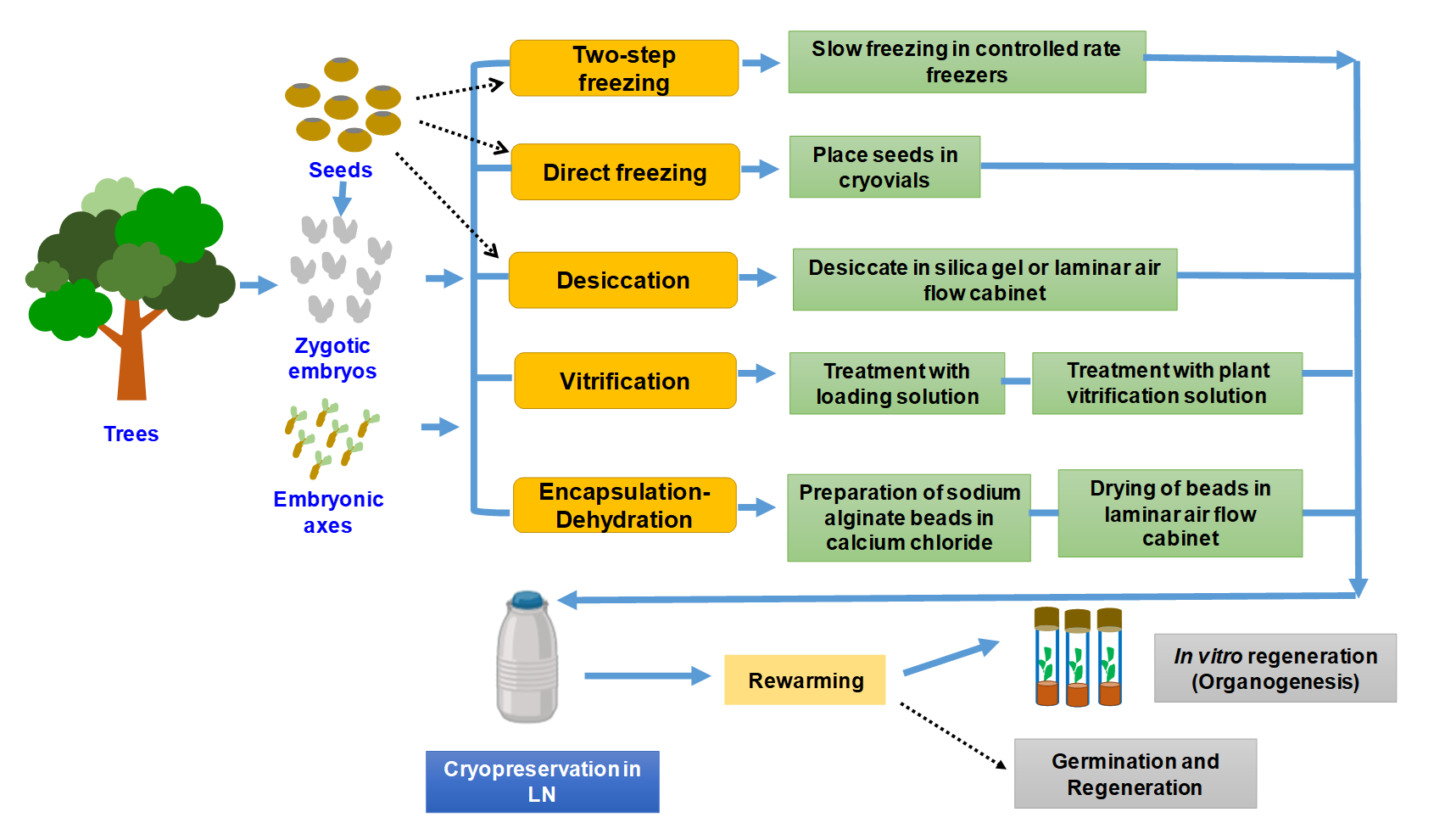
The post-thaw organogenesis of ZE and EA of trees is a pivotal phase in the cryopreservation process, where the ability of these tissues to regenerate and develop into viable plantlets is tested. The success of this regeneration largely depends on the composition of the basal media, plant growth regulators and conditions of the recovery medium used after thawing, affecting germination rates for different species (Figure 1, Table 1). Therefore, achieving high survival rates and effective organogenesis often requires empirical testing and fine-tuning of the recovery medium and environmental conditions to support the best possible growth outcomes.
The long-term viability of cryopreserved plant axes is a critical factor in assessing the success of cryopreservation techniques (Ballesteros and Pence, 2019). In the case of Aesculus hippocastanum, the study demonstrated that the axes maintained a remarkably high viability of 100% even after 23.4 years of storage in LN (Ballesteros and Pence, 2019). This indicates that the cryopreservation method used was highly effective in preserving the axes' ability to remain viable over an extended period. Furthermore, the viability of these axes showed no significant changes during subsequent drying or storage periods totalling 9.5 years in LN, suggesting that both the initial cryopreservation and the subsequent storage conditions were optimal for preserving the axes' viability. In contrast, Aesculus glabra axes displayed a notable decline in viability over time. After 21.6 years in storage, the viability dropped to 33%, which is a significant reduction compared to the 80% viability observed in freshly harvested axes. This decrease indicates deterioration in the axes' ability to remain viable over the extended storage period. However, when compared to other conditions, the decrease in viability of A. glabra was not statistically significant relative to axes that had been dried (with a viability of 70%) or those stored for 9.5 years in LN (with a viability of 75%).
Table 1. Comparative analysis of different cryotechniques and recovery media for the ex situ conservation of seeds, zygotic embryos (ZE) and embryonic axes (EA) in trees. Basal media: MS, Murashige and Skoog (1962); WPM, woody plant medium (Lloyd and McCown, 1981); Phytoregulators & additives: BA/BAP, 6-benzyladenine/6-Benzylaminopurine; KIN, Kinetin; IAA, indole-3-acetic acid; GA3, gibberellic acid; TDZ, thidiazuron; IAPhe, indole-acetyl-phenylalanine; AC, activated charcoal. Cryo solutions: PVS2, plant vitrification solution 2; LN, liquid nitrogen. Symbols: (-) indicates data not specified in the original source or control treatment.
|
Species |
Explant |
Cryopreservation technique |
Post-cryo germination medium |
Germination (%) |
Reference |
|
Astronium urundeuva |
Seeds |
Desiccation |
Blotting paper assay in transparent acrylic boxes |
69 |
|
|
Betula lenta |
Seeds |
Desiccation |
DKW + 10µmol/L TDZ or BAP |
12 |
|
|
Cedrela odorata |
Seeds |
Encapsulation/desiccation |
Pots assay |
75 |
|
|
Handroanthus impetiginosus |
Seeds |
Desiccation |
Filter paper assay |
77.5 |
|
|
Jatropha curcas |
Seeds |
Desiccation |
MS medium |
100 |
|
|
Parkia nitida |
Seeds |
Desiccation |
1/4 MS + 20g/L sucrose |
94 |
|
|
Swietenia mahagoni |
Seeds |
Desiccation |
Pots assay |
68 |
|
|
Aquilaria malaccensis |
ZE |
Desiccation |
MS + 4µM Kinetin |
23 |
|
|
Castanospermum australe |
ZE |
Flash drying |
MS |
40 |
|
|
Jatropha curcas |
ZE |
Desiccation |
MS medium |
100 |
|
|
Pinus elliottii var. elliottii x Pinus caribaea var. hondurensis |
ZE |
Desiccation |
MS + 0.5µM BA + 0.5µM TDZ |
86 |
|
|
Pinus radiata |
ZE |
Direct freezing |
½ modified Quoirin and Lepoivre medium + 5mg/L BA |
31.2–100 |
|
|
Strychnos gerrardii |
ZE |
Flash drying |
Full MS |
75 |
|
|
Syzygium maire |
ZE |
Metal-mesh vacuum infiltration vitrification |
WPM + 2mg/L zeatin + 1mg/L copper sulphate |
19 |
|
|
Acer platanoides |
EA |
Desiccation |
WPM |
65 |
|
|
Acer pseudoplatanus |
EA |
Desiccation |
WPM |
70 |
|
|
Acer saccharinum |
EA |
Two-step freezing |
WPM |
55 |
|
|
Aesculus hippocastanum |
EA |
Direct freezing |
MS+ 2mg/L BAP + 2mg/L IAPhe |
100 |
|
|
Aesculus glabra |
EA |
Direct freezing |
MS+ 2mg/L BAP + 2mg/L IAPhe |
33 |
|
|
Araucaria angustifolia |
EA |
Encapsulation-Dehydration followed by flash cooling or two-step freezing |
MS+ 3% AC + 0.929µM KIN + 11.40µM IAA |
0 |
|
|
Castanea sativa |
EA |
Desiccation |
MS (half-strength nitrates) + 0.5mg/L BA + 1ml/L Plant Preservative Mixture |
93–100 |
|
|
Juglans nigra |
EA |
Direct freezing |
MS+ 2mg/L BAP + 2mg/L IAPhe |
75–100 |
|
|
Nothapodytes nimmoniana |
EA |
Desiccation |
MS medium |
60 |
|
|
Parkia speciosa |
EA |
Vitrification (PVS2 90 min) |
MS +100mg/L myo-inositol |
55.5 |
|
|
Syzygium maire |
EA |
Metal-mesh vacuum infiltration vitrification (PVS2 20 min.) |
WPM macronutrients + MS micronutrients + 2mg/L Zeatin + 1mg/L copper sulphate |
19 |
Plumule tissue, part of the plant embryo situated within the seed, consists of the shoot apex (the apical dome) and the developing leaf primordia that give rise to the above-ground part of the plant, including the stem and leaves. Assy Bah and Engelmann (1992) found that, in coconut zygotic embryos cryopreserved by freezing, most embryonic cells were destroyed, except for those in the plumule, which comprises the apical dome and a few leaf primordia. The plumules are about 1mm in size, similar to immature zygotic embryos, which range from 0.1 to 0.3mm. The plumular tissue's small size, high concentration of regenerative meristematic cells, and strong regenerative capabilities contribute to its suitability for successful cryopreservation. This makes it an excellent explant for cryopreservation. Few successful cryopreservations of plumular explants were reported in Quercus robur (Chmielarz et al, 2011; Plitta et al, 2014) and Quercus petraea (Wasileńczyk et al, 2024), using encapsulation-dehydration and droplet-vitrification techniques. Detailed ultrastructural analysis by Alla-N’Nan et al (2014) provided insights into the cellular changes occurring during encapsulation-dehydration cryopreservation, enhancing our understanding of tissue integrity under cryopreservation conditions.
Cryopreservation of shoot tips
Shoot tips that include the meristematic dome and several leaf primordia are ideal for long-term conservation, as they contain a uniform population of small, actively dividing cells with high nucleo-cytoplasmic ratios and minimal vacuolation, which improve desiccation tolerance (Varghese et al, 2009). It possesses the remarkable ability to regenerate entire plants. Additional distinct advantages include their genetic stability and optimal size for processing. The small, compact nature of shoot tips, coupled with their uniform developmental stage, allows for more precise handling and treatment with cryoprotectants, which are essential for protecting cells from damage during the freezing process. Furthermore, shoot tips typically have lower water content than other plant tissues, reducing the risk of harmful ice crystal formation within cells, which can otherwise lead to cell rupture and decreased survival rates (Agrawal et al, 2024; Gowthami et al, 2024b).
Organogenesis is important both before and after cryopreservation of shoot tips, and this process is critical as it determines the ability of cryopreserved shoot tips to regenerate into healthy shoots and complete plants, confirming their viability and growth potential after being stored at ultra-low temperatures. Effective organogenesis ensures that the genetic integrity of the plant material is maintained, with the regenerated shoots reflecting the original genetic makeup and not suffering adverse effects from freezing and thawing. This capability directly influences recovery efficiency, allowing a higher percentage of cryopreserved material to develop into viable plants, which is crucial for large-scale propagation. Additionally, organogenesis facilitates the adaptation of regenerated shoots to standard growth conditions post-thaw, ensuring robust development and minimizing stress. Before cryopreservation, optimizing the conditions for multiplication of shoot tip donor plants – including selection of optimum medium with specific plant growth regulators and incubation temperature, pretreatment or preconditioning of shoot tip donor plants, shoot tip size and origin, preculture of shoot tips, cryotechnique, type and concentration of plant vitrification solutions – are essential for organogenesis. Following cryopreservation, where shoot tips are stored at ultra-low temperatures, the post-thaw recovery process becomes essential. The primary challenge is to restore the viability and regenerative potential of the cryopreserved shoot tips. Thawing must be handled with care to prevent thermal shock, and rehydration protocols are implemented to help the tissues recover from the dehydration experienced during freezing. The recovery medium used post-thaw often differs from pre-cryopreservation media, with adjustments made to support the recovery of the tissues and induce organogenesis. The presence of suitable plant growth regulators (PGRs), combined with optimal temperature and light conditions, continues to play a crucial role in this phase. The organogenesis process post-cryopreservation is influenced by the pre-cryopreservation factors and the effectiveness of the thawing and rehydration procedures, and the composition of the recovery medium. Representative examples of cryopreservation of shoot tips of trees are provided in Table 2 and Figure 2.
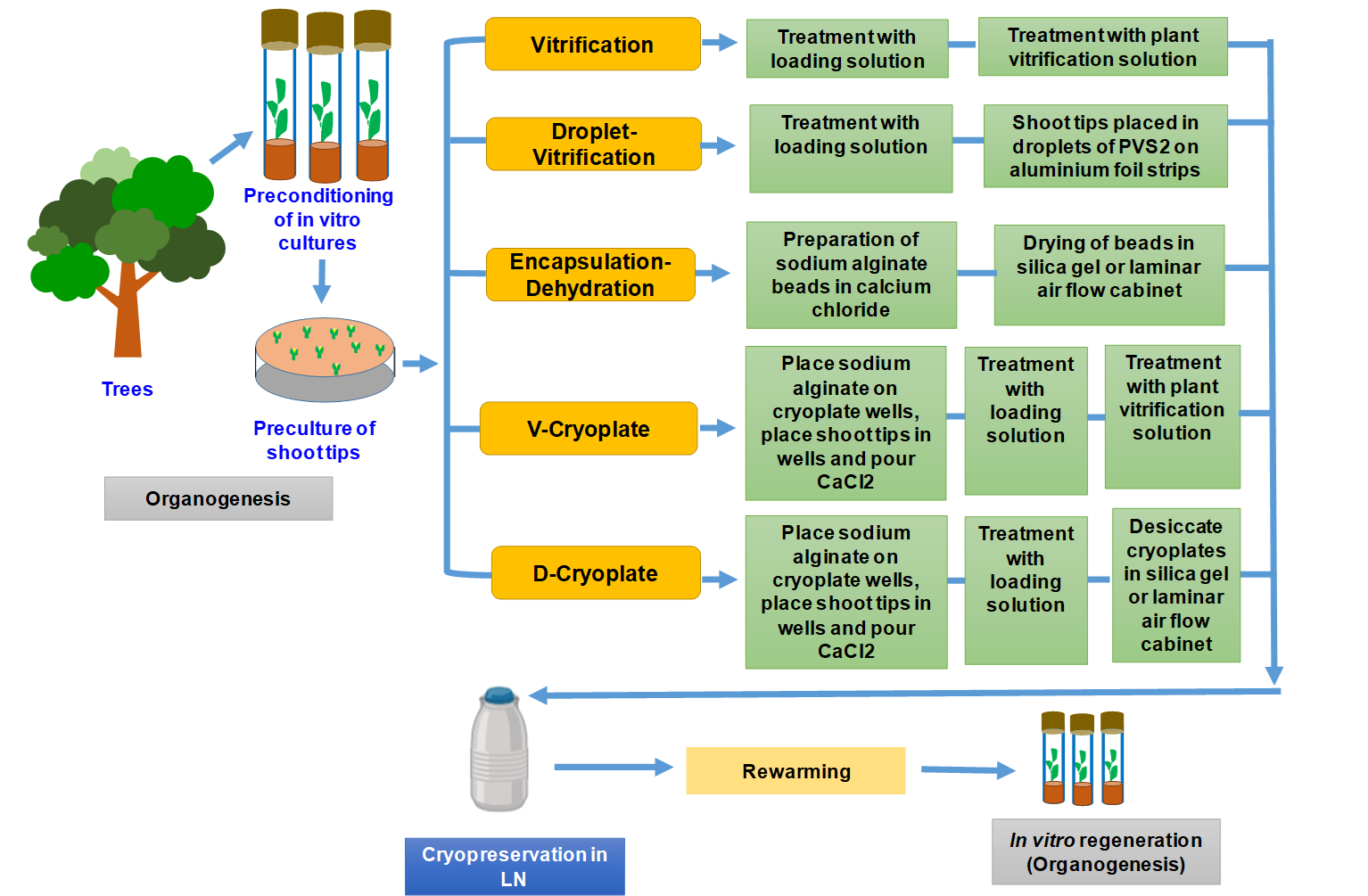
Table 2. Cryopreservation protocols for shoot tips of tree species: Preconditioning treatments, cryotechniques, and recovery efficiency. BA, N6-benzyladenine; PVS2, plant vitrification solution 2; GA3, gibberellic acid; IAA, indole-3-acetic acid; NAA, α-naphthaleneacetic acid; WPM, woody plant media; GD medium, Gresshoff and Doy medium (Gresshoff and Doy, 1972); US, unloading solution (basal media + 1.2 M sucrose); BAP, 6-benzylaminopurine; mVSL, modified vitrification solution L (20% glycerol + 5% sucrose + 25% ethylene glycol + 10% dimethyl sulfoxide (DMSO)); DKW, Driver and Kuniyuki basal media (Driver and Kuniyuki, 1984); VS A3, 37.5% glycerol, 22.5% sucrose, 15% ethylene glycol (EG), and 15% DMSO, w/v; KIN, kinetin; V, vitrification; DV, droplet-vitrification; ED, encapsualtion-dehydration; VCP, V cryoplate; DCP, D cryoplate.
|
Species |
Cryo technique |
Pregrowth media |
Preculture media |
Osmoprotection |
Dehydration |
Thawing |
Regrowth media |
% Regrowth/ survival |
Reference |
|
Alnus glutinosa |
V |
WPM + 0.5mg/L BA + 0.5mg/L IAA + 0.2mg/L zeatin for 6 week |
WPM + 0.2M sucrose for 2 days at 4°C |
2M glycerol + 0.4M sucrose for 20 min at 25°C |
50% PVS2 for 30 min at 0°C, and then placed in 100% PVS2, for 30 min at 0°C |
Rapid thawing in 0°C for 2 min and washed with US twice for 10 min at 25° C |
WPM + 0.5mg/L BA + 0.5mg/L IAA + 0.2mg/L Zeatin +20g/L glucose + 0.6% agar |
> 50 |
|
|
Castanea sativa |
V |
GD + 0.2µM BA |
GD + 0.2M sucrose for 2 days at 4°C |
LS for 20 min |
PVS2 for 60–120 min at 0°C |
Rapid thawing in 40°C for 2 min and then washed for 20 with US |
GD + 2.2µM BA + 2.9µM IAA+ 0.9µM Zeatin + 0.09M sucrose+ 0.7% agar |
63 |
|
|
Crateva nurvala |
V |
MS + 0.1mg/L BAP + 3% sucrose for 4 weeks |
MS + 0.4M sucrose for 16 h |
LS for 20 min at 25°C |
PVS2 for 40 min |
40°C for 2 min and washed with US for 20 min |
MS + 0.1mg/L BAP + 3% sucrose + 0.8% agar |
56.6 |
|
|
Garcinia mangostana |
V |
Not reported |
MS + 0.6M sucrose for 2 days |
Not reported |
PVS2 for 20 min at 0°C |
Not reported |
Not reported |
50 |
|
|
Hancornia speciosa |
V |
WPM + 2.0mg/L BAP + 0.09M sucrose + 0.7% agar |
WPM + 0.3M sucrose for 1 days |
LS for 20 min |
PVS2 for 60 min at 0°C |
39 ± 2°C for 2 min and washed with US for 15 min |
WPM + 2.0mg/L BAP +20ppm ascorbic acid + 0.09M sucrose + 0.7% agar |
> 70 |
|
|
Nephelium ramboutanake |
V |
MS + 1mg/L BAP |
MS + 0.5 M sucrose for 2 days |
LS + 0.28mM vitamin C for 20 min at 25°C |
PVS2 for 15 min at 0°C |
Rapid thawing at 38 ± 2°C for 40–45s followed by rinsed with US for 5 min at 25°C |
MS + 1mg/L BAP + 0.28mM vitamin C |
3.33 |
|
|
Pinus kesiya |
V |
MS + 15g/L sucrose + 0.8% agar |
½MS + 0.1M sucrose for 11 days followed by 0.4 and 0.7M sucrose treatment for 1 day each |
Not reported |
mVSL for 10 min at 25 ± 1°C |
40°C for 1–2 min and washed with US for 20 |
MS + 4.0mg/L BA + 3% sucrose |
76 |
|
|
Trichilia emetica |
V |
MS medium for 2 to 3 months |
MS + 0.7M sucrose for 4 days |
LS for 15 min |
50% PVS2 solution for 5 min followed by 100% PVS2 for 15 min |
40°C for 1–2 min and washed with US for 20 min at 25°C |
WPM + 0.05mg/L BAP + 0.1mg/L GA3 |
55 |
|
|
Ulmus americana |
V |
Not reported |
Preculture medium with 0.1–0.5μM melatonin for 24 hr |
Not reported |
PVS2 for 10 min |
Not reported |
Recovery medium supplemented with 0.1–0.5μm melatonin |
100 |
|
|
Betula lenta |
DV |
DKW + 5µM BA + 1.0µM GA3 for 2 months |
DKW + 0.3M sucrose for 24 h |
LS for 20 min at room temp. |
VS A3 for 60 min. at 0°C |
Rapid thawing in US reduced to 0.8M sucrose |
DKW + 5µM BA + 1.0µM GA3 |
52 |
|
|
Eucalyptus spp. |
DV |
MS + 0.04 mg/L BA + 1% sucrose + 0.45% agar for 4–6 week |
MS + 0.25M sucrose |
Not reported |
PVS2 for 30 min |
Rapid thawing in washing solution (MS + 1.0M sucrose) |
MS + 0.04mg/L BA + 1% sucrose + 0.45% agar |
38–85 |
|
|
Hancornia speciosa |
DV |
WPM + 2.0mg/L BAP + 0.09M sucrose + 0.7% agar |
WPM + 0.3M sucrose for 1 day |
LS for 20 min at room temperature |
PVS2 for 30 min at 0°C |
Rapid thawing in US for 15 min |
WPM + 2.0mg/L BAP +20ppm ascorbic acid + 0.09M sucrose + 0.7% agar |
>70 |
|
|
Malus domestica |
DV |
MS + 1.35µM BA + 0.25µM IBA |
Not reported |
LS for 20 min |
PVS2 for 60 min |
Rapid thawing in US for 15 min |
MS +1.35µM BA + 0.25µM IBA |
70 |
|
|
Buxus hyrcana |
ED |
MS + 0.50mg/L BAP + 1.50mg/L NAA |
Shoot tip not precultured |
Not reported |
Air dehydration in laminar airflow for 60 min |
40°C for 2 min |
MS + 0.50mg/L BAP + 1.50mg/L NAA |
60 |
|
|
Malus domestica |
ED |
MS + 0.5mg/L BA + 0.25mg/L IBA |
MS + 0.75M sucrose for 24 h |
Not reported |
Silica gel dehydration for 14 hrs |
Beads direct transfer to recovery media |
MS + 1.35µM BA + 0.25µM IBA |
72 |
|
|
Malus spp. |
ED |
MS + 0.25mg/L BA + 0.01mg/L IBA |
MS + 0.75M sucrose for 5 days |
Not reported |
Air dehydration in laminar airflow for 6 hrs |
Rapid thawing in 38°C for 2 min |
MS + 0.25mg/L BA + 0.01mg/L IBA |
57 |
|
|
Malus domestica var. Gala |
ED |
MS + 0.25mg/L BA + 0.01mg/L IBA |
MS + 0.5M sucrose for 7 days |
Not reported |
Air dehydration in laminar airflow for 6 hrs |
Rapid thawing in 38°C for 2 min |
MS + 0.25mg/L BA + 0.01mg/L IBA |
75 |
|
|
Prunus armeniaca |
ED |
WPM + 4mg/L BA + 0.5mg/L 2iP |
WPM + 0.75M sucrose for 2 days |
Not reported |
Air dehydration in laminar airflow for 2 hrs |
Rapid thawing at 38°C for 2-3 min |
WPM + 1mg/L zeatin + 0.1mg/L IAA |
71 |
|
|
Hovenia dulcis |
VCP |
MS + 0.09M sucrose + 0.8% agar |
MS + 0.3M sucrose for 24 h at 26 ± 2°C in darkness |
LS for 20 min |
PVS2 for 120 min |
Rapid thawing in US for 15 min |
MS + 0.5mg/l BA + 0.5mg/l KIN + 0.09M sucrose + 0.8% agar |
62 |
|
|
Prunus cerasifera |
VCP |
MS + 1mg/L BA + 0.1mg/L IBA + 0.1mg/L GA3 |
MS + 0.3M sucrose for day at 23ºC in dark |
LS for 30 min at room temperature |
PVS containing 37.5% (w/v) glycerol, 15% (w/v) DMS, 15% (w/v) EG and 22.5% (w/v) sucrose 30 min at room temperature |
Rapid thawing in MS + 0.8M sucrose for 30 min at room temperature |
MS + 1mg/L BA + 0. mg/L IBA + 0.1mg/L GA3 |
44–56 |
|
|
Diospyros kaki |
DCP |
Not reported |
1/2MS + 0.3M sucrose |
LS for 30 min at 25°C |
Air dehydration in laminar airflow for 30 min |
Rapid thawing in 1/2MS + 1M sucrose solution for 15 min at 25°C |
1/2MS + 1mg/L BA |
84 |
|
|
Prunus cerasifera |
DCP |
MS + 1mg/L BA + 0.1mg/L IBA + 0.1mg/L GA3 |
MS + 0.3M sucrose for day at 23°C in dark |
LS 30 min at room temperature |
Air dehydration in laminar airflow for 2 hrs |
Rapid thawing in MS + 0.8M sucrose for 30 min at RT |
MS + 1mg/L BA + 0.1mg/L IBA + 0.1mg/L GA3 |
57–77 |
Below are some critical factors to consider during the cryopreservation of tree species using shoot tips:
Pretreatment of donor plants
Pretreating donor plants with cold acclimation or exposure to high sugar levels significantly enhances their physiological resilience to the stresses encountered during cryopreservation. Cold acclimation involves gradually lowering the temperature to which plants are exposed, a process that activates stress-responsive genes and strengthens cellular membranes. This pretreatment improves the plant's capacity to endure the harsh conditions of freezing and dehydration by stabilizing cell membranes and enhancing the management of intracellular water content. Cold acclimation has been widely used for temperate crops that naturally possess the capacity to harden to low temperatures (Popova and Kim, 2026). Cold acclimation of shoot cultures in a standard laboratory refrigerator (4°C) for 7 or 14 days resulted in significantly higher regrowth in Ulmus americana (Uchendu et al, 2013). Another approach to obtain cold hardiness is exposure to high levels of sucrose before cryopreservation, which induces osmotic adjustment, reduces intracellular water content and minimizes the risk of ice crystal formation within cells. Sucrose promotes the production of various substances, including proline, glycine betaine, glycerol, and polyamines, which exert both colligative and non-colligative effects (Hirsh, 1987; Antony et al, 2013), strengthen cellular structures and improve membrane stability. The inclusion of 0.1µM melatonin at two key stages in the cryopreservation process proved effective for shoot tips of U. americana (Uchendu et al, 2013). Melatonin's role at these critical points likely improves the stress tolerance and recovery of the explants by influencing various physiological and biochemical pathways, thus promoting better outcomes in cryopreservation procedures.
Size of explants
The size of excised shoot tips significantly impacts the effectiveness of cryoprotection methods. Typically, shoot tips between 1 and 3mm are used, depending on the species (Bettoni et al, 2021). Smaller explants facilitate better uptake of cryoprotectants and efficient water removal, enhancing cryopreservation success. However, very small shoot tips are prone to mechanical damage and loss during handling. Conversely, larger shoot tips can suffer from uneven dehydration and ice crystal formation, leading to cellular damage and poor regrowth. Thus, selecting the appropriate size of shoot tips is crucial for optimizing cryoprotection and recovery. Depending on the species, different sizes of shoot tips are used, such as 0.5–0.8mm shoot tips in Trichilia emetica (Varghese et al, 2009) and 2.0–4.0mm shoot tips in U. americana (Uchendu et al, 2013). The survival, shoot regrowth and shoot length of smaller shoot tips (0.5–1.0mm) were significantly better than those of larger tips (2.0mm) in Castanea sativa (Vidal et al, 2005).
Genotype
The genotype of plant material plays a crucial role for the success of cryopreservation techniques and the efficiency of post-thaw recovery. Variations in genetic backgrounds among cultivars or genetic lines within a species can lead to differing responses to cryopreservation protocols, reflecting diverse characteristics such as age, physiological condition, explant size, and protocol specifics. Genotypic differences in shoot recovery varied from 37.5% to 54.4% in C. sativa (Vidal et al, 2005). Later, Vidal et al (2010) introduced a vitrification-based cryopreservation technique for 46 genotypes of in vitro-cultivated European chestnut. The efficiency of shoot recovery varied greatly, from 0% to 53%, underscoring the notable genotype-specific differences observed in C. sativa, emphasizing the need for genotype-specific optimization of cryopreservation protocols.
Preculture
Preculture treatment with sucrose is crucial for optimizing cryopreservation outcomes, significantly enhancing recovery rates of cryopreserved explants. Gradually increasing sucrose concentrations during pre-culture improves the survival and regrowth of shoot tips by optimizing cellular conditions and enhancing cryoprotective effects (Feng et al, 2013). Low sucrose concentrations act as a metabolic substrate supporting biochemical changes necessary for cryopreservation, while higher concentrations provide cryoprotection by stabilizing membranes and reducing freezing and thawing damage. High sucrose levels, similar to abscisic acid (ABA), improve cellular tolerance to desiccation through osmotic regulation and membrane stabilization. For instance, in C. sativa shoot tips pre-cultured in 0.1 to 0.4M sucrose showed high recovery, whereas 0.7M sucrose reduced recovery to 7.4% (Jorquera et al, 2004). Moreover, T. emetica shoot tips benefit from sucrose or sucrose-glycerol mixtures through osmotic dehydration and increased protective compounds (Varghese et al, 2009).
Plant vitrification solutions
PVS are essential for achieving a glass-like state that prevents ice formation and protects cellular integrity during cryopreservation. Among the most commonly used formulations are PVS2 and PVS3, which have proven effective in a variety of applications. The success of these solutions depends heavily on optimizing exposure duration and temperature to ensure adequate dehydration while avoiding cellular damage. The stepwise PVS2 exposure method was explored because pretreating with a lower PVS2 concentration can mitigate toxicity before using the full concentration. In Garcinia mangostana, shoot tips dehydrated with 50% PVS2 for 15 minutes and then exposed to full-concentration PVS2 for 10 minutes had higher survival rates (39.2 ± 10.1%) than other treatments (Ibrahim and Normah, 2013). Also, PVS2 dehydration at a lower temperature (0°C) was shown to be more favourable compared with a higher PVS2 temperature (25°C) (Ibrahim and Normah, 2013). This result may be due to restricted water molecule mobility at low temperatures, which helps prevent ice crystal formation. Conversely, at 25°C, PVS2 penetrates cell membranes more quickly, potentially causing toxic effects or excessive dehydration of the shoot tips (Gowthami et al, 2023).
Regrowth medium
Cryopreservation often results in significant cellular damage, necessitating an optimal recovery environment to swiftly address reversible damage, restore normal cell function, and promote tissue proliferation. This process is energy-intensive and requires several key conditions: minimizing stress to avoid additional damage, removing toxins such as CPA residues and byproducts from damaged cells, providing nutrients due to potential disruption in cell connections, supporting repair mechanisms for cellular structures and managing ROS accumulation, supplying appropriate carbohydrate sources for energy, and promoting morphogenic responses like regrowth, embryo development, or new root formation from propagules (Popova et al, 2023). Post-culture conditions after cryostorage are crucial for the successful recovery of cryopreserved samples. For instance, in C. sativa, a recovery medium supplemented with 0.5mg/L BA and 0.5mg/L IAA was used as regrowth medium (Vidal et al, 2010; Jorquera et al, 2004). Rathwell et al (2016) found that GA3 at 0.35mg/L was superior for plant regeneration from both cryoprotected and cryopreserved Betula lenta shoot tips compared to other treatments. U. americana shoot tips recovered well with GA3 and BA (Uchendu et al, 2013), while BA alone was effective for other Ulmus species (Harvengt et al, 2004).
Embryogenic explants
Cryopreservation techniques enable the preservation of somatic embryogenic explants, typically in clumps or clusters in tree species. Somatic embryos, whether appearing as clumps or clusters, are stages of development ranging from loosely organized groups of cells to fully developed embryos. These embryos can vary in their degree of differentiation, with some still resembling the initial undifferentiated cells while others have matured into more recognizable embryonic forms. Factors such as age, physiological condition, and size of these explants are critical considerations. Using young embryogenic cultures for isolating initial explants is crucial for successfully recovering materials after storage in LN. Additionally, selecting the appropriate developmental stage of somatic embryos is essential; typically, undifferentiated or early developmental stages are preferred (Engelmann, 2011). These considerations are pivotal in optimizing the cryopreservation process to ensure the viability and genetic integrity of stored plant materials. Cryopreservation of plant material derived from somatic embryogenesis using LN is widely utilized to preserve embryogenic potential and minimize the risk of genetic drift. This technique effectively halts all biological activities, thereby maintaining the viability and regenerative capacity of the tissues over extended periods (Hazubska-Przybył et al, 2013). Nevertheless, some studies have indicated that cryopreservation might cause genetic alterations in these types of cultures (Krajňáková et al, 2011). Different techniques used for cryopreservation of somatic embryos of tree species are two-step freezing, desiccation, vitrification, droplet-vitrification, and encapsulation-dehydration methods (Figure 3, Table 3).
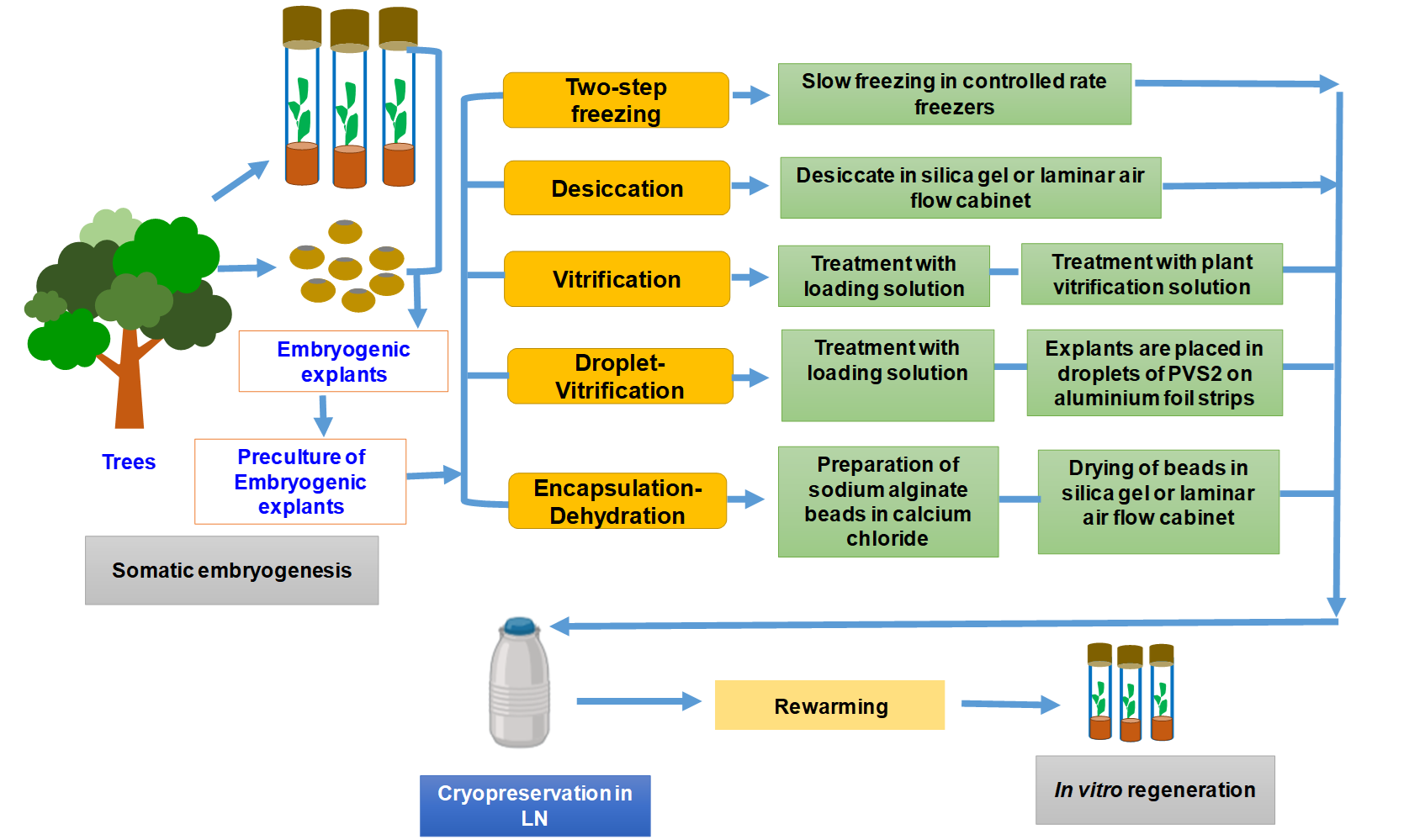
Table 3. Cryopreservation protocols for somatic embryogenic explants of tree species. DMSO, dimethyl sulfoxide; PEG, polyethylene glycol; PVS, plant vitrification solution; WPM, woody plant media; RT, room temperature; WC, water content; US, unloading solution; MS, murashige and skoog medium.
|
Species |
Explant type |
Cryotechnique |
Preconditioning/ Preculture treatment |
Dehydration/Cryoprotection |
Thawing |
% Regrowth/ survival/recovery |
Reference |
|
Castanea sativa |
6-8mg clumps of globular or heart-shaped secondary embryos |
Desiccation |
Proliferation medium with 0.3M sucrose for 3 days followed by 0.7M sucrose for 4 days (devoid of glutamine and plant growth regulators) |
Desiccation in the air flow of a laminar flow cabinet to water contents of 25% |
40°C water bath for 2 min |
33% |
|
|
Quercus robur |
4–6mg clumps (1.0–1.5mm) of globular or heart-shaped secondary embryos |
Desiccation |
Proliferation medium with 0.3M sucrose for 3 days followed by 0.7M sucrose for 4 days |
Desiccation in the airflow of a laminar flow cabinet to water contents of 24–34%. |
40°C water bath for 2 min |
56% |
|
|
Abies alba |
Embryogenic tissue |
Two-step freezing |
Proliferation medium with 0.5M sorbital for 24 h |
DMSO 5% Mr Frosty® with a cooling rate of 1°C/min to -40°C |
40°C water bath for 3 min |
91.66–100% |
|
|
Abies pinsapo |
Embryogenic tissue |
Slow cooling |
Proliferation medium with 0.2M sucrose for 24 h, and with 0.4M sucrose for an additional 24 h |
PGD I (10% PEG6000 +10% glucose + 10% DMSO) Mr. Frosty: 1°C/min in an -80°C ultra-freezer until they reached -40°C. |
40°C water bath |
100% |
|
|
Larix olgensis |
Embryogenic callus |
Slow freezing |
24 h stepwise preculture on medium containing 0.2 and 0.4mol/L sucrose |
0.4mol/L sucrose + 2.5% DMSO + 10% PEG6000 cooling rate of -1°C/min until reaching -80 °C |
37°C water bath |
100% |
|
|
Picea abies |
Embryogenic tissue |
Two-step freezing |
Semi-solid medium with increasing sucrose concentration (0.1M for 24 h; 0.2M for another 24 h) |
PGD mixture (composed of PEG6000, glucose, and DMSO 10% w/v each) Programmable freezer with a slow cooling rate (0.17°C/min). |
37°C water bath for 2 min |
87% |
|
|
Pinus massoniana |
Embryogenic callus |
Two-step freezing |
Proliferation medium with 0.5mol/L sucrose for 48 h |
5% DMSO + 80% 0.5mol/L sucrose+15% PEG4000 Programmed cooling: equilibrate at 0°C for 10 min, cool at 1°C/min to -80°C, then hold at -80°C for 30 min. |
32°C water bath |
20% |
|
|
Picea pungens |
Embryogenic tissue |
Two-step freezing |
0.4mol/L sorbitol (24 h) |
DMSO 5% Nalgene® cooling box of 4 °C gradually reduced to -80 °C, kept for 2 h |
37°C water bath for 1 min |
High maturation efficiencies (1030E/gFM) |
|
|
Taxodium hybrid |
Embryogenic callus |
Slow cooling |
0.5M sucrose for 36 h |
10% DMSO Programmed cooling at a rate of 1 °C per minute until reaching -80 °C |
35°C water bath for 2 min |
Proliferation rate of 6.39 |
|
|
Castanea sativa |
6–8mg clumps of globular or heart-shaped secondary embryos |
Vitrification |
Proliferation medium with 0.3M sucrose for 3 days (devoid of glutamine and plant growth regulators) |
PVS2 at 0 °C for 60 min |
40°C water bath for 2 min |
68% |
|
|
Euterpe edulis |
Somatic embryos |
Vitrification |
Osmotic conditioning: 30g/L (30 days) → 60g/L (15 days) → 90g/L (15 days), |
Modified PVS3 + DMSO 15% |
40°C water bath for 2 min |
69.50% |
|
|
Fraxinus mandshurica |
Embryogenic callus |
Vitrification |
WPM + 0.5mol/L sucrose for 3 d, followed by loading solution for 60 min |
PVS2 at RT for 50 min |
40°C water bath for 2 min |
> 60% |
|
|
Kalopanax septemlobus |
Embryogenic callus |
Vitrification |
Precultured in liquid MS with progressively increasing sucrose 0.3 → 0.5 → 0.7M sucrose for 17 → 3 → 3 h |
Loading solution for 20 min; Vitrification solution: 33.3% glycerol + 13.3% DMSO + 13.3% ethylene glycol + 20.1% sucrose for 40 min at 0°C |
Water bath at 37°C for 30 seconds |
> 99% |
|
|
Mangifera indica |
Embryogenic masses |
Vitrification |
Solid medium containing 0.5M sorbitol for 24 h |
PVS3 for 20 min |
Water bath at 25°C for 2–3 min |
94.3% |
|
|
Picea mariana |
Embryogenic masses |
Vitrification |
Semi-solid medium containing 0.8M sorbitol for 48 h |
PVS2 at 0 °C for 30 min |
40°C water bath |
0–66.7% |
|
|
Quercus ilex |
Clusters of globular secondary embryos |
Vitrification |
Gelled basal medium + 0.3M sucrose for 3 days |
PVS2 at RT for 30 min |
Water bath at 42°C for 2 min |
80% |
|
|
Quercus robur |
4–6 mg clumps (1.0–1.5mm) of globular or heart-shaped secondary embryos |
Vitrification |
MS + 0.3M sucrose for 3 days |
PVS2 at RT for 60 min |
40°C water bath for 2 min |
70–90% |
|
|
Quercus suber |
2–4mg (1.5–2.5mm) clumps of globular secondary embryos |
Vitrification |
MS + 0.3M sucrose for 3 days |
PVS2 at 0 °C for 60 min |
40°C water bath for 2 min |
88–93% |
|
|
Euterpe edulis |
Somatic embryos |
Droplet-vitrification |
Osmotic conditioning: 30g/L (30 days) → 60g/L (15 days) → 90g/L (15 days) |
Modified PVS3 + DMSO 15% |
No thawing direct rewarmimg in US |
67.50% |
|
|
Kalopanax septemlobus |
Embryogenic callus |
Droplet-vitrification |
Precultured in liquid MS with progressively increasing sucrose 0.3 → 0.5 → 0.7M sucrose for 17 → 3 → 3 h |
Loading solution for 20 min; Vitrification solution: 33.3% glycerol + 13.3% DMSO + 13.3% ethylene glycol + 20.1% sucrose for 40 min at 0°C |
No thawing direct rewarming in US |
94.2% |
|
|
Olea europaea |
Somatic embryos |
Droplet- vitrification |
Olive cyclic embryogenesis medium with 0.2M sucrose for 28 days |
Loading solution for 20 min PVS2 for 30 min at 0º C |
No thawing direct rewarming in US |
90% |
|
|
Quercus suber |
Somatic embryos |
Encapsulation-Dehydration |
Encapsulation beads precultured in 0.7M sucrose for 3 days |
Desiccation of beads in the airflow of a laminar flow cabinet to 25–35% WC |
Water bath at 38°C for 2 min |
90% |
Here are some critical factors to consider during the cryopreservation of tree species using embryogenic explants:
Selection of explant
The choice of explant is crucial for successful cryopreservation. A range of embryogenic explants, including embryogenic callus, embryogenic masses, embryogenic tissues, embryogenic cell suspensions, proembryogenic masses, nodular embryogenic structures, polyembryoids, and clusters of somatic embryos, are used for cryopreservation (Ballesteros et al, 2024). The success is notably affected by their developmental stage, with earlier stages generally performing better. In Quercus spp., for instance, nodular embryogenic structures demonstrated greater resilience to cryostorage in LN compared to more differentiated cotyledonary embryos (Martínez et al, 2022). Similarly, in Quercus suber, the recovery rates varied significantly using globular, early torpedo, and cotyledonary embryos from two different embryogenic lines for cryopreservation (Valladares et al, 2004). Globular embryos achieved the highest recovery percentage with one embryogenic line, but the lowest recovery with the other line.
Preculture and cryoprotection
Preculture of explants on media containing sugars or sugar alcohols is typically used to subject the tissues to mild osmotic stress, which triggers adaptive responses that enhance desiccation tolerance, such as increased levels of ABA and proteins associated with late embryogenesis (Charoensub et al, 1999). In Q. suber (Valladares et al, 2004) and Q. ilex (Barra-Jiménez et al, 2015), preculturing on 0.3M sucrose medium was found suitable.
Embryogenic masses of Picea mariana achieved the highest survival rates of 50 to 67% by preculturing on semi-solid medium with 0.8M sorbitol for 48 hours, followed by a 30-minute incubation at 0°C in modified cryoprotective agent PVS2 after cryopreservation (Touchell et al, 2002). In Picea abies, the addition of ABA to sucrose-containing preculture medium improved tolerance to LN storage, resulting in better regrowth and a higher yield of mature somatic embryos in comparison to preculture with sucrose alone (Hazubska-Przybył et al, 2013). This combination significantly enhanced both desiccation and LN storage tolerance, leading to more somatic embryos reaching the cotyledonary stage. Combining ABA with sugars in preculture media induces beneficial cellular changes, such as reduced cell size and increased cytosolic density, enhancing cryotolerance.
The reaction to dehydration caused by vitrification solutions can differ significantly across species and even among cultivars of the same species. Assessing each species' or cultivar's sensitivity to this dehydration is a crucial initial step in developing an optimized vitrification protocol. Exposure to PVS2 for up to 120 minutes resulted in no significant decrease in embryogenic levels in Q. suber, which typically remained above 95% (Valladares et al, 2004). In C. sativa cultures, embryogenesis efficiency improved from 33 to 68% post-cryopreservation with a 3-day preculture on high-sucrose medium followed by 60 minutes of PVS2 treatment before storage (Corredoira et al, 2004). Q. ilex embryogenic lines had 80% growth resumption after cryopreservation following a 0.3M sucrose pretreatment and 30 minutes of PVS2 treatment (Barra-Jiménez et al, 2015).
Dormant buds
Dormant buds from field-grown trees are highly valued for conserving genetic resources in vegetatively propagated plants due to their superior genetic stability compared to other explants like individual cells or embryogenic tissues (Zhang et al, 2025). Cryopreservation of dormant buds takes advantage of their inherent cold-hardiness, enabling them to endure ultra-low temperatures during storage without the need for cryoprotectants, provided they receive proper pre-treatment (Stushnoff, 1991). Their quiescent state during winter reduces metabolic activity and stabilizes genetic material, making them ideal for cryopreservation. Research by Sakai (1960) and Forsline et al (1998) demonstrated that pre-cooled, dried twigs can survive storage in LN, enhancing survival rates. Cryopreservation of dormant buds is cost-effective and simpler than traditional methods involving in vitro-grown shoots (Tanner et al, 2021). This technique requires minimal pre-treatment, offers faster recovery, and is broadly applicable to various plant species. Viability of cryopreserved dormant buds is assessed through methods such as grafting, visual scoring, in vitro recovery, direct rooting, and chemical viability testing with 2, 3, 5-triphenyl tetrazolium chloride (TTC). Cryopreservation of dormant winter buds is a well-established technique for preserving tree species such as Betula sp. (Endoh et al, 2023), Carya illinoinensis (Morrissey and Gustafson, 1990), Castanea ozarkensis (Jenderek et al, 2024), Diospyros spp. (Zhang and Luo, 2004; Matsumoto et al, 2004; Ai and Luo, 2004; Benelli et al, 2008), Salix sp. (Towill and Widrlechner, 2004; Jenderek et al, 2013; Bonnart et al, 2014), Ulmus sp. (Harvengt et al, 2004; Välimäki et al, 2022), and Populus trichocarpa (Bonnart et al, 2014).
Conclusion and future prospects
The conservation of trees has become increasingly urgent due to escalating threats such as deforestation, habitat destruction and climate change. Cryopreservation stands out as a promising solution by allowing genetic material to be stored at ultra-low temperatures, effectively pausing biological processes. This method is particularly advantageous for trees with recalcitrant seeds or those that are difficult to propagate, thus supporting the preservation of genetic diversity. Nonetheless, the effective application of cryopreservation encounters several challenges, including the need for species-specific protocol development, substantial infrastructure costs, and specialized expertise.
To advance the field, ongoing research is vital for improving cryopreservation techniques and developing more cost-effective, scalable solutions. Future advancements could include the creation of more adaptable protocols for organogenesis, somatic embryogenesis and cryopreservation, which would be applicable to a broader range of species, including those with complex or poorly understood reproductive biology. Progress in cryobiology, the development of better cryoprotectants, and the use of automated systems may address some of the current limitations. Collaboration among researchers, conservationists and policymakers will be crucial to overcoming these challenges and broadening the implementation of cryopreservation.
By tackling these issues and leveraging technological innovations, we can more effectively preserve the genetic diversity of trees. This will ensure their long-term survival and sustain the vital ecosystem services and resources they provide, which are essential for both biodiversity and human well-being.
Author contributions
Gowthami R: Planned, designed the manuscript layout and prepared the draft; Subhash Chander: Compiled and edited the information, prepared tables. GM Puneeth: Prepared tables, formatted references. Anju Mahendru-Singh: Critically edited the manuscript and provided inputs; Marcos Edel Martínez-Montero: Critically edited the manuscript and provided inputs; PE Rajasekharan: Critically edited the manuscript and provided inputs
Conflict of interest statement
On behalf of all authors, the corresponding author states that there is no conflict of interest.
References
Agrawal, A., Gowthami, R., Chander, S., and Srivastava, V. (2022). Sustainability of in vitro genebanks and cryogenebanks. Indian J Plant Genet Resour 35, 180–184. http://dx.doi.org/10.5958/0976-1926.2022.00065.1
Agrawal, A., Gowthami, R., Chander, S., Srivastava, V., Shankar, M., and Deepak, D. A. (2024). Biotechnological Tools for Conservation of Plant Genetic Diversity. In Sustainable Utilization and Conservation of Plant Genetic Diversity; Al-Khayri, J. M., Jain, S. M., Penna, S., Eds.; Springer: Singapore, Sustainable Development and Biodiversity 35, 711–752. https://doi.org/10.1007/978-981-99-5245-8_21
Ai, P. and Luo, Z. (2004). Cryopreservation of dormant vegetative buds and genetic stability analysis of regenerated plantlets in persimmon. Acta Hortic 685, 85–92. https://doi.org/10.17660/ActaHortic.2005.685.8
Alla-N’Nan, O., Tiécoura, K., Bi, S. G., Verdeil, J. L., and Malaurie, B. (2014). Ultrastructural changes during cryopreservation of plumules and embryos of coconut (Cocos nucifera L.). Int J Agron Agric Res 5, 103–115. ISSN 2223-7054.
Antony, J. J. J., Keng, C. L., Mahmood, M., and Subramaniam, S. (2013). Effects of ascorbic acid on PVS2 cryopreservation of Dendrobium Bobby Messina’s PLBs supported with SEM analysis. Appl Biochem Biotechnol 171, 315–329. https://doi.org/10.1007/s12010-013-0369-x
Assy-Bah, B. and Engelmann, F. (1992). Cryopreservation of mature embryos of coconut (Cocos nucifera L.) and subsequent regeneration of plantlets. CryoLetters 13, 117–126.
Ayala, L.P. E, Luna, C.V., Brugnoli, E.A., Espasandin, F.D., Duarte, M.J., González, A.M., Gauchat, M.E., Moncaleán Guillén, P., and Sansberro, P.A. (2023). Cryopreservation of mature zygotic embryos, shoot bud regeneration, and field establishment of Pinus elliottii var. elliottii x Pinus caribaea var. hondurensis in vitro-derived plants. Trees 37(2),417-433. https://doi.org/10.1007/s00468-022-02359-0
Ballesteros, D. and Pence, V. C. (2019). Survival and growth of embryo axes of temperate trees after two decades of cryo-storage. Cryobiology 88, 110–113. https://doi.org/10.1016/j.cryobiol.2019.04.005
Ballesteros, D., Martínez, M. T., Sanchez-Romero, C., Montalban, I. A., Sales, E., Moncalean, P., Arrillaga, I., and Corredoira, E. (2024). Current Status of the cryopreservation of embryogenic material of woody species. Front Plant Sci 14, 1337152. https://doi.org/10.3389/fpls.2023.1337152
Ballesteros, D., Varghese, B., Berjak, P., and Pammenter, N.W. (2014). Uneven drying of zygotic embryos and embryonic axes of recalcitrant seeds: challenges and considerations for cryopreservation. Cryobiology 69(1), 100-109. http://dx.doi.org/10.1016/j.cryobiol.2014.05.010
Barra-Jiménez, A., Aronen, T. S., Alegre, J., and Toribio, M. (2015). Cryopreservation of embryogenic tissues from mature holm oak trees. Cryobiology 70, 217–225. https://doi.org/10.1016/j.cryobiol.2015.02.006
Beardmore, T. and Whittle, C. A. (2005). Induction of tolerance to desiccation and cryopreservation in silver maple (Acer saccharinum) embryonic axes. Tree Physiol.25, 965–972. https://doi.org/10.1093/treephys/25.8.965
Benelli, C., De Carlo, A., Giordani, E., Pecchioli, S., Bellini, E., and Kochanova, Z. (2008). Vitrification/one-step freezing procedure for cryopreservation of persimmon dormant buds. Acta Hortic 833, 163–168. https://doi.org/10.17660/ActaHortic.2009.833.26
Berjak, P., Pammenter, N. W., and Vertucci, C. (1992). Homoiohydrous (recalcitrant) seeds: developmental status, desiccation sensitivity and the state of water in axes of Landolphia kirkii Dyer. Planta 186, 249–261. https://doi.org/10.1007/BF00196255
Bettoni, J. C., Bonnart, R., and Volk, G. M. (2021). Challenges in implementing plant shoot tip cryopreservation technologies. Plant Cell Tissue Org Cult 144, 21–34. https://doi.org/10.1007/s11240-020-01846-x
BGCI (2021). State of the World’s Trees. Available online: https://www.bgci.org/wp/wp-content/uploads/2021/08/FINAL-GTAReportMedRes-1.pdf (accessed on 2021).
Bonnart, R., Waddell, J., Haiby, K., Widrlechner, M. P., and Volk, G. M. (2014). Cryopreservation of Populus trichocarpa and Salix dormant buds with recovery by grafting or direct rooting. CryoLetters 35, 507–515.
Bradaï, F., Almagro-Bastante, J., and Sánchez-Romero C. (2023). Effect of sucrose preculture and culture inoculum density on cryopreservation of olive somatic embryos. Scientia Horticulturae, 322:112385. https://doi.org/10.1016/j.scienta.2023.112385
Cabero-Moreno, L., Landeras-López, I., Bravo-Navas, M.V., and Sánchez-Romero, C. (2025). Induction of somatic embryogenesis and cryopreservation of Abies pinsapo Boiss. Frontiers Plant Science 16:1535113. https://doi.org/10.3389/fpls.2025.1535113
Campos, T.S., Pereira, V.M., El Merzougui, S., Beleski, D., Pérez, H.E., Pivetta, K.F.L., and Vendrame, W.A. (2024). Cryopreservation of Lavender Trumpet Tree (Handroanthus impetiginosus) Seeds. Horticulturae, 10(12), 1256. https://doi.org/10.3390/horticulturae10121256
Cao, X., Gao, F., Qin, C., Chen, S., Cai, J., Sun, C. et al, (2022). Optimizing somatic embryogenesis initiation, maturation and preculturing for cryopreservation in Picea pungens. Forests 13, 2097. https://doi.org/10.3390/f13122097
Charoensub, R., Phansiri, S., Sakai, A., and Yongmenitchai, W. (1999). Cryopreservation of Cassava In Vitro-grown shoot tips cooled to −196°C by vitrification. Cryoletters 20, 89–94.
Chen, T., Jia, X., Yu, C., Yin, Y., and Hua, J. A. (2024). Simple and efficient protocol for cryopreservation of Taxodium hybrid ‘zhongshanshan’ embryogenic callus. Plant Cell Tissue Organ Cult 156, 44. https://doi.org/10.1007/s11240-023-02667-4
Chmielarz, P., Michalak, M., Pałucka, M., and Wasileńczyk, U. (2011). Successful cryopreservation of Quercus robur plumules. Plant Cell Rep 30, 1405–1414. https://doi.org/10.1007/s00299-011-1049-3
Chua, S.P. and Normah, M.N. (2011). Effect of preculture, PVS2 and vitamin C on survival of recalcitrant Nephelium ramboutan-ake shoot tips after cryopreservation by vitrification. CryoLetters, 32(6), pp.506-515.
Condello, E., Caboni, E., André, E., Piette, B., Druart, P., Swennen, R., and Panis, B.(2011). Cryopreservation of apple in vitro axillary buds using droplet-vitrification. CryoLetters 32(2), 175-185.
Corredoira, E., San-José, M. C., Ballester, A., and Vieitez, A. M. (2004). Cryopreservation of zygotic embryo axes and somatic embryos of European chestnut. CryoLetters 25(1), 33-42.
Devi, S. D., Kumaria, S., and Das, M. C. (2019). Development of cryopreservation protocol for Aquilaria malaccensis Lam., a recalcitrant seeded tropical tree species. Cryoletters 40(1), 18-27.
Driver J.A. and Kuniyuki A.H. (1984). In vitro propagation of paradox walnut rootstock. HortScience, 19(4): 507–509.
Endoh, K., Hanaoka, S., Matsushita, M., Ubukata, M., and Yamada, H. (2023). Ex situ conservation of birch trees by cryopreservation of dormant buds adapted to subzero temperatures by extracellular freezing. New For 54, 515–523. https://doi.org/10.1007/s11056-022-09934-w
Engelmann, F. (2003). Cryopreservation techniques. In: Chaudhury, R., Pandey, R., Malik, S.K., and Mal, B. (eds) In vitro conservation and cryopreservation of tropical fruit species. IPGRI Office for South Asia, New Delhi, India/NBPGR, New Delhi, India. Pp. 145-154.
Engelmann, F. (2004). Plant cryopreservation: progress and prospects. In Vitro Cell Dev Plant 40, 427–433.https://doi.org/10.1079/IVP2004541.
Engelmann, F. (2011). Cryopreservation of embryos: An overview. In: Thorpe TA, Yeung EC (eds) Methods in Molecular Biology Plant Embryo Culture: Methods and Protocols, Springer: New York, 710, 155–183.
Engelmann, F., Arnao, M.T.G., Wu, Y., and Escobar, R. (2008). Development of Encapsulation Dehydration. In: Reed, B.M. (eds) Plant Cryopreservation: A Practical Guide. Springer, New York, NY. https://doi.org/10.1007/978-0-387-72276-4_4
Entensa, Y., González-Morales, A., Linares, C., Vázquez, J.G., Martínez-Montero, M.E., Zevallos-Bravo, B.E., Hajari, E., Höfer, M., Villalobos-Olivera, A., and Lorenzo, J.C. (2022). Cryopreservation of seeds of the highly valued tropical timber species Swietenia mahagoni. CryoLetters, 43(6), 341-348.
Fagundes, D.P., Costa, J.S., Simões, I.M., de Carvalho, S.W.S., de Araujo, C.P., Lima Dias, L.L., Alves, E., Werner, E.T., Schmildt, E.R., Khoddamzadeh, A.A. and Otoni, W.C. (2026). A comparison of two vitrification methods and the effect of dimethyl sulfoxide in vitrification solution for cryopreservation of Euterpe edulis Martius (Arecaceae). Plant Cell, Tissue and Organ Culture, 166, 15.
Feng, C.H., Cui, Z.H., Li, B.Q., Chen, L., Ma, Y.L., Zhao, Y.H. and Wang, Q.C. (2013). Duration of sucrose preculture is critical for shoot regrowth of in vitro-grown apple shoot-tips cryopreserved by encapsulation-dehydration. Plant Cell, Tissue and Organ Culture, 112(3), 369-378. https://doi.org/10.1007/s11240-012-0245-3
Fernandes, P., Rodriguez, E., Pinto, G., Roldan-Ruiz, I., De Loose, M., and Santos, C. (2008). Cryopreservation of Quercus suber somatic embryos by encapsulation-dehydration and evaluation of genetic stability. Tree Physiol 28, 1841–1850.https://doi.org/10.1093/treephys/28.12.1841
Forni, C., Braglia, R., Beninati, S., Lentini, A., Ronci, M., Urbani, A., Provenzano, B., Frattarelli, A., Tabolacci, C. and Damiano, C.(2010). Polyamine concentration, transglutaminase activity and changes in protein synthesis during cryopreservation of shoot tips of apple variety Annurca. CryoLetters 31(5), 413-425.
Forsline, P. L., Towill, L. E., Waddell, J. W., Stushnoff, C., Lamboy, W. F., and McFerson, J. R. (1998). Recovery and longevity of cryopreserved dormant apple buds. J Am Soc Hort Sci 123, 365–370. https://doi.org/10.21273/JASHS.123.3.365
Frizzo, C. and Quoirin, M. (2018). Viability of embryonic axes of Araucaria angustifolia after freezing using two cryopreservation methods. Braz J For Res 38, e201701498. https://doi.org/10.4336/2018.pfb.38e201701498
Funnekotter, B., Whiteley, S. E., Turner, S. R., Bunn, E. and Mancera, R. L. (2015). Evaluation of the new vacuum infiltration vitrification (VIV) cryopreservation technique for native Australian plant shoot tips. CryoLetters, 36(2), pp.104-113.
Gowthami, R., Martinez-Montero, M. E., and Rajasekharan, P. E. (2024a). Cryoconservation of Antiallergic Medicinal Plants: Techniques and Applications. In: Gantait, S., Majumder, J., and Sharangi, A. B. (eds) Biotechnology of Medicinal Plants with Antiallergy Properties Springer, Singapore, 611–634. https://doi.org/10.1007/978-981-97-1467-4_21
Gowthami, R., Rajashekaran, P. E., Martinez-Montero, M. E., Chander, S., Singh, A. M., Puneeth, G. M., Shankar, M., and Deepak, D. A. (2024b). In Vitro Techniques for Safeguarding Medicinal Plants with Antiallergic Properties. In: Gantait, S., Majumder, J., and Sharangi, A. B. (eds) Biotechnology of Medicinal Plants with Antiallergy Properties Springer, Singapore, 635–672. https://doi.org/10.1007/978-981-97-1467-4_22
Gowthami, R., Sharma, N., Chandra, R., Kurian, J. S., Malhotra, E. V., and Agrawal, A. (2023). Development of an improved and simple shoot tip cryoconservation protocol for cryobanking of Bacopa monnieri (L.) Wettst. Germplasm. In Vitro Cell Dev Biol-Plant 59, 744-756.https://doi.org/10.1007/s11627-023-10375-z
Gresshoff, P.M., and Doy, C.H. (1972). Development and differentiation of haploid Lycopersicon esculentum. Planta, 107:161–170.
Hargreaves, C., Grace, L., Maas, S. V., Reeves, C., Holden, G., Menzies, M., Kumar, S., and Foggo, M. (2004). Cryopreservation of Pinus radiata zygotic embryo cotyledons: Effect of storage duration on adventitious shoot formation and plant growth after 2 years in the field. Can J For Res 34(3), 600–608. https://doi.org/10.1139/x03-226
Harvengt, L., Meier-Dinkel, A., Dumas, E., and Collin, E. (2004). Establishment of a cryopreserved genebank of European elms. Can J For Res 34, 43–55. https://doi.org/10.1139/x03-193
Hazubska-Przybył, T., Chmielarz, P., Michalak, M., Dering, M., and Bojarczuk, K. (2013). Survival and genetic stability of Picea abies embryogenic cultures after cryopreservation using a pregrowth-dehydration method. Plant Cell Tissue Organ Cult 113, 303–313. https://doi.org/10.1007/s11240-012-0270-2.
Hirsh, A. G. (1987). Vitrification in plants as a natural form of cryoprotection. Cryobiology 24, 214–228. https://doi.org/10.1016/0011-2240(87)90024-1
Ibrahim, S. and Normah, M. N. (2013). The survival of in vitro shoot tips of Garcinia mangostana L. after cryopreservation by vitrification. Plant Growth Regul 70, 237–246. https://doi.org/10.1007/s10725-013-9795-6
Jenderek, M. M., Ambruzs, B., Tanner, J., Holman, G., Ledbetter, C., Postman, J., Ellis, D., and Leslie, C. (2013). Extending the dormant bud cryopreservation method to new tree species. Acta Hortic 1039, 133–136. https://doi.org/10.17660/ActaHortic.2014.1039.16
Jenderek, M. M., Yeater, K. M., and Thomas, A. L. (2024). Germplasm of Ozark chinquapin (Castanea ozarkensis Ashe) can be cryopreserved by dormant winter buds. Cryobiology 114, 104833. https://doi.org/10.1016/j.cryobiol.2023.104833
Jorquera, L., Vidal, N., Sánchez, C., and Vieitez, A. M. (2004). Optimizing conditions for successful plant regeneration from cryopreserved Castanea sativa shoot tips. Acta Hortic 693, 511–518. https://doi.org/10.17660/ActaHortic.2005.693.66
José, M. C. S., Valladares, S., Janeiro, L. V., and Corredoira, E. (2014). Cryopreservation of in vitro-grown shoot tips of Alnus glutinosa (L.) Gaertn. Acta Physiol Plant 36, 109–116. https://doi.org/10.1007/s11738-013-1391-x
Kalita, V., Choudhury, H., Kumaria, S., and Tandon, P. (2012). Vitrification-based cryopreservation of shoot-tips of Pinus kesiya Royle ex. Gord. CryoLetters 33, 58–68.
Kaviani, B. and Kulus, D. (2022). Cryopreservation of endangered ornamental plants and fruit crops from tropical and subtropical regions. Biology 11, 847. https://doi.org/10.3390/biology11060847
Kaviani, B. and Negahdar, N. (2017). Propagation, micropropagation and cryopreservation of Buxus hyrcana Pojark. An endangered ornamental shrub. South Afr J Bot 111, 326–335. https://doi.org/10.1016/j.sajb.2017.04.004
Kaviani, B., Safari-Motlagh, M. R., Padasht-Dehkaei, M. N., Darabi, A. H. & Rafizadeh, A. (2008). Cryopreservation of lily (Lilium ledebourii (Baker) Bioss.) germplasm by encapsulation-dehydration. International Journal of Botany, 4, 491–493.
Kaya, E., Alves, A., Rodrigues, L., Jenderek, M., Hernandez-Ellis, M., Ozudogru, A., and Ellis, D. (2013). Cryopreservation of Eucalyptus genetic resources. CryoLetters 34, 608–618.
Krajňáková, J., Sutela, S., Aronen, T., Gömöry, D., Vianello, A., and Häggman, H. (2011). Long-term cryopreservation of Greek fir embryogenic cell lines: Recovery, maturation and genetic fidelity. Cryobiology 63, 17–25. https://doi.org/10.1016/j.cryobiol.2011.04.004.
Kulus, D. and Zalewska, M. (2014). Cryopreservation as a tool used in long-term storage of ornamental species—A review. Scientia Horticulturae, 168, 88–107. https://doi.org/10.1016/j.scienta.2014.01.014
Li, B.Q., Feng, C.H., Hu, L.Y., Wang, M.R., Chen, L. and Wang, Q.C.(2014). Shoot regeneration and cryopreservation of shoot tips of apple (Malus) by encapsulation–dehydration. In Vitro Cellular & Developmental Biology-Plant, 50(3),357-368. https://doi.org/10.1007/s11627-014-9616-2
Liu, X., Liu, Y., Yu, X., Tretyakova, I. N., Nosov, A. M., Shen, H., and Yang, L. (2023). Improved Method for Cryopreservation of Embryogenic Callus of Fraxinus mandshurica Pupr. by Vitrification. Forests, 14(1), 28. https://doi.org/10.3390/f14010028
Lloyd, G., and McCown, B. (1981). Woody Plant Medium (WPM): A mineral nutrient formulation for microculture of woody plant species. HortScience, 16: 453.
Lusty, C., Guarino, L., Toll, J., & Lainoff, B. (2014). Genebanks: Past, present, and optimistic future. In N. K. Van Alfen (Ed.), Encyclopedia of agriculture and food systems Academic Press, 417–432 https://doi.org/10.1016/B978-0-444-52512-3.00016-4
Martínez, M. T., Ballester, A., and Vieitez, A. M. (2003). Cryopreservation of embryogenic cultures of Quercus robur using desiccation and vitrification procedures. Cryobiology 46, 182–189. https://doi.org/10.1016/s0011-2240(03)00024-5
Martínez, M. T., Suarez, S., Moncalean, P., and Corredoira, E. (2022). Cryopreservation of holm oak embryogenic cultures for long-term conservation and assessment of polyploid stability. Plants, 11(9), 1266. https://doi.org/10.3390/plants11091266
Maruyama, T.E., Tsuruta, M., and Mori, T. (2024). Effect of culture temperatures on the initial growth performance of seedlings germinated from cryostored seeds of a tropical tee Parkia nitida Miq. (Fabaceae, Mimosoideae). Seeds 3(3), 381-392. https://doi.org/10.3390/seeds3030027
Matsumoto, T., Niino, T., Shirata, K., Kurahashi, T., Matsumoto, S., Maki, S., and Itamura, H. (2004). Long-term conservation of Diospyros germplasm using dormant buds by a prefreezing method. Plant Biotechnol 21, 229–232. https://doi.org/10.5511/plantbiotechnology.21.229
Matsumoto, T., Yamamoto, S.I., Fukui, K., Rafique, T., Engelmann, F. and Niino, T., (2015). Cryopreservation of persimmon shoot tips from dormant buds using the D cryo-plate technique. The Horticulture Journal, 84(2), pp.106-110.
Morrissey, T. M. and Gustafson, W. A. (1990). The use of dormant-bud cryopreservation for long-term storage of pecan and walnut germplasm. HortScience 25, 1142c. https://doi.org/10.21273/HORTSCI.25.9.1142c
Murashige, T., and Skoog, F., (1962). A revised medium for rapid growth and bioassays with tobacco tissue cultures. Physiologia Plantarum, 15, 473–497. doi: https://doi.org/10.1111/j.1399-3054.1962.tb08052.x
Nagel, M., Pence, V., Ballesteros, D., Lambardi, M., Popova, E., and Panis, B. (2024). Plant cryopreservation: Principles, applications, and challenges of banking plant diversity at ultralow temperatures. Annu Rev Plant Biol 75, 797-824. https://doi.org/10.1146/annurev-arplant-070623-103551
Niino, T., Yamamoto, S. I., Fukui, K., Castillo Martinez, C. R., Arizaga, M. V., Matsumoto, T., Engelmann, F. (2013). Dehydration improves cryopreservation of mat rush (Juncus decipiens Nakai) basal stem buds on cryo-plates. CryoLetters 34, 549–560.
Normah, M.N., Makeen, A.M. (2008). Cryopreservation of Excised Embryos and Embryonic Axes. In: Reed, B.M. (eds) Plant Cryopreservation: A Practical Guide. Springer, New York, NY, 211–240 https://doi.org/10.1007/978-0-387-72276-4_10
Panis, B. (2019). Sixty years of plant cryopreservation: from freezing hardy mulberry twigs to establishing reference crop collections for future generations. Acta Hortic 1234, 1–8.https://doi.org/10.17660/ActaHortic.2019.1234.1
Panis, B., Nagel, M., and Van den Houwe, I. (2020). Challenges and prospects for the conservation of crop genetic resources in field genebanks, in vitro collections and/or in liquid nitrogen. Plants 9, 1634. https://doi.org/10.3390/plants9121634
Panis, B., Piette, B. M. A. G., and Swennen, R. (2005). Droplet vitrification of apical meristems: a cryopreservation protocol applicable to all Musaceae. Plant Sci 168, 45–55. https://doi.org/10.1016/j.plantsci.2004.07.022
Paula, J.C.B.D., Guariz, H.R., Ribeiro, W.A., Shimizu, G.D., Faria, R.T.D., and Oliveira, H.C.D. (2022). Cryopreservation of seeds of the Brazilian native species Aroeira-do-sertão (Astronium urundeuva M. Allemão Engl.). Rev Caatinga, 35(4), pp.915-924. https://doi.org/10.1590/1983-21252022v35n419rc
Pegg, D. E. (2007). Principles of cryopreservation. In: Day, J. G. and Stacey, G. N. (eds) Cryopreservation and freeze-drying protocols, book series: Methods in molecular biology, Humana Press, 39–75. https://doi.org/10.1007/978-1-59745-362-2_3
Pegg, D.E. (2002). The history and principles of cryopreservation. In: Seminars in reproductive medicine.Thieme Medical Publishers, Inc., New York, USA. 20, 05-13. https://doi.org/10.1055/s-2002-23515. PMID:11941530.
Pennycooke, J. C. and Towill, L. E. (2000). Cryopreservation of shoot tips from in vitro plants of sweet potato (Ipomoea batatas (L.) Lam.) by vitrification. Plant Cell Rep 19, 733–737. https://doi.org/10.1007/s002999900171
Plitta, B. P., Michalak, M., Naskręt-Barciszewska, M. Z., Barciszewski, J., and Chmielarz, P. (2014). DNA methylation of Quercus robur L. plumules following cryo-pretreatment and cryopreservation. Plant Cell Tissue Organ Cult 117, 31–37. https://doi.org/10.1007/s11240-013-0417-9
Polge, C., Smith, A.U., and Parkes, A.S. (1949). Revival of spermatozoa after vitrification and dehydration atlow temperatures. Nature 164, 666. https://doi.org/10.1038/164666a0
Popova, E. and Kim, H.H. (2026). Beyond the protocol: revisiting the critical role of donor plants in cryopreservation of economically important clonal crops. Plants 15(8):1221. https://doi.org/10.3390/plants15081221
Popova, E., Kulichenko, I., and Kim, H. H. (2023). Critical role of regrowth conditions in post-cryopreservation of in vitro plant germplasm. Biology 12, 542. https://doi.org/10.3390/biology12040542
Prada, J. A., Aguilar, M. E., Abdelnour-Esquivel, A., and Engelmann, F. (2015). Cryopreservation of seeds and embryos of Jatropha curcas L. Am J Plant Sci 6(1), 172–180. https://doi.org/10.4236/ajps.2015.61020
Pukacki, P.M., and Juszczyk, K. (2015). Desiccation sensitivity and cryopreservation of the embryonic axes of the seeds of two Acer species. Trees 29(2), 385-396. https://doi.org/10.1007/s00468-014-1118-7
Quatrano, R. S. (1968). Freeze-preservation of cultured flax cells utilizing dimethyl sulfoxide. Plant Physiol 43, 2057–2061. https://doi.org/10.1104/pp.43.12.2057
Radha, R. K., Decruse, S. W., and Krishnan, P. N. (2010). Cryopreservation of excised embryonic axes of Nothapodytes nimmoniana (Graham) Mebberly—A vulnerable medicinal tree Species of the Western Ghats. Indian J Biotechnol 9, 435–437.
Rathwell, R., Popova, E., Shukla, M. R., and Saxena, P. K. (2016). Development of cryopreservation methods for cherry birch (Betula lenta L.), an endangered tree species in Canada. Can J For Res 46, 1–9. https://doi.org/10.1139/cjfr-2016-0166
Saavedra, A. M., De Castro, T. C., da Silva Cordeiro, L., Athayde, T., Albarello, N., and Simões-Gurgel, C. (2021). In vitro propagation and cryopreservation of the medicinal species Hovenia dulcis Thunb. (Rhamnaceae). Plant Cell Tissue Organ Cult 144, 577–591. https://doi.org/10.1007/s11240-020-01980-6
Sakai, A. (1960). Survival of the twig of woody plants at −196 °C. Nature 185, 392–394. https://doi.org/10.1038/185393a0
Sakai, A. and Engelmann, F. (2007). Vitrification, encapsulation-vitrification and droplet-vitrification: a review. CryoLetters 28, 151–172.
Sakai, A., Kobayashi, S., and Oiyama, I. (1990). Cryopreservation of nucellar cells of navel orange (Citrus sinensis Osb. var. brasiliensis Tanaka) by vitrification. Plant Cell Rep 9(1), 30-33. https://doi:10.1038/1871134a0
Salaj, T., Panis, B., Klubicova, K., and Salaj, J. (2022). Cryopreservation of Abies alba embryogenic tissues by slow-freezing method. Not Bot Horti Agrobo 50, 12770. https://doi.org/10.15835/nbha50412770
Sanayaima, R. K., Kaur, A., Agrawal, A., and Babbar, S. B. (2006). Cryopreservation of in vitro-grown shoot tips of Crateva nurvala Buch.-Ham, an important medicinal tree. CryoLetters 27, 375–386.
Santos, I. R. I. and Stushnoff, C. (2002). Cryopreservation of embryonic axes of Citrus species by encapsulation-dehydration. Plant Genet Resour Newslett 131, 36–41.
Santos, P. A. A., Paiva, R., Silva, L. C., Souza, A. C. D., Santana, M. C. D., and Silva, D. P. C. D. (2015). Cryopreservation of the mangaba tree (Hancornia speciosa Gomes): A protocol for long-term storage. Acta Sci Agron 37, 289–296. https://doi.org/10.4025/actasciagron.v37i3.19573
Shin, D. J., Kong, H., Popova, E. V., Moon, H. K., Park, S. Y., Park, S. U. et al, (2012). Cryopreservation of Kalopanax septemlobus embryogenic callus using vitrification and droplet-vitrification. CryoLetters 33, 402–410.
Singh, S., Agrawal, A., Kumar, R., Thangjam, R., and John, K. J. (2021). Seed storage behavior of Musa balbisiana Colla, a wild progenitor of bananas and plantains-implications for ex situ germplasm conservation. Scientia Horticulturae 280, 109926. https://doi.org/10.1016/j.scienta.2021.109926
Sinniah, U. R. and Gantait, S. (2013). Cryopreservation of immature Parkia speciosa Hassk. Zygotic embryonic axes following desiccation or exposure to vitrification solution. Acta Physiol Plant 35, 2629–2634. https://doi.org/10.1007/s11738-013-1284-z
Soliman, H.I. (2013). Cryopreservation of in vitro-grown shoot tips of apricot (Prunus armeniaca L.) using encapsulation-dehydration. African Journal of Biotechnology, 12(12), 1419.
Stushnoff, C. (1991). Cryopreservation of fruit crop genetic resources—implications for maintenance and diversity during conservation. HortSci 26, 518–522. https://doi.org/10.21273/HORTSCI.26.5.518
Tanner, J. D., Chen, K. Y., Jenderek, M. M., Wallner, S. J., and Minas, I. S. (2021). Determining the effect of pretreatments on freeze resistance and survival of cryopreserved temperate fruit tree dormant buds. Cryobiology 101, 87–94. https://doi.org/10.1016/j.cryobiol.2021.05.003
Touchell, D. H., Chiang, V. L., and Tsai, C. J. (2002). Cryopreservation of embryogenic cultures of Picea mariana (black spruce) using vitrification. Plant Cell Rep 21, 118–124. https://doi.org/10.1007/s00299-002-0490-8
Towill, L. E. and Widrlechner, M. (2004). Cryopreservation of Salix species using sections from winter vegetative scions. CryoLetters 25, 71–80.
Uchendu, E. E., Shukla, M. R., Reed, B. M., and Saxena, P. K. (2013). Melatonin enhances the recovery of cryopreserved shoot tips of American elm (Ulmus americana L.). J Pineal Res 55, 435–442. https://doi.org/10.1111/jpi.12094
UNEP-WCMC and IUCN (2024). Protected Planet Report 2024. UNEP-WCMC and IUCN: Cambridge, United Kingdom; Gland, Switzerland
Välimäki, S., Rusanen, M., and Aronen, T. (2022). Dehydration treatment improves Ulmus glabra dormant bud regeneration from cryostorage. Forests 13, 1923. https://doi.org/10.3390/f13111923
Valladares, S., Toribio, M., Celestino, C., and Vieitez, A. M. (2004). Cryopreservation of embryogenic cultures from mature Quercus suber trees using vitrification. CryoLetters 25, 177–186.
van der Walt, K., Nadarajan, J., Mathew, L., Bettoni, J. C., and Souza, J. A. (2023). Advances in Cryopreservation of Syzygium maire (Swamp Maire, Maire Tawake) zygotic embryos, a critically endangered tree species endemic to New Zealand. Front Conserv Sci 4, 1269881. https://doi.org/10.3389/fcosc.2023.1269881
Van Iren, F., Schrijnemakers, E.W., Reinhoud, P.J., Kijne, J.W. (1995). Cryopreservation of plant cellcultures. Biotechnologia 1, 60-68.
Varghese, D., Berjak, P., and Pammenter, N. W. (2009). Cryopreservation of shoot tips of Trichilia emetica, a tropical recalcitrant-seeded species. CryoLetters 30, 280–290.
Varis, S. A., Virta, S., Montalbán, I. A., and Aronen, T. (2022). Reducing pre-and post-treatments in cryopreservation protocol and testing storage at -80°C for Norway spruce embryogenic cultures. Int J Mol Sci 23, 15516. https://doi.org/10.3390/ijms232415516
Velasco-García, M.V., Hernández-Arroyo, D.G., Muñoz-Gutiérrez, L., Castillo-Martínez, C.R., Vallejo-Reyna, M.Á., and García-Campusano, F. (2022). Seed cryopreservation of Cedrela odorata L.: germination and early nursery establishment. Revista mexicana de cienciasforestales, 13(69), pp.31-55. https://doi.org/10.29298/rmcf.v13i69.1198
Vidal, N., Sánchez, C., Jorquera, L., Ballester, A., and Vieitez, A. M. (2005). Cryopreservation of chestnut by vitrification of in vitro-grown shoot tips. In Vitro Cell Dev Biol-Plant 41, 63–68. https://doi.org/10.1079/IVP2004596
Vidal, N., Vieitez, A. M., Fernández, M. R., Cuenca, B., and Balleste, A. (2010). Establishment of cryopreserved gene banks of European chestnut and cork oak. Eur J For Res 129, 635–643. https://doi.org/10.1007/s10342-010-0364-5
Vujović, T., Chatelet, P., Ružić, Đ. and Engelmann, F. (2015). Cryopreservation of Prunus spp. using aluminium cryo-plates. Scientia Horticulturae, 195,173-182. https://doi.org/10.1016/j.scienta.2015.09.016
Wang, C., Zhao, W., Liu, Y., Dong, H., Ning, Y., Cui, C., Zhang, H., Li, M., and Li, S. (2025). A Cryopreservation and Regeneration Protocol for Embryogenic Callus of Larix olgensis. Plants, 14(20), 3127. https://doi.org/10.3390/plants14203127
Wasileńczyk, U., Wawrzyniak, M. K., Martins, J. P., Kosek, P., and Chmielarz, P. (2024). Cryopreservation of sessile oak (Quercus petraea (Matt.) Liebl.) plumules using aluminium cryo-plates: Influence of cryoprotection and drying. Plant Methods 20, 53. https://doi.org/10.1186/s13007-024-00720-6
Wu, Y.J., Huang, X.L., Xiao, J.N., Li, X.J., Zhou, M.D., and Engelmann, F. (2003) Cryopreservation of mango (Mangifera indica L.) embryogenic cultures. Cryo Letters, 24(5):303-14.
Wyse, S. V., Dickie, J. B., and Willis, K. J. (2018). Seed banking not an option for many threatened plants. Nature plants 4(11), 848-850. https://doi.org/10.1038/s41477-018-0298-3
Yang, Q., Lin, Y., Chen, Y.-M., Fei, Q., Ye, J.-R., and Zhu, L.-H. (2025). Cryopreservation and Maturation Media Optimization for Enhanced Somatic Embryogenesis in Masson Pine (Pinus massoniana). Plants, 14(11), 1569. https://doi.org/10.3390/plants14111569
Zhang, Y. and Luo, Z. (2004). Cryopreservation of dormant shoot tips of non-astringent types of Chinese persimmon by encapsulation–vitrification and plantlets regeneration. Sci Agric Sin 37, 2019–2025.
Zhang, Y. H., Wang, J. X., He, C. Y., and Guo, Q.Y. (2025). Cryopreservation of dormant buds by PVS-based vitrification: A highly promising strategy for large-scale cryobanking of plant genetic resources. Biopreservation and Biobanking, 27, 19475535251385419. https://doi.org/10.1177/19475535251385419