Rose genetic resources conserved ex situ at the M.M. Gryshko National Botanical Garden, Ukraine
Olena Rubtsova*, Mykola Shumyk, Nataliia Chuvikina, Tetyana Vakulenko, Valentina Chizhankova
M.M. Gryshko National Botanical Garden, National Academy of Sciences of Ukraine, 1 Sadovo-Botanichna Str., Kyiv 01103, Ukraine
* Corresponding author: Olena Rubtsova (olenarubtsova@gmail.com)
Abstract: The rose genetic collection of the M.M. Gryshko National Botanical Garden, National Academy of Sciences of Ukraine (Kyiv, Ukraine) is the largest and most systematically studied Rosa collection in the country. Established in 1946 on the basis of planting material obtained from Germany as part of post-war reparations, it has expanded significantly over eight decades and today comprises 18 wild species and over 650 cultivars of various origins. The collection serves as a long-term ex situ conservation resource and provides a basis for studies of morphological traits, winter hardiness, drought tolerance and resistance to major pathogens. Monitoring has identified cultivars with high resistance to powdery mildew, black spot and rust, while morphological analyses support taxonomic and breeding research. The collection also includes historically important heritage cultivars and 12 original Ukrainian cultivars registered in the State Register of Plant Varieties Suitable for Distribution. Seeds of wild species are preserved in the seed laboratory, and a specialized seedbank is planned for long-term conservation. Extensive national and international collaborations contribute to the continuous enrichment of the gene pool and support educational, scientific and outreach activities. The study highlights the scientific, cultural and conservation value of this unique Rosa collection and its importance for breeding programmes in northern Ukraine.
Keywords: Rosa, genetic resources, ex situ conservation, rose breeding, Ukraine
Introduction
Roses (Rosa L.) represent one of the most diverse and economically important groups of ornamental plants worldwide. The diversity of wild species in the genus Rosa is the result of natural evolutionary processes, whereas its long history of cultivation and breeding has produced thousands of cultivars (Young and Schorr, 2007) that serve as sources of valuable traits, including winter hardiness, drought tolerance, disease resistance and ornamental qualities. Preserving this diversity is essential for sustainable breeding, adaptation to climate change, and the protection of horticultural heritage.
In this context, the historical development of garden roses provides an important framework for understanding the origin and diversity of cultivated forms. Garden roses have a long and complex history of cultivation, originating from wild species native to Europe, Asia and North America. Early domestication and selection began in ancient civilizations, particularly in China and the Middle East, where roses were valued for their ornamental, medicinal and symbolic properties. A major turning point in rose breeding occurred in the late 18th and early 19th centuries with the introduction of Chinese roses into Europe, bringing traits such as recurrent flowering and a broader colour range. This led to the development of new classes, including Hybrid Tea, Floribunda, and Polyantha roses, which dominate modern horticulture. Continuous breeding efforts throughout the 19th and 20th centuries have resulted in thousands of cultivars with diverse morphological and ornamental characteristics adapted to a wide range of climatic and landscape conditions.
Within this diversity, old garden roses are defined as cultivated classes that originated before the introduction of the first Hybrid Tea rose (‘La France’, 1867) (Krüssmann, 1981), which is widely accepted as the boundary between old and modern roses. These include Gallica, Damask, Alba, Centifolia, and Moss roses. In addition, the term heritage cultivars refers to historically significant cultivars that have been preserved in cultivation due to their cultural, genetic, or horticultural value, often representing earlier stages of breeding and no longer widely used in modern commercial production.
From a historical perspective, several key stages can be distinguished in European rose breeding: early cultivation and selection of European species and ancient garden groups (up to the 18th century); the introduction of Chinese roses into Europe in the late 18th century, enabling recurrent flowering; the development of hybrid groups such as Bourbon, Noisette, and Hybrid Perpetual roses in the 19th century; and finally, the emergence of modern roses following the introduction of Hybrid Tea roses from the late 19th century onward.
Ex situ conservation of rose genetic resources is predominantly carried out through living field collections, as clonal maintenance is required to preserve cultivar identity and phenotypic stability. Botanical gardens, therefore, play a crucial role in safeguarding rose germplasm, providing long-term maintenance, systematic documentation, and opportunities for characterization and evaluation under local environmental conditions. In contrast to seed-based conservation, living collections allow continuous observation of adaptive traits and enable the identification of valuable genotypes for breeding and landscaping (Collective, 2023; Lempitsky and Halytska, 1968).
The M.M. Gryshko National Botanical Garden, National Academy of Sciences of Ukraine (M.M. Gryshko NBG) maintains the largest and most comprehensive rose genetic collection in the country. The collection was established in 1946, following the introduction of planting material from Germany in the post-war period. The rose collection was introduced from nurseries located in Saxony (Germany), including Otto Kloß, Heinrich Tietze, Max Ziegenbalg, Paul Hauber, Karl Köhler, Victor Teschendorff, Emil Teich, Münch und Haufe, Guido Geißler, Theodor Simmgen, and the Rosarium Sangerhausen (Scientific Archive M.M. Gryshko NBG, 1946). and has since been continuously enriched through national and international exchanges (Gryshko, 1949; Ahr and Lang, 1991; Cherevchenko and Chuvikina, 2003) (Figure 1).
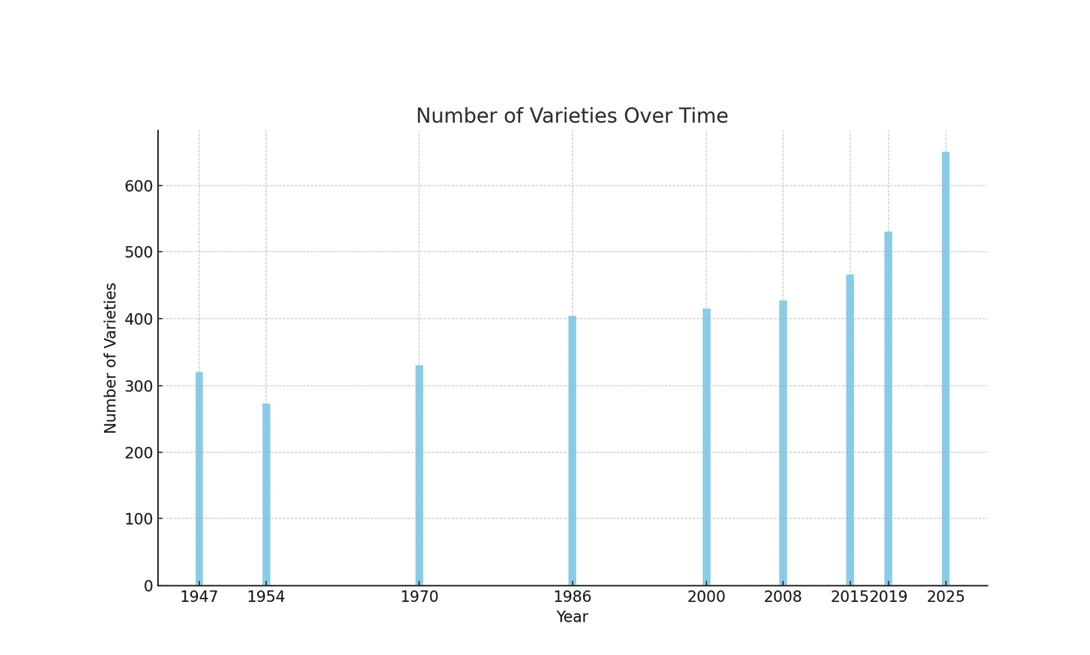
Over several decades, the collection has evolved from a display-oriented rose garden into a structured ex situ genetic resource, supporting research, breeding, and conservation objectives.
M.M. Gryshko NBG is located in the Right-Bank Forest-Steppe zone of Ukraine, characterized by a moderately continental climate with cold winters, occasional extreme frost events, and periodic summer droughts. These environmental conditions provide a natural framework for evaluating winter hardiness, drought tolerance and resistance to major fungal diseases in roses. Long-term observations of accessions under open-ground conditions (Figure 2a,c) have generated valuable data on phenotypic stability and adaptive potential, particularly relevant for northern and central regions of Eastern Europe (Rubtsova and Chizhankova, 2017).
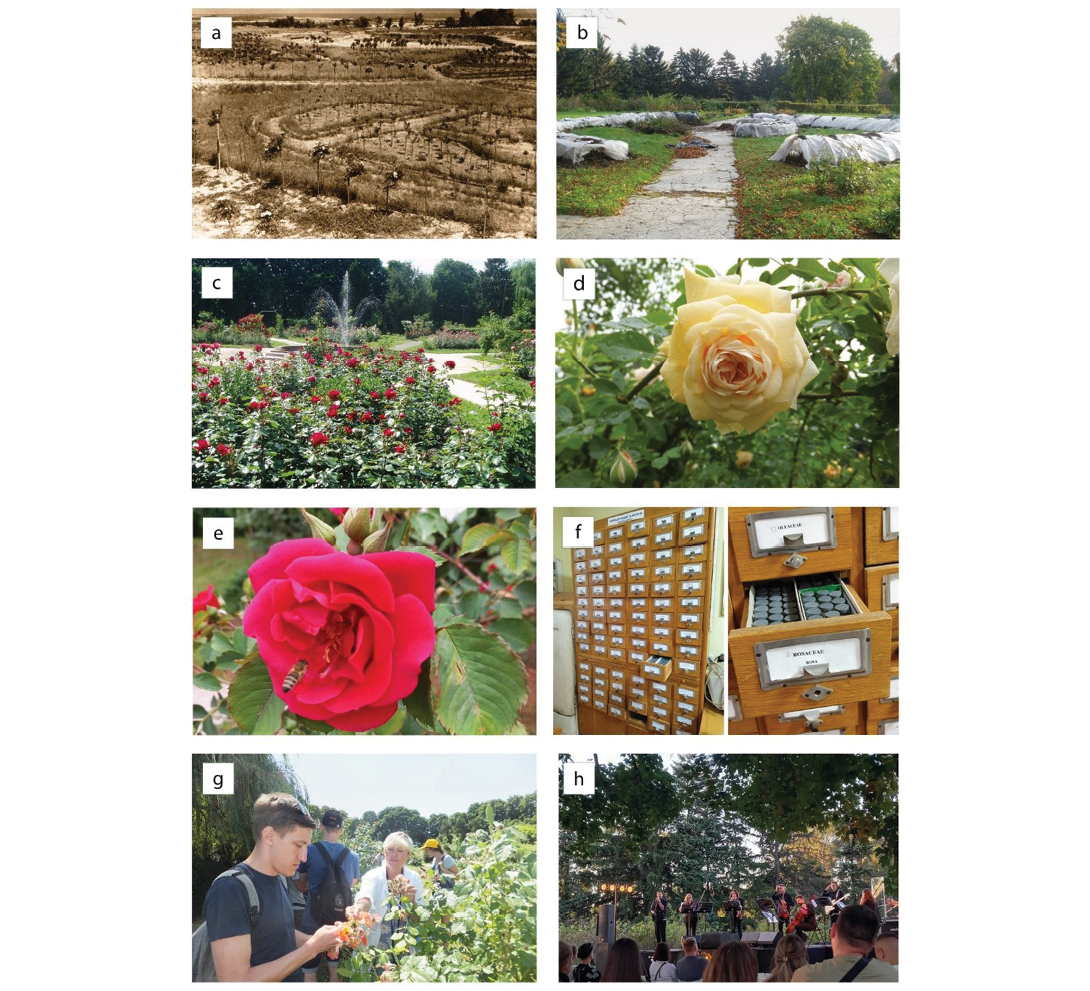
Figure 2. The rose collection of the M.M. Gryshko NBG: history, conservation and utilization. (a), rose garden in 1948, representing the early stage of establishment of the rose collection; (b), air-dry shelter; (c), general view of the rose garden as an ex situ conservation site; (d), ‘Khortytsia’, a Ukrainian-bred rose cultivar; (e), ‘Hratsiinyi Tanok’, a Ukrainian-bred rose cultivar; (f), cabinet for storage of fruit and seed collections (world flora) at the M.M. Gryshko NBG; on the right, a pull-out drawer with specimens of the Rosaceae family (genus Rosa); (g), rose breeding course for student; (h), open-air concert in rose garden.
Sources: Fig. 4a – Museum of the M.M. Gryshko NBG; Fig. 4b–e, g, h – photos by O. L. Rubtsova, Fig.4f – photo by T.B. Vakulenko.
In addition to its scientific and practical value, the rose collection of the M.M. Gryshko NBG has significant historical and cultural importance. It includes a substantial proportion of heritage cultivars representing key stages in European rose breeding, as well as original Ukrainian cultivars developed for local environmental conditions. Specifically, cultivars bred at the Nikita Botanical Garden (‘Ahtiar’, ‘Emmi’, ‘Kakhovka’, ‘Khersones’, ‘Klimentina’, ‘Korallovyi Siurpriz’, ‘Krasnyi Maiak’, ‘Krymskii Samotsvet’, ‘Maikl’, ‘Pestraia Fantaziia’, ‘Plamja Vostoka’, ‘Polka Babochka’, ‘Professor Viktor Ivanov’, ‘Zolotaia Osen’) as well as those developed at the M.M. Gryshko NBG (‘Akvarel Rose Park’, ‘Halaktyka’, ‘Khortytsia’ (Figure 2d) ‘Hratsiinyi Tanok’ (Figure 2e), ‘Karusel’, ‘Kraplia Sontsia’, ‘Mushli’, ‘Pochaina’, ‘Solodkyi Son’, ‘Spohady’, ‘Vintazh’, ‘Vrazhennia’). In recognition of its exceptional value, the collection was included in the State Register of Scientific Objects of National Heritage of Ukraine in 2006 (Rakhmetov et al, 2019).
This article presents an overview of the rose genetic resources conserved ex situ at the M.M. Gryshko NBG, focusing on the composition of the collection, conservation and management practices, characterization and evaluation of accessions, and the use of the collection in research, breeding, education and public outreach. By documenting this collection in a standardized format, the study contributes to the integration of Ukrainian ornamental plant genetic resources into the international framework of plant genetic resource conservation.
Collection description
The rose genetic collection of the M.M. Gryshko NBG represents a national reference collection of Rosa genetic resources, combining conservation, research and practical horticultural functions.
The germplasm is initially maintained in the nursery, where propagation is carried out by grafting (budding). Once a sufficient number of plants is obtained, they are transplanted to the rose garden: shrub roses are represented by at least three plants, which are planted together in the same location, while hybrid tea and floribunda cultivars are planted in groups of up to 150 individuals.
Figure 1 illustrates the increase in the number of rose cultivars maintained in the collection from 1947 to 2025. An initial phase of modest growth is observed between 1947 and 1986, with the number of varieties rising from approximately 320 to 400. A more pronounced expansion occurred from 2000 onwards, reflecting intensified efforts in acquisition, international collaboration and propagation. By 2025, the collection reached over 650 cultivars, indicating a steady and substantial enhancement of genetic diversity within the rose collection.
Taxonomic and horticultural composition
At present, the collection comprises 18 wild Rosa species and more than 650 cultivated varieties, representing the main horticultural groups used in ornamental horticulture. The diversity of the collection reflects both the taxonomic breadth of the genus Rosa and the historical development of garden roses.
Cultivated accessions include representatives of modern garden rose groups such as Hybrid Tea, Floribunda, Grandiflora, Miniature, Shrub, Climbing, including both ornamental garden types and cultivars used for cut flowers, as well as a substantial group of old roses.
This wide representation allows comparative evaluation of genotypes with different growth habits, flowering patterns and adaptive traits under uniform environmental conditions.
Wild Rosa species
Wild Rosa species constitute an essential component of the collection, serving as sources of adaptive traits such as winter hardiness, drought tolerance, disease resistance and specific morphological characteristics. The collection (Table 1) includes species of Eurasian, East Asian and North American origin, several of which are of particular interest for breeding and conservation (Rubtsova et al, 2025b).
Table 1. Wild Rosa species conserved in the M.M. Gryshko rose collection: origin, main characteristics and number of preserved individuals
|
No. |
Rosa species |
Origin |
Main characteristics |
No. of individuals |
|
1 |
R. arkansana Porter |
North America |
Stems erect, slender or stout, 0.6–1.5m tall; pink flowers |
3 |
|
2 |
R. canina L. |
Europe, Northwest Africa, and Western Asia |
Shrub 1–5m tall; pale pink flowers |
10 |
|
3 |
R. caudata Baker |
China |
Shrub up to 4m tall; red flowers, in corymbs, 3.5–6cm in diameter |
2 |
|
4 |
R. gallica L. |
Southern and Central Europe, eastwards to Turkey and the Caucasus |
Shrub up to 1m tall; deep pink flowers |
3 |
|
5 |
R. glauca Pourr. |
Central and Southern Europe |
Shrub 1.5–3m tall; glaucous blue-green to coppery or purplish leaves; pink flowers |
3 |
|
6 |
R. donetzica Dubovik |
Eastern Europe (Ukraine); rare species listed in the Red Book of Ukraine (2009) |
Shrub up to 0.9m tall; pink flowers |
3 |
|
7 |
R. filipes Rehder & E.H. Wilson |
Western China |
Shrub 3–5m tall; white flowers , 2–2.5cm in diameter, in large corymbs |
3 |
|
8 |
R. kokanica (Regel) Regel ex Juz. |
Afghanistan, Kazakhstan, Mongolia; Southwest Asia |
Shrub 1.5–2m tall; pale yellow flowers |
3 |
|
9 |
R. multiflora Thunb. |
East Asia (China, Korea, Japan) |
Climbing shrub up to 3–5m; small flowers (1.5–4cm), in large corymbs, white or pink |
3 |
|
10 |
R. nitida Willd. |
Northeastern North America |
Shrub up to 1m tall; glossy leaves; pink flowers |
3 |
|
11 |
R. rubiginosa L. |
Europe and Western Asia |
Shrub up to 2–3m tall; foliage with strong apple-like fragrance; pink flowers |
3 |
|
12 |
R. rugosa Thunb. |
East Asia |
Shrub up to 1.5m tall; leaflets distinctly corrugated; dark pink to white flowers |
3 |
|
13 |
R. roxburghii Tratt. |
East Asia |
Shrub up to 2.5m tall; pink flowers; large burred hips resembling chestnuts |
3 |
|
14 |
R. sambucina Koidz. |
East Asia |
Climbing shrub; white flowers, in corymbs |
3 |
|
15 |
R. setigera Michx. |
Central and Eastern North America |
Climbing shrub up to 3m; pink flowers |
2 |
|
16 |
R. spinosissima L. |
Western, Central, and Southern Europe and Northwest Africa |
Shrub up to 1.5m tall; pale pink flowers |
3 |
|
17 |
R. virginiana Mill. |
Eastern North America |
Shrub up to 2m tall; pink flowers |
2 |
|
18 |
R. xanthina Lindl. |
East Asia |
Shrub up to 2.5m tall; yellow flowers |
2 |
Cultivated varieties and heritage roses
Cultivated roses form the largest part of the collection and include a significant number of historical and heritage cultivars bred during the 19th and early 20th centuries. These accessions are maintained as clonal material and are of particular value for preserving ornamental traits, fragrance, and growth habits that are often absent in modern commercial cultivars.
The presence of old garden roses enables long-term comparative studies and supports the conservation of horticultural heritage. Many of these cultivars are maintained in a limited number of collections worldwide, emphasizing the importance of the M.M. Gryshko NBG as a conservation site.
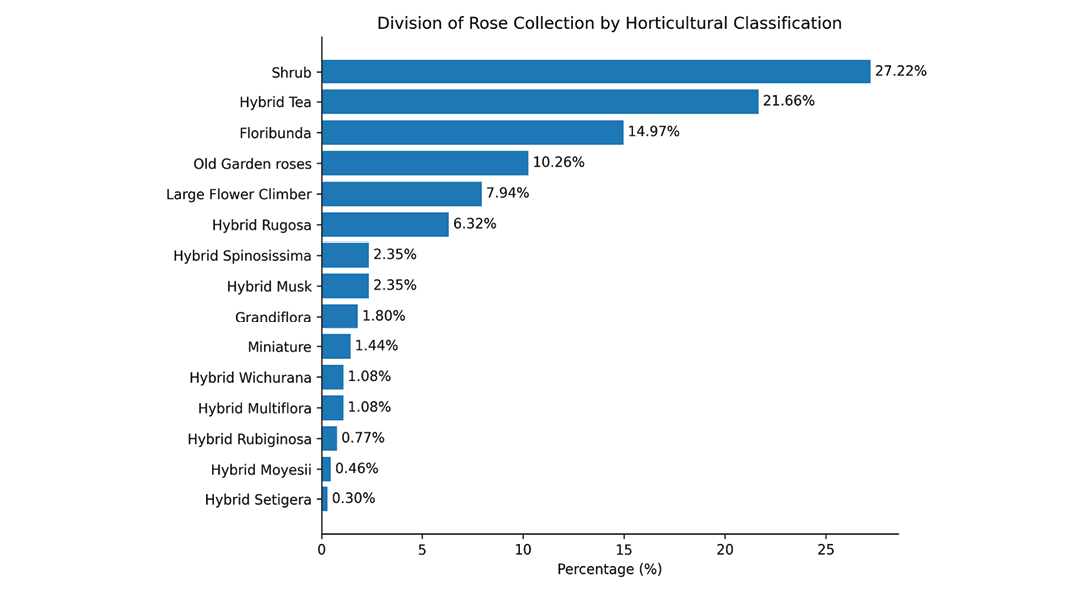
The collection is divided per the Horticultural Classification of the American Rose Society (Young and Schorr, 2007) into 24 horticultural groups: 89.74% modern roses and 10.26% old garden roses (Centifolia, Hybrid Perpetual, Damask, Hybrid Gallica, Bourbon, Hybrid China, Noisette, Hybrid Foetida, Alba, Portland) (Figure 3).
Geographic origin of accessions
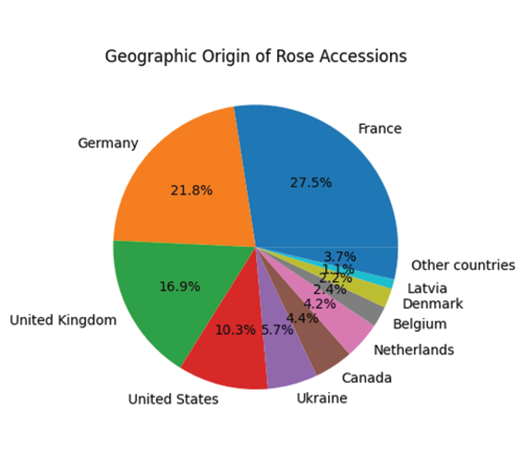
The geographic origin of accessions reflects the historical development of the collection and international exchange networks. A substantial proportion of cultivated material originates from Western and Central Europe, particularly Germany, France and the United Kingdom, regions that played a key role in the development of modern rose breeding since the late 19th century (Figure 4).
The initial core of the collection was established using planting material introduced from Germany in the mid-20th century. Subsequent enrichment was achieved through targeted acquisitions from botanical gardens, research institutions and breeders in Eastern Europe, North America, and Asia. This diverse geographic background contributes to the broad adaptive potential observed within the collection. The introduced cultivars originate from different breeding centres (see Figure 4).
Ukrainian cultivars
An important component of the collection consists of original Ukrainian rose cultivars developed through classical breeding programmes at the M.M. Gryshko NBG. These cultivars were selected for ornamental value, winter hardiness and suitability for landscape use under the climatic conditions of northern Ukraine (Figure 4).
To date, 12 Ukrainian cultivars (Table 2) have been officially registered, and all are conserved within the collection as reference material. Their inclusion ensures the preservation of national breeding achievements and provides a genetic basis for future breeding and research activities (State Register, 2025).
Table 2. Rose cultivars developed at the M.M. Gryshko NBG and their main characteristics
|
No. |
Cultivar name |
Passport data |
Class |
Main characteristics |
|
1 |
Akvarel Rose Park |
2013 |
Hybrid Tea |
Height 90–100cm, flower colour: pink |
|
2 |
Halaktyka |
2021 |
Shrub |
Height 200cm, flower colour: pink |
|
3 |
Hratsiinyi Tanok |
2011 |
Shrub |
Height 130–150cm, flower colour: red |
|
4 |
Karusel |
2018 |
Shrub |
Height up to 250cm, flower colour: pink |
|
5 |
Khortytsia |
2007 |
Shrub |
Height up to 250cm, flower colour: yellow |
|
6 |
Kraplia Sontsia |
2025 |
Shrub |
Height up to 200cm, flower colour: pink |
|
7 |
Mushli |
2021 |
Shrub |
Height up to 200cm, flower colour: pink |
|
8 |
Pochaina |
2020 |
Shrub |
Height up to 200cm, flower colour: pink |
|
9 |
Solodkyi Son |
2021 |
Shrub |
Height up to 250cm, flower colour: pink |
|
10 |
Spohady |
2019 |
Floribunda |
Height 130-150cm, flower colour: pink |
|
11 |
Vintazh |
2017 |
Shrub |
Height up to 250cm, flower colour: yellow |
|
12 |
Vrazhennia |
2013 |
Shrub |
Height up to 250cm, flower colour: crimson |
Conservation and management of the collection
The rose genetic resources of the M.M. Gryshko NBG are conserved primarily as a living field collection, which represents the most appropriate ex situ conservation strategy for clonally propagated ornamental plants. This approach ensures the preservation of cultivar identity, phenotypic stability and long-term availability of material for research, breeding and evaluation (Table 3).
To ensure long-term conservation and reduce the risk of genetic erosion, selected accessions of the rose collection are maintained as safety duplicates within different sectors of the M.M. Gryshko NBG, as well as in cooperating botanical institutions. The collection has a long tradition of exchanging plant material with botanical gardens, research institutions and breeding centres, primarily within Ukraine and, historically, with institutions in other European countries. Material exchange is carried out in compliance with national regulations and institutional policies and is mainly aimed at conservation, research and educational purposes. The proportion of accessions maintained as safety duplicates within the Garden or in other institutions is not constant, and depends on the conservation value of particular accessions, their propagation status and collaboration activities. Priority is given to valuable, rare, or vulnerable genotypes.
Table 3. Structure of the Rosa genetic resources collection conserved ex situ at the M.M. Gryshko NBG rose collection
|
Component |
No. of accessions |
Conservation form |
Characteristics and significance |
|---|---|---|---|
|
Wild Rosa species |
18 |
Living plants; seeds |
Sources of adaptive traits (winter hardiness, drought tolerance, disease resistance); high conservation value |
|
Non-Ukrainian cultivars (modern and old garden roses) |
> 650 |
Living clonal plants |
Cultivars of international origin representing major horticultural groups, including heritage germplasm |
|
Ukrainian cultivars |
12 |
Living clonal plants |
National breeding products adapted to local environmental conditions |
|
Total |
> 668 |
Field ex situ collection with complementary seed storage |
Largest Rosa genetic resources collection in Ukraine |
Field ex situ conservation
All rose accessions are maintained under open-ground conditions in the collection plots of the M.M. Gryshko National Botanical Garden, covering an area of approximately 0.5ha.
The spatial arrangement of plants ensures adequate air circulation and access for maintenance operations, while minimizing disease pressure. Standard horticultural practices are applied to maintain plant health and longevity, while avoiding intensive management that could mask genotypic differences in stress tolerance.
The plants were grown on dark grey podzolized soils with a well-developed cultivated layer, enriched with compost applied in autumn. During the growing season, a complete mineral fertilizer (NPK 16–16–16; NH4H2PO4 + NH4NO3 + KCl) was applied at 4-week intervals. Weeds are removed by hand weeding.
Irrigation was carried out every 14 days in the absence of rainfall. Less winter-hardy roses were protected using an air-dry shelter (covering with insulating materials) (Figure 2b), whereas more winter-hardy cultivars were overwintered by soil mounding (hilling-up). Frost damage is evaluated visually, based on the extent of injury to shoots and buds after winter.
Pruning practices varied among garden groups. Old garden roses were subjected to minimal pruning. Modern roses (Hybrid Tea and Floribunda) were pruned to approximately half of their natural, unpruned height. For climbing roses, long vigorous shoots were trained horizontally or obliquely, while lateral shoots were shortened to a well-developed bud.
Such conditions enable the long-term assessment of winter hardiness, frost damage, and general plant resilience, which are critical traits for the selection of cultivars suitable for landscaping in northern Ukraine. General plant resilience is assessed visually as an integrated trait, taking into account winter survival, the degree of recovery after frost damage, shoot regrowth, and overall plant vigour during the growing season.
Propagation and maintenance strategy
Cultivated varieties are conserved as clonal accessions and propagated vegetatively to maintain trueness-to-type. Propagation is carried out periodically to replace aging plants, restore damaged accessions, or increase the number of plants of particularly valuable genotypes.
Wild Rosa species are conserved both as living plants and, where possible, through seed propagation. This dual strategy allows the preservation of genetic diversity within species while ensuring the availability of material for regeneration and research.
Accession identity is maintained through careful labelling, long-term curatorial records, and expert morphological assessment based on stable diagnostic traits, including plant habit, flower morphology and flowering behaviour.
Seed collection and complementary conservation
Living plants of wild species are maintained in the field, and seed samples are preserved in the seed laboratory of the M.M. Gryshko NBG, providing an additional level of conservation.
From the plants cultivated in the collection, seed material is obtained, then cleaned and dried at room temperature. Later, part of the seeds is used through Index Seminum for international scientific exchange with botanical institutions around the world. These seeds are stored in paper bags in an amount of 200–400g at room temperature and are updated annually. Such storage conditions are quite sufficient to preserve the seeds for 1–2 years without significant loss of viability. Different types of rose hips retain germination even without special treatment from 20% (R. canina L.) to 40% (R. rugosa Thunb.). The rest of the seeds, which are used for sowing in breeding work, as well as those obtained under the scientific exchange system, undergo stratification in a refrigerator at a temperature of approximately 5°C, which increases the germination of different types of rose hips to 60–80%.
In addition, the seed laboratory of the M.M. Gryshko NBG keeps a carpological collection that demonstrates the diversity of morphological types of fruits and seeds of the world's flora. The genus Rosa is represented by 160 specimens, covering 73 species of rose hips. In the carpological collection, dried seeds weighing 20–40g are stored in glass stoppered test tubes in cabinets at room temperature (Figure 2f). Such specimens can be stored for many years. Due to the loss of germination, they are not intended for sowing, but are used for anatomical or morphological studies in resolving controversial phylogenetic and systematic issues, and also serve as didactic material for garden employees, students and postgraduates studying the carpology of various systematic groups of plants. In the future, it is planned to create a full-fledged genetic seedbank on the basis of the seed laboratory with the involvement of special equipment and compliance with international requirements for the storage of genetic resources.
Perspectives for long-term conservation
The rose collection of the M.M. Gryshko NBG (Table 3) is officially recognized as an object of national scientific heritage, which provides an institutional framework for its long-term conservation (Rakhmetov et al, 2019). Future priorities include the continued enrichment of the collection with underrepresented horticultural groups and wild species, improvement of documentation and data standardization, and integration into international networks for ornamental plant genetic resources, which would enable the exchange of plant material and information, harmonization of data standards, participation in collaborative research, and the development of coordinated conservation strategies.
Under current climate change scenarios, the collection also serves as a testing ground for identifying genotypes with enhanced tolerance to abiotic stresses, reinforcing its strategic importance for sustainable landscaping and breeding.
Documentation and data availability
Comprehensive documentation constitutes a core component of the ex situ conservation of rose genetic resources at the M.M. Gryshko NBG. All accessions maintained in the collection are supported by curatorial records that ensure traceability, long-term management, and availability of data for research and conservation purposes.
The internal documentation system of the M.M. Gryshko NBG is primarily based on curated archival records maintained as structured paper files. These records include passport data, inventory information and documentation of collection history. Selected data are additionally maintained in digital form using standard spreadsheet tools to facilitate data handling and updating, with ongoing efforts toward further digitalization and data standardization.
In addition to textual records, the collection is supported by a photographic archive documenting key morphological traits, phenological stages and general plant habit. These images are used for verification of accession identity and for comparative analysis.
Passport data include basic information on accession identity (scientific name, cultivar denomination, origin, source, and year of introduction), while detailed morphological and ornamental traits (including floral characteristics) are recorded separately within the characterization and evaluation (C&E) dataset.
Documentation data are available upon request for scientific, educational and conservation purposes. At present, the data are not publicly accessible online; however, selected information is disseminated through scientific publications and institutional reports, including studies on rose collections and their morphological and biological traits (Rubtsova et al, 2021; Rubtsova et al, 2022; Rubtsova et al, 2023; Rubtsova et al, 2025a; Rubtsova et al, 2025b).
Passport data
Each accession is accompanied by passport data, including the scientific name, cultivar denomination, horticultural group, geographic origin, source of acquisition and year of introduction into the collection. For cultivated varieties, additional information on breeder, country of origin and breeding period is recorded where available.
Passport data are maintained in the internal documentation system of the M.M. Gryshko NBG and are regularly updated during collection inventory and regeneration activities. This information allows the reconstruction of accession history and supports the assessment of collection completeness and representativeness.
Accession identification and quality control
Accession identity is ensured through expert morphological verification, supported by historical records and comparison with reference descriptions. Periodic assessments are carried out to detect possible mislabelling, somatic mutations, or loss of clonal integrity, which is particularly relevant for long-maintained ornamental cultivars (Rubtsova and Chyzhankova, 2026).
In cases of uncertainty, accessions are flagged for further evaluation, and propagation material is taken from verified plants to maintain collection accuracy.
This quality control is essential for long-term genebank-type conservation of clonally propagated ornamentals.
Data accessibility and exchange
Documentation data are available upon request for scientific, educational and conservation purposes, in accordance with institutional regulations of the M.M. Gryshko NBG. Exchange of plant material and associated data is conducted through bilateral agreements with botanical gardens and research institutions.
M.M. Gryshko NBG follows internationally accepted principles for the exchange and use of plant genetic resources, ensuring transparency and responsible use of conserved material. Future efforts are aimed at improving data standardization and facilitating integration into international information systems for plant genetic resources.
Use of the collection
The rose genetic collection conserved ex situ at the M.M. Gryshko NBG serves multiple functions, including scientific research, breeding, education and public outreach, thereby reinforcing its role as a national reference collection of ornamental plant genetic resources (Rubtsova and Chizhankova, 2017; Gordienko et al, 2021).
Research and long-term observations
Characterization and evaluation of rose accessions are conducted through long-term field observations under uniform environmental conditions. C&E data include morphological descriptors (plant habit, flower form, colour, flowering period) (Rubtsova et al, 2022; Rubtsova et al, 2023), phenological traits (Boiko at al, 2015; Pokhylchenko at al, 2024), and indicators of ornamental value (e.g. flowering abundance, duration, and overall decorative effect in plantings), as applied in urban landscaping studies (Kolesnichenko et al, 2020).
The oldest data used in this study date back to 1958 and are derived from the monograph by L.P. Lempitskyi (1958), which represents one of the earliest comprehensive sources on rose cultivation in Ukraine.
Particular attention is given to adaptive traits of practical relevance, such as winter hardiness, drought tolerance and resistance to major fungal diseases. These traits are assessed over multiple growing seasons, enabling the identification of stable phenotypic patterns and genotypes with enhanced adaptive potential.
C&E data are used to support scientific publications, selection of material for breeding, and recommendations for landscape use. Part of these data has already been published, including studies on frost tolerance and morphological traits of Rosa rugosa cultivars (Rubtsova and Chyzhankova, 2017), adaptation of Scots roses in Northern Ukraine (Rubtsova et al, 2021), adaptation of East Asia roses (Rubtsova at al, 2025b) and resistance to powdery mildew (Rubtsova et al, 2025a). While full datasets are not currently available in international online databases, summarized information is disseminated through peer-reviewed publications and institutional reports.
The collection provides a stable experimental base for long-term studies on rose biology, phenotypic variability, and adaptation to environmental conditions. Uniform cultivation under open-ground conditions allows comparative assessment of accessions with different genetic backgrounds and horticultural groups.
Long-term observations have supported research on somatic mutations (Rubtsova et al, 2026), phenotypic stability, flowering behaviour, and adaptive traits such as winter hardiness and drought tolerance. Results obtained using material from the collection have been disseminated through peer-reviewed scientific publications, contributing to the understanding of rose diversity and adaptation in temperate climates (Rubtsova et al, 2025a).
Breeding and selection
The collection constitutes an important genetic reservoir for rose breeding programmes conducted at the M.M. Gryshko NBG. Wild species and selected cultivars are used as parental material in classical breeding schemes aimed at developing varieties adapted to local climatic conditions.
Particular emphasis is placed on the selection of genotypes combining high ornamental value with increased tolerance to abiotic stresses. Ukrainian cultivars conserved in the collection represent tangible outputs of this work and serve as reference material for further breeding and evaluation.
Education and professional training
In cooperation with the National University of Life and Environmental Sciences of Ukraine, the rose garden contributes to university-level teaching, including courses on phenological observations, rose breeding (Figure 2g) and the use of roses in landscape design. It also organizes thematic exhibitions, such as the ‘Shakespeare’s Roses’ display dedicated to the Year of Shakespeare.
The collection also serves as a platform for professional training of specialists in ornamental horticulture and for the dissemination of knowledge on plant genetic resource conservation. In addition, the rose garden is used as a venue for cultural events, including open-air concerts (Figure 2h), which enhance public engagement and promote awareness of plant diversity and the aesthetic value of cultivated roses.
Public outreach and cultural value
In addition to its scientific role, the rose collection has significant cultural and educational value for the general public. It is an integral part of the M.M. Gryshko NBG’s exhibition infrastructure and attracts a wide audience during the flowering season.
By maintaining historical and heritage cultivars alongside modern varieties, the collection contributes to the preservation of horticultural traditions and raises public awareness of the importance of conserving plant genetic diversity.
Conclusions
The rose genetic collection conserved ex situ at the M.M. Gryshko NBG represents the largest and most diverse collection of Rosa genetic resources in Ukraine. Apart from the M.M. Gryshko NBG, several other institutions maintain significant rose collections. Rose collections in Ukraine are maintained in several leading botanical institutions. Significant rose garden are also established at the National Dendrological Park Sofiyivka and the Dendrological Park Alexandria of the National Academy of Sciences of Ukraine. Important collections of Rosa spp. are further held in university botanical gardens, including the O.V. Fomin Botanical Garden of Taras Shevchenko National University of Kyiv, the Botanical Garden of Odesa I.I. Mechnikov National University, and the Botanical Garden of Yuriy Fedkovych Chernivtsi National University, Botanical Garden of Oles Honchar Dnipro National University. A historically important centre of rose cultivation and introduction is the Nikita Botanical Garden – National Scientific Center (Crimea), which has long contributed to the development and study of ornamental roses in the region.
Maintained primarily as a living field collection, it ensures the long-term preservation of cultivated varieties, wild species, and national breeding achievements.
Systematic conservation, documentation, and long-term evaluation under open-ground conditions provide valuable data on adaptive traits of roses relevant to temperate climates. The collection supports research, breeding, education and public outreach, thereby fulfilling key objectives of ex situ conservation of ornamental plant genetic resources.
By documenting the structure, management, and use of this collection in a standardized format, the present article contributes to the visibility of Ukrainian ornamental plant genetic resources and their integration into the international framework of plant genetic resource conservation.
Author contributions
Olena Rubtsova: conceptualization and ideation. Mykola Shumyk: writing, review, and editing. Natalia Chuvikina: historical background. Tetyana Vakulenko: writing, data analysis. Valentina Chizhankova: data collection.
Сonflict of interest statement
The authors declare that they have no conflicts of interest.
References
Ahr, H., and Lang, I. (1991). Zeittafel des Rosarium Sangerhausen. Rosen-jahrbuch 1990, ed. Schoser G. (Verlag GmbH & Co.), 147–159.
Boiko, R.V., Shcherbakova, O.F., Rubtsova, O.L., & Chyzhankova, V.I. (2015). Methodological recommendations for phenological observations of recurrently flowering roses (Ukraine : Veles Publishing), 52 p.
Cherevchenko T.M., Chuvikina N.V. (2003). The role of Danilo Fedorovitch Likhvar in the formation of the Central Republican Botanical Gardens of Academy of Sciences of Ukraine (on the 100-th anniversary of birth). Plant Introduction 1-2, 166–172. url: https://www.plantintroduction.org/index.php/pi/article/view/1143/1099
Gordienko D.S., Rubtsova O.L., Buidina T.O., Chizhankova V.I., Rozhok O.F., Sokolova O.A. (2021). Drought resistance of English roses varieties in the conditions of Right-bank Forest-Steppe of Ukraine. Plant Varieties Studying and Protection 17, 60-65. https://doi.org/10.21498/2518-1017.17.1.2021.228212
Gryshko, M.M. (1949). Objectives and Directions of the Work of the Botanical Garden of the Academy of Sciences of the Ukrainian SSR. In Proceedings of the Botanical Garden of the Academy of Sciences of the Ukrainian SSR. Kyiv, 1, 3–21.
Collective (2023). Guide des Roseraies en Europe (Paris, France: Société Nationale d’Horticulture de France), 244 p.
Kolesnychenko, O.V., Rubtsova, O.L., Shumyk, M.I., Hrysiuk, S.M., Pikovskyi, M.Y., Shvets, I.V., Morozko, A.P., & Chyzhankova, V.I. (2020). Roses in urban plantings of Kyiv (Ukraine: Yamchynskyi Publishing), 267 p.
Krüssmann, G. (1981). The Complete Book of Roses (USA, Portland: Timber Press), 436 p.
Lempitskyi, L.P. (1958). Kultura roz u vidkrytomu hrunti [Rose cultivation in open ground]. (Ukraine: Publishing House of the Academy of Sciences of the Ukrainian SSR), 124 pp.
Lempitsky L.P., Halytska A.F. (1968) Introduction of roses in the Ukrainian SSR. Introduction and acclimatization of plants in Ukraine 3, 39–45.
Pokhylchenko, O., Gorelov, O., Dovhalyuk, N., Kozubenko, T., Kruglyak, Y. and Paraschuk, O. (2024). Phenological observations in dendrological collections: motivation for the use of the universal coding “BBCH scale”. Journal of Native and Alien Plant Studies 20, pp. 176–197. https://doi.org/10.37555/2707-3114.20.2024.318688
Rakhmetov D.B., Zaimenko N.V., Gaponenko M.B., Buyun L.I., Rubtsova O.L. (2019). Scientific objects of the M.M. Gryshko NBG of the National Academy of Sciences of Ukraine, firming the national heritage (Ukraine: Palivoda A.V. Publishing), 224 p.
Red Data Book of Ukraine. Plant Kingdom (2009). Ed. by Ya.P. Didukh. Kyiv: Globalconsulting. Available at: https://redbook-ua.org/
Rubtsova O., Chizhankova V. (2017). Morphological characteristics and frost tolerance of cultivars derived from the Rosa rugosa Thunb. Journal of Applied Horticulture 19 (1). 67–69. doi: http://dx.doi.org/10.37855/jah.2017.v19i01.11
Rubtsova O., Chyzhankova V. (2026). Somatic mutations in introduced garden rose cultivars in the collection of the M.M. Gryshko National Botanical Garden. Plant Introduction 109, 55-64. https://doi.org/10.46341/PI2025031
Rubtsova, O., Kolesnichenko, O., Shumyk, M., Shynder, O., Chyzhankova, V., Dzyba, A. and Hrysiuk, S. (2021). Scots roses in Northern Ukraine. Horticultural Science 48(3), 144–148. https://doi.org/10.17221/90/2020-HORTSCI
Rubtsova, O.L., Vakulenko, T.B. and Chyzhankova, V.I. (2022) Morphological features of nectaries of some species of the genus Rosa (Rosaceae). Ukrainian Botanical Journal 79(2), 103–113. https://doi.org/10.15407/ukrbotj79.02.103
Rubtsova, O.L., Vakulenko, T.B., Chyzhankova, V.I. (2023) Teratogenesis of generative organs of cultivars of Rosa (Rosaceae) in the collection of the M.M. Gryshko National Botanical Garden, National Academy of Sciences of Ukraine. Ukrainian Botanical Journal 80(4), 364–374. https://doi.org/10.15407/ukrbotj80.04.364
Rubtsova O., Pikovskyi M., Myroshnychenko D., Chyzhankova V. (2025a). Evaluation of powdery mildew (Podosphaera pannosa (Wallr.) de Bary) in roses. Biological Systems: Theory and Innovation 16, 1, p.22–32. https://doi.org/10.31548/biologiya/1.2025.22
Rubtsova O., Shumyk M., Shynder O., Chyzhankova V. (2025b). Roses of East Asia in Ukraine (Ukraine: Feniks Publishing), 160 p. https://www.researchgate.net/publication/400214857_SIPSINI_SHIDNOI_AZII_V_UKRAINI_Monografia
Scientific Archive of the M.M. Gryshko National Botanical Garden, National Academy of Sciences of Ukraine (1946), Reports on scientific expeditions of the Botanical Garden staff (missions to Germany). Fond 2, file 1, 103 pp.
State Register of Plant Varieties Suitable for Distribution in Ukraine (2025). Available at: https://data.gov.ua/dataset/eabd0bd2-2dc6-47e2-b748-9bd254da4956
Young, M. A. and Schorr, P. (2007). Modern Roses 12: The comprehensive list of roses in cultivation or of historical or botanical importance (USA, Shreveport, Louisiana: American Rose Society), 576 p.