Morphological characterization of roselle (Hibiscus sabdariffa L.) germplasm collected from the Darfur region in Sudan using qualitative traits
Ibrahim Mohamed El Tahir* and Magdi Ahmed Mohamed Elgabri
Agricultural Plant Genetic Resources Conservation and Research Centre, Agricultural Research Corporation, Sudan
* Corresponding author: Ibrahim Mohamed El Tahir
(eltahir81@yahoo.com)
Abstract: Eighty-two accessions of roselle (Hibiscus sabdariffa var. sabdariffa L.) collected from five states in the Darfur region, Sudan, were characterized during the rainy seasons of 2018, 2020 and 2021 using ten qualitative descriptors covering vegetative and inflorescence traits. Occurrence levels of descriptor states ranged from very rarely occurring in 5% or less of the accessions to abundantly occurring in more than 90%. The enlarged fleshy calyces, the main usable organs, showed five different shapes and five different colours. All accessions were grouped into two major clusters at a Euclidean distance of 3.5, with one cluster containing 11 accessions, all collected from West Darfur state, and the second cluster containing the rest of the accessions collected from all five states of Darfur. The latter were further grouped at a Euclidean distance of 3 into three subclusters. Each subcluster contained separately all accessions collected from either Central Darfur, North Darfur, or East Darfur states, indicating a high tendency of clustering according to collection site. However, those collected from West Darfur were dispersed among all clusters and subclusters. Moreover, petal colour discriminated between clusters, as did collection site. These variations of roselle accessions from Darfur make them promising for further use in improvement programmes, especially for product quality and drought tolerance. Nevertheless, further characterization and evaluation for more morpho-agronomic traits as well as genotyping are needed. As some characters were rare, close attention should be paid to avoiding their loss during seed regeneration, to ensure the best management of such diverse germplasm.
Keywords: Roselle, accessions, characterization, variations, Darfur, Sudan
Introduction
Roselle (Hibiscus sabdariffa L.) is an important tropical and subtropical crop that might have been domesticated 6,000 years ago in Sudan (McClintock and El Tahir, 2004). According to Purseglove (1974), there are two botanical varieties of the roselle plant: H. sabdariffa var. sabdariffa, which is cultivated mainly for its edible fleshy calyces, and H. sabdariffa var. altissima, which is cultivated mainly for fibre.
According to FAO (2004), China and Thailand were the largest producers and controlled much of the world supply. More recently, Osei-Kwarteng et al (2021) reported that the major producers of roselle include Malaysia, China and Thailand, which dominate the large international markets in the United States and Germany. It is also produced for local uses as beverages in many countries such as Egypt, Sudan, Nigeria, Mexico, West Indies, Senegal, Benin, Côte d’Ivoire, Burkina Faso, Tanzania and Kenya (Osei-Kwarteng et al, 2021). However, Sudan is widely recognized for producing high-quality roselle, although it is not among the top world producers (Park et al, 2015; Islam et al, 2016; Solangi et al, 2017). The high quality of Sudanese roselle is mostly attributed to its attractive bright red colour as well as its favourable acidity, making it popular in other countries such as Germany (Mohamed et al, 2012).
In Africa, roselle has two main uses: as a vegetable and for a beverage (McClintock and El Tahir, 2004). As a beverage, the edible fleshy calyces surrounding the fruit capsules are commonly used after drying to prepare a refreshing tea, drunk hot or, more commonly, cold with sugar, and very popular from Senegal to Sudan, as well as in Egypt and other North African countries, where it is referred to as ‘karkadé’ (McClintock and El Tahir, 2004). While roselle is attracting attention for use as food and beverage, it is also being used for medicinal purposes and as a colourant to replace some synthetic dyes (Islam, 2019). Therefore, the calyx colour of roselle plays an important role in determining roselle quality, with crimson red being the most desirable colour (Yirzagla et al, 2023).
According to Babalola et al (2001), roselle calyces could be good source of nutrients, and their consumption should be encouraged among disadvantaged groups in developing countries. The calyces contain high levels of vitamin C and anthocyanins, as well as calcium, potassium, magnesium, sodium, niacin, riboflavin and iron , making them unique for their nutritional characteristics (Islam et al, 2016). Calcium, magnesium and zinc contents were found to be very high in dark red calyces, while red calyces had significantly higher iron content than other calyces (Babalola et al, 2001). Also, one of the most widely studied claims is the effect of roselle tea on blood pressure and cholesterol, and in preventing cardiovascular disease (Islam, 2019).
Roselle is grown in various parts of Sudan, particularly Kordofan and Darfur regions in the west of the country. It is one of the cash crops cultivated by traditional farmers under rain-fed conditions, where large quantities are produced for local consumption and for export (Mohamed et al, 2012). The crop is mostly produced under traditional smallholder systems, depending on natural soil fertility without the use of chemical fertilizers or insecticides (El Naim et al, 2012).
As previously reported by the authors, roselle grown in Sudan comprises several local strains, which can be identified on the basis of calyx shape and colour, and other plant characteristics (Mohamed and Elgabri, 2013). Together, they constitute important genetic resources of a crop in a country claimed to be its centre of origin. Such genetic resources are threatened by different environmental and production factors, including drought spells in the production areas in the Kordofan and Darfur regions of western Sudan. Therefore, the Agricultural Plant Genetic Resources Conservation and Research Centre (APGRC) of the Agricultural Research Corporation in Sudan has targeted roselle for conserving its local genetic resources. As documented in the Genesys PGR data portal, a total of 396 accessions were collected from 16 states in the country, with 176 and 100 accessions from the Darfur and Kordofan regions, respectively (www.genesys-pgr.org). These accessions are conserved under long-term conditions in the central seed genebank of the APGRC in Wad Medani, Sudan, with a copy of those collected from Kordofan and Darfur regions preserved in the subnational genebank unit at Elobeid Agricultural Research Station in North Kordofan state. However, all germplasm accessions conserved in Wad Medani were exposed to unfavourable conditions after the outbreak of the war in the capital, Khartoum, on 15 April 2023, and its subsequent spread into Wad Medani on 15 December 2023. All deep freezers, where the seed samples were stored, were looted, and seed envelopes were left scattered all around. Fortunately, copies of seed samples of more than 7,000 accessions were already duplicated in the subnational genebank unit in Elobeid city (Ahmed et al, 2025). They include copies of roselle accessions collected from the Kordofan and Darfur regions in western Sudan.
Earlier, a total of 126 roselle accessions collected from different regions of Sudan were characterized morpho-agronomically by the authors in 2006, 2007 and 2008 (Mohamed and Elgabri, 2013). Most of them (82 accessions) were from the Kordofan region, while the rest were from other regions, including four from Darfur. A total of 202 accessions were later collected from Darfur during and after 2014, when germplasm collection activities were under way in different states of the Darfur region (El-Tahir et al, 2025). Some of these accessions were grown during the 2018–2019, 2020–2021 and 2021–2022 cultivation seasons for characterization and documentation of their variation using a number of qualitative morphological traits, while the rest are planned to be studied later. This paper presents the results of such activities, revealing the level of variation observed in some of the roselle accessions collected from the Darfur region in Sudan in 2014 and subsequent years.
Materials and methods
A total of 82 accessions of roselle (Hibiscus sabdariffa var. sabdariffa) collected from Darfur region in the far west of Sudan were grown under rain-fed conditions during the 2018–2019, 2020–2021 and 2021–2022 cultivation seasons for morphological characterization using some qualitative traits (Supplemental Table 1). Only qualitative traits were used at this stage because they are normally stable across different environments, providing a preliminary idea on the phenotypic variations among accessions, compared with quantitative traits, which are more likely to be expressed differently across different environments. Those accessions were collected by the APGRC during and after 2014 from the states of Central Darfur (11 accessions), West Darfur (27 accessions), North Darfur (17 accessions), East Darfur (26 accessions) and South Darfur (one accession) (Figure 1), and have been conserved in the APGRC genebank since then.
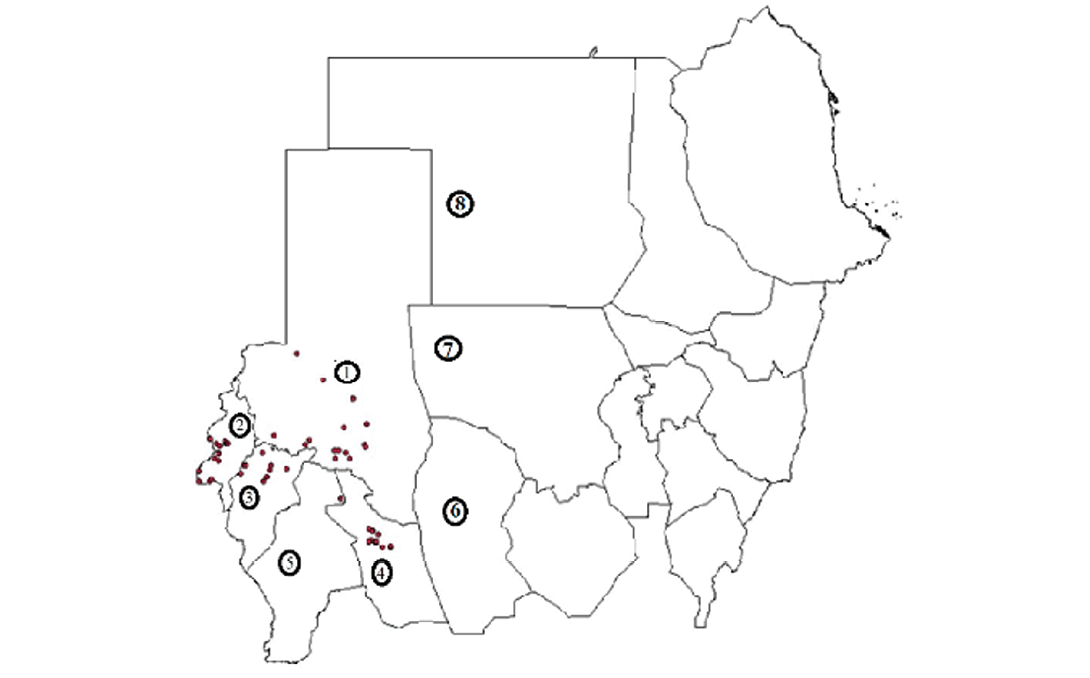
They were grown on sandy soil in the farm of Elobeid Agricultural Research Station (30°14' 13.230" E; 13°12' 36.801" N) in Elobeid city, North Kordofan state, Sudan (Abdalla et al, 2018). The materials were grown under rain-fed conditions. Total annual rainfall ranged between 309 and 347mm per season across the different successive seasons of cultivation. At the beginning, the land was shallowly ploughed during late June in each season, and then manually cleaned of weeds after the first rain showers. Seed sowing took place on cleaned land during the successive seasons on 12 July 2018 for 38 accessions, 29 July 2020 for 18 accessions, and 15 July 2021 for 26 accessions (Supplemental Table 1). The accessions were characterized in three different seasons due to the differences in the years of collection. Some of the studied materials were collected as early as 2014 and 2015, so they were characterized in 2018, while others were collected as late as 2019 and 2020, and hence characterized in 2020 and 2021, successively. The study was conducted using non-replicated observation subplots. Each accession was planted in one row containing up to five plants, with spacing of 75 × 75cm between plants and rows, and one plant per hill. Weeds were removed manually as needed throughout the season.
A descriptor list of ten morphological descriptors, covering overall plant morphology and stem, leaf, inflorescence and calyx characters, was used for characterization (Table 1). Plants were described while in the field for all vegetative and inflorescence descriptors. Calyx characters were described when the calyces were fleshy, and the fruit capsules enclosed within the enlarged fleshy calyces were fully ripe. Characterization of vegetative and inflorescence descriptors was usually started after 6 weeks from sowing, while characterization of the enlarged calyces was usually started after 12 weeks from sowing.
Frequency of occurrence was calculated for different descriptor states observed. Accordingly, the occurrence levels of different descriptor states were categorized on the basis of the frequency percentage ranges, including very rare (≤ 5%), rare (> 5 to 30%), moderate (> 30 to 60%), common (> 60 to 90%) or abundant (> 90%). Multivariate analysis was run as classical cluster analysis for the characterization data of all accessions. The data matrix of numerical codes for different traits was used to generate similarity indices based on Euclidean distances. Cluster analysis was carried out using hierarchical analysis and the complete-link method using the PAST Software Version 5.4 (Hammer et al, 2001).
Results
Detailed descriptions of different characterized accessions are given in Supplemental Table 2, with all descriptor states for each accession, including states recorded for heterogeneous accessions for either of the descriptors. Results in terms of frequencies of accessions showing specific descriptor states across the different descriptors, and their levels of occurrence are shown in Table 1, including vegetative, inflorescence and enlarged calyces’ characters. They are briefly described as follows.
Table 1. Summarized results of the morphological characterization of roselle accessions, indicated as frequency and level of occurrence among the characterized accessions. Occurrence levels: Very rare (≤ 5%), Rare (> 5 – 30%), Moderate (> 30 – 60%), Common (> 60 – 90%), Abundant (> 90%)
|
Descriptor |
Occurrence level and frequency percentage of descriptor state |
|||||
|---|---|---|---|---|---|---|
|
Abundant |
Common |
Moderate |
Rare |
Very Rare |
Heterogeneous |
|
|
Overall plant morphology |
Erect (43%) |
Procumbent (13%) |
12% |
|||
|
Medium (32%) |
||||||
|
Stem texture |
Smooth (100%) |
|||||
|
Stem pubescence |
Slight (99%) |
Glabrous (1%) |
||||
|
Stem colour |
Green with red patches (31%) |
Green (28%) |
28% |
|||
|
Reddish (13%) |
||||||
|
Leaf shape |
Shallowly incised broadly lobed (55%) |
Non-lobed (1%) |
2% |
|||
|
Deeply incised narrowly lobed (42%) |
||||||
|
Leaf colour |
Green (70%) |
Red (12%) |
Green with red veins (5%) |
13% |
||
|
Number of epicalyx segments |
> 10 (55%) |
8–10 (26%) |
||||
|
5–7 (19%) |
||||||
|
Petal colour |
Pink (32%) |
White (14%) |
||||
|
Yellow (54%) |
||||||
|
Shape of enlarged fully ripe fleshy calyx |
Partially open calyx with lobes Bending inwards (50%) |
Fully open calyx with lobes Pointing upwards (18%) |
Fully closed, rounded calyx (5%) |
5% |
||
|
Slightly open calyx (15%) |
||||||
|
Fully open calyx with lobes curving outwards (7%) |
||||||
|
Colour of enlarged fully ripe fleshy calyx |
Red (61%) |
White (18%) |
Dark red (3%) |
5% |
||
|
Light red (11%) |
Red with whitish patches (2%) |
|||||
Vegetative characters
Vegetative characters described included overall plant morphology, stem texture, stem pubescence, stem colour, leaf shape and leaf colour.
While 88% of the accessions were homogeneous for either of the descriptor states of overall plant morphology – including erect, medium and procumbent – the rest (12%) were heterogeneous, showing at least two states of overall plant morphology within each accession. A total of 43% of accessions had erect plants, and 32% were medium, each with a moderate level of occurrence, compared, on the other hand, with the procumbent overall plant morphology, which was rare in only 13% of the accessions.
All of the characterized accessions (100%) had smooth stems with abundant level of occurrence, while none had prickly stems. Nearly all accessions (99%) had slightly pubescent stems as an abundantly occurring character, with the exception of one accession (1%) having glabrous stems as a very rare character within this roselle collection.
Different stem colours were observed, including green with red patches on 31% of the accessions, categorized as moderately occurring, as well as green on 28% of the accessions, and red on 13% of the accessions; each of them was rarely observed. The rest of the accessions (28%) were heterogeneous for stem colour.
The vast majority of the accessions (97%) had incised lobed leaves, including 55% that were shallowly incised and broadly lobed, and 42% that were deeply incised and narrowly lobed, each occurring at a moderate level of occurrence (Figure 2). On the other hand, non-lobed leaves were very rare (1%), while the rest (2%) were heterogeneous in leaf shape.
The leaf colours were commonly green in most of the accessions (70%). Other accessions included green with reddish-veined leaves, or reddish leaves, being either rare at 12%, or very rare at 5%, respectively. The rest of the accessions (13%) were heterogeneous, showing mixed leaf colours.
Inflorescence and calyx characters
The inflorescence and calyx characters covered included the number of epicalyx segments, petal colour, shape of enlarged fleshy calyx and colour of enlarged fleshy calyx.
Most accessions (55%) had flowers with more than ten epicalyx segments. On the other hand, accessions with 8–10 or 5–7 epicalyx segments were rarely observed, accounting for 26% and 19% of the accessions, respectively.
Petal colours observed were either pink, yellow or white. Most accessions (86%) had pinkish or yellowish petals, with frequency of 32% and 54%, respectively (Figure 2). On the other hand, white petals were rare in 14% of the accessions.
Fully ripe fleshy enlarged calyces of roselle, which are the usable parts of the plant, varied considerably in terms of shape and colour. Five shapes of enlarged calyces were observed (Figure 2). Calyces partially open from the top with lobes bending inwards were observed at a moderate level in half of the accessions (50%). The remaining calyx shapes occurred either very rarely or rarely. Among the studied accessions, 18% had calyces fully open from the top with lobes pointing upwards, while 15% had calyces slightly open from the top. Calyces that were fully open from the top, with lobes curving outwards, were observed in 7% of the accessions. Fully closed, rounded calyces were very rare, occurring in only 5% of the accessions. The remaining 5% of accessions were heterogeneous in calyx shape, displaying a variety of forms.
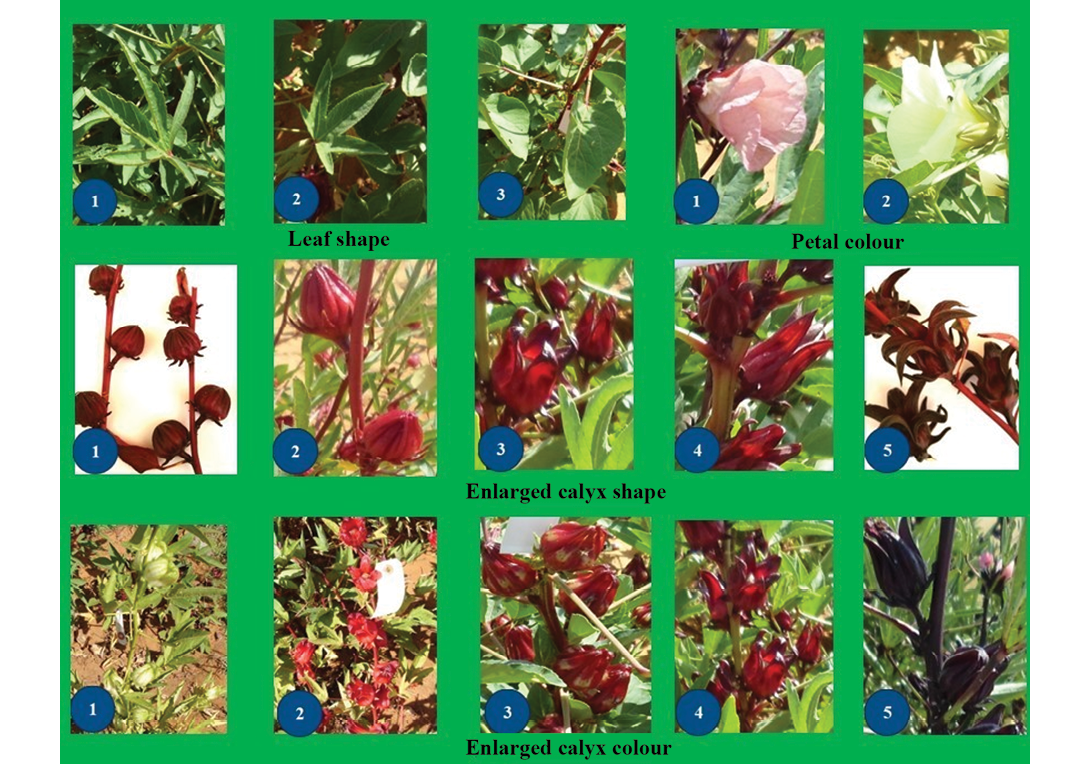
Figure 2. Variations in leaf shapes, petal colours, and enlarged fully ripe calyx shapes and colours observed among different roselle accessions. Leaf shape: 1, deeply incised narrowly lobed; 2, shallowly incised broadly lobed; 3, non-lobed. Petal colour: 1, pinkish; 2, yellowish. Enlarged fully ripe fleshy calyx shape: 1, fully closed; rounded calyx. 2, slightly open calyx; 3, partially open calyx with lobes bending inwards; 4, fully open calyx with lobes pointing upwards; 5, fully open calyx with lobes curving outwards. Enlarged fully ripe fleshy calyx colour: 1, white; 2, light red; 3, red with whitish patches; 4, red; 5, dark red.
The calyces of different accessions had different colours, including dark red, red, light red, red with whitish patches, and white (Figure 2). Red was the most common colour, occurring in 61% of the accessions. White and light red calyces were observed in 18% and 11% of the accessions, respectively, and were considered rare. Dark red and red calyces with whitish patches were the least common, occurring in 3% and 2% of the accessions, respectively. The remaining 5% of accessions were heterogeneous for this character, producing calyces with mixed colours within the same accession.
Clustering results
The classical clustering grouped all accessions into two main clusters (A and B) at Euclidean distance of 3.5 (Figure 3). At a distance of 3, accessions under cluster B grouped into three subclusters (B1, B2 and B3), while those under cluster A remained without further subclustering. Cluster B contained the absolute majority of the accessions (87%) consisting of 71 accessions collected from the different five states of Darfur, while cluster A was composed of only 11 accessions (13%), all from West Darfur state. Subcluster B1 comprised only one accession from West Darfur, while subcluster B2 comprised 25 accessions from Central Darfur (11) and West Darfur (14). Subcluster B3 comprised 45 accessions, constituting 55% of the total characterized accessions, including 17 from North Darfur and 26 from East Darfur, and one each from West Darfur and South Darfur (Supplemental Table 2). Therefore, the accessions from Central Darfur, East Darfur and North Darfur each clustered together within a single subcluster. In contrast, the accessions from West Darfur were distributed across several groups: 11 accessions were assigned to cluster A, 14 to subcluster B2, one to subcluster B1, and one to subcluster B3, together with accessions from other states.
When accessions in either of the clusters or subclusters were compared in terms of morphological features, it was observed that all accessions under cluster A, which were collected from West Darfur, had white flowers and white enlarged calyces. On the other hand, all accessions under subcluster B2 had pinkish flowers and calyces with red colour of different degrees. However, almost all accessions under subcluster B3 (44 accessions) had yellow flowers, except for one accession with whitish flowers; all produced calyces with either white or red colours. In other words, all characterized accessions were mostly separated under different clusters on the basis of flower colours, where cluster A was fully characterized by white flowers, subcluster B2 was fully characterized by pinkish flowers, and subcluster B3 was almost fully characterized by yellowish flowers, indicating the significant role of flower colour in the separation pattern of the studied accessions (Supplemental Table 2). Interestingly, roselle accessions with white flowers and white calyces were only confined to West Darfur state. On the other hand, the accessions with pinkish flowers were confined to both Central and West Darfur states, carrying at the same time red coloured calyces at different degrees, while the accessions with yellow flowers were only confined to North and East Darfur states with calyces that were mostly red in colour. So, cluster separation was very much related to the site of collection as well as the colour of the flowers.
Moreover, 11 groups of morphologically identical accessions were identified. Each group comprised two to seven accessions clustering at zero Euclidean distance, at the bottom of the y-axis of the clustering dendrogram, indicating no dissimilarity among the accessions within each group (Figure 3 and Supplemental Table 3). Notably, all but two of these groups comprised accessions collected from the same state in the Darfur region. This suggests that the same genotype may have been collected from different locations within a given state.
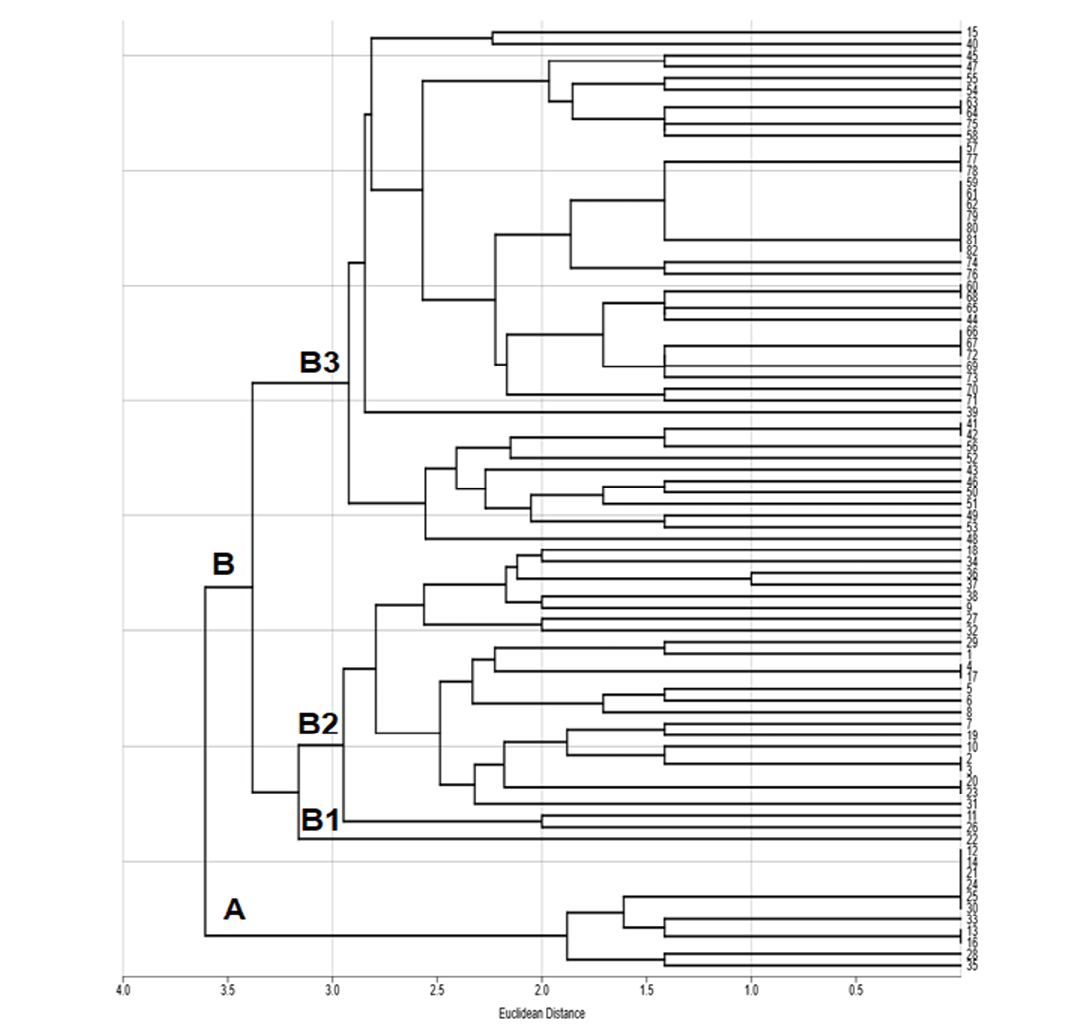
Figure 3. Dendrogram showing clustering patterns of characterized roselle accessions based on morphological traits. Accessions on the y-axis are denoted with numeric codes (Supplemental Table 2). Four major clusters were identified: Cluster A (West Darfur), Cluster B1 (West Darfur), Cluster B2 (West and Central Darfur), and Cluster B3 (North, East, West, and South Darfur)
Discussion
As a result of the germplasm collecting missions conducted in 2014 and subsequent years in the Darfur region, a total of 202 roselle accessions were collected from the states of Central Darfur, West Darfur, North Darfur, South Darfur and East Darfur (El-Tahir et al, 2025). This was, in fact, the largest number of roselle accessions collected after 2002 from one region compared to those collected during the same period from the rest of the regions, which in total counted 142 accessions. This relatively large collection reflected the importance of Darfur as a main producing region of roselle in Sudan together with its neighbouring Kordofan region, where roselle is cultivated under rain-fed conditions for local consumption and export (Mohamed et al, 2012). Three hundred ninety-six (396) roselle accessions held by APGRC were collected from different regions of Sudan until 2022 (www.genesys-pgr.org/a/v285MO1q33M), of which 276 originated from Kordofan and Darfur combined.
Morphological characterization of roselle has received limited attention worldwide, with only a small number of traits being investigated (Satyanarayana et al, 2022). Therefore, the present study contributes to addressing this gap. Our 2013 work characterized 126 Sudanese roselle accessions and reported considerable variation within and among accessions for both qualitative and quantitative characters such as growth habit, as well as leaf, stem, flower and calyx characteristics (Mohamed and Elgabri, 2013). The majority of these accessions (82) were collected from the Kordofan region, neighbouring the Darfur region to the east, while the rest were from other regions in the country. However, these 82 accessions represented only approximately 41% of the total accessions collected from the Darfur region from 2014 onwards, with the remaining accessions planned for characterization in subsequent studies.
Compared with the results previously reported for accessions from the Kordofan region and other regions of Sudan, the Darfur collection also showed considerable variation in several qualitative traits. However, the Darfur collection included a higher proportion of accessions that were homogeneous within each accession for the different traits than the collections characterized previously. In fact, the proportion of heterogeneous accessions collected from the Darfur region ranged from 2% to 13% for almost all characters, except for stem colour, which was heterogeneous in 28% of accessions. In contrast, heterogeneity for the different characters in the previously characterized collection ranged from 2 to 55%, with most characters showing heterogeneity in 20–55% of the accessions (Mohamed and Elgabri, 2013). This might be indicative of a tendency by roselle farmers in Darfur in recent years to select and cultivate more pure strains rather than mixed ones compared with farmers in Kordofan and other regions in earlier years. However, the occurrence of within-accession variation may also be related to the reproductive biology of roselle. Although roselle is predominantly self-pollinated, a limited degree of natural cross-pollination can occur (Vaidya, 2000), leading to variability within subsequent generations if no measures are taken to prevent natural outcrossing, which normally occurs in the fields from where farmers get their seeds for the coming seasons.
Generally, the variations observed in the roselle accessions from Darfur were consistent with previous studies on similar traits of roselle from other countries. For example, five strains from Central America, Egypt, India, Thailand and Senegal were found to differ morphologically in a number of traits such as leaf shape (3–5 lobes), petal colour (yellow, orange, red) and calyx shape (conical to longish) and colour (different kinds of red) (El Afry et al, 1979). Also, considerable diversity in qualitative traits such as plant growth habit and leaf base shape, was also observed among 81 accessions obtained from different African countries, and characterized in Ethiopia (Tilet et al, 2024). As these studies were conducted over several decades, from 1979 to 2024, the continued observation of variation among roselle genetic resources suggests that this diversity has persisted over time (El Afry et al, 1979 and Tilet et al, 2024). Nevertheless, these genetic resources should be conserved to prevent the erosion of diversity resulting from climate change and the increasing tendency of farmers to replace traditional materials with uniform or improved varieties, as suggested by the findings of the present study. Conservation is particularly important for traits that were found to occur rarely or very rarely, as their loss could further reduce the diversity available for future cultivation and breeding. For roselle, both ex situ and in situ conservation approaches should be used as they are complementary approaches for plant genetic resources conservation. Hence, arrangements for on-farm and in situ conservation of roselle diversity in Darfur and Kordofan, as the main regions for production and diversity, are strongly encouraged. The importance of on-farm conservation has been well articulated by Khoury et al (2022), particularly in situations where important diversity is facing ongoing or emerging threats, or where there is a need to recover diversity that has already been lost. These considerations may be particularly relevant to roselle in Sudan. In addition to on-farm conservation, safety duplication is an important strategy for safeguarding crop genetic resources against potential loss. In this regard, APGRC has taken measures to secure roselle germplasm in the Svalbard Global Seed Vault. More than 5,000 accessions have been safety duplicated there so far, including 72 roselle accessions (seedvault.nordgen.org), which must be significantly increased in the near future to cover all roselle accessions held by APGRC.
All accessions from Darfur had smooth stems, suggesting farmer-driven selection against prickly types, likely due to handling difficulties during fieldwork and harvesting. This agrees with the reports by McClintock and El Tahir (2004) that roselle stems are generally known to be glabrous to sparsely pubescent, sometimes sparsely prickly.
The most notable variations with multiple descriptor states were observed on enlarged fleshy calyces, indicating a wider chance for selection on such a main consumable part. The multiple characteristics observed on the calyx of roselle accessions from Darfur were in agreement with what was reported by Satyanarayana et al (2022), who found that calyx pigmentation and pod shape were variable traits for calyx and seed crop of roselle. The absolute majority of the characterized accessions (82%) produced fleshy enlarged calyces with various degrees of red colour, which is consistent with a crop mainly produced for the dried calyces used in cold and hot coloured beverages. The different red colour degrees, from light red to dark red, is indicative to different anthocyanin levels, making such accessions promising for different uses of coloured calyx products, including food and pharmaceutical uses. This is supported by the findings of Shruthi et al (2016), who reported that aqueous extracts of roselle calyces have characteristic intense red colouration due to the presence of anthocyanins, which could be utilized as a colouring agent in pharmaceutical products.
Moreover, roselle plants with anthocyanin pigmentation are able to withstand the harsh Sahelian environment better than plants with a yellow-green colour (Stevels, 1990). Therefore, the dominance of roselle variants with red colours on the fleshy calyces and stems could be attributed to natural selection under the harsh conditions in both Kordofan and Darfur regions of Sudan, where roselle is produced within the low rainfall savannah zone on sandy soil with other crops such as millet, sesame, groundnut and watermelon (Mahgoub, 2014). Such remarkable variations observed in calyx shapes and colour indicate the presence of great diversity that would be promising for further uses and possible improvements for quality as well as for drought resistance in the context of climate change, an area that has received limited attention in roselle. Information on the genetics, breeding, and production of roselle in relation to climate change adaptation is scarce (Mahunu, 2021).
The clustering analysis showed a tendency for accessions from most of the states in Darfur to group separately within a single cluster, especially those from Central Darfur, North Darfur and East Darfur, indicating a considerable degree of similarity between accessions within each of these states. One possible explanation is the practice of seed exchange among roselle farmers within these areas, which may have contributed to the dissemination of locally adapted genotypes with relatively similar sets of traits. This is further proved by the observation of similar common traits, such as petal colour, within accessions from each of these states. However, the accessions collected from West Darfur were mainly dispersed into two clusters out of four, in addition to one accession standing alone as a separate subcluster, and another one grouping alone with others from other states, indicating a higher level of variation within West Darfur compared to the rest of the states.
As mentioned by Bramel et al (2025), characterization of the composition of collections is needed for improved efficiency and for securing long-term conservation of priority genetic resources. It is important to note that, although variations were detected among the roselle accessions examined in the present study, 33 accessions were grouped into 11 sets of similar accessions, suggesting the possibility that the same genotypes had been collected from different locations. This may be due to the exchange of seeds of the same genotype among farmers within a state. These accessions may represent duplicates, but this could only be verified by further morpho-agronomic and genetic characterization. Duplicates may occur in germplasm collections for various reasons, resulting in redundancies that should be identified and eliminated to improve collection composition (van Treuren and van Hintum, 2003). This issue was also highlighted recently by Bramel et al (2025), who examined the composition of ex situ collections conserved by 20 national genebanks and emphasized the need for collection holders to carefully reassess their collections, both individually and collectively, within the global conservation system. Such efforts are particularly important given the significant costs and limited resources available for long-term ex situ conservation. Accordingly, suspected roselle duplicates should be considered when selecting accessions from the genebank for utilization to avoid unnecessary redundancy. Once their duplicate status has been confirmed, appropriate management measures, including the possible removal of redundant accessions, may be considered to improve the efficiency of genebank collection management.
The present study highlights the richness of Sudanese roselle genetic resources, particularly in traits related to the enlarged fleshy calyces, the major usable organs. The observed variation in calyx shape and colour indicates that these accessions represent promising materials for further varietal improvement, especially for yield potential and quality attributes. Their effective utilization could help Sudan maintain and further strengthen its position in the global roselle trade, both in terms of production volume and product quality.
Although this study has revealed considerable variation among roselle accessions collected from the Darfur region, these preliminary findings need to be confirmed through further morpho-agronomic characterization as well as genotyping using molecular tools. A recent study by Coffie et al (2025) on 26 roselle accessions from different West African countries highlighted the importance of assessing genetic diversity in roselle germplasm for diverse agro-morphological traits, and the need to employ both agro-morphological and molecular structuring. A more comprehensive understanding of the nature and extent of diversity within Sudanese roselle genetic resources will also require the characterization of the remaining accessions collected from Darfur, as well as those from other regions of the country. Further evaluation for desirable traits such as yield potential and drought tolerance would be necessary to enhance the use of such genetic resources, especially in breeding programmes. From a germplasm management perspective, more attention should be given in genebanks to conserving rare and very rare traits during seed multiplication or regeneration. These include, for example, fully rounded calyces and dark red calyces, of which the latter are known to be rich in calcium, magnesium and zinc (Babalola et al, 2001).
Conclusion
Roselle (Hibiscus sabdariffa L.) germplasm collected from Darfur, in western Sudan, exhibited considerable phenotypic variation within and among the studied accessions. Distinctive variations were observed in overall plant morphology and in stem, leaf, inflorescence and calyx characters. Although some accessions produced white calyces, the majority exhibited red calyces of different degrees of pigmentation. This variation highlights the richness of roselle germplasm from Darfur in anthocyanin pigmentation, which is valuable for the production of naturally coloured food products, as well as for its pharmaceutical properties. It is also known for its importance in withstanding harsh conditions and making roselle plants tolerant to drought. Anthocyanins have also been associated with plant responses to environmental stress, such as drought. The study also revealed phenotypic diversity among and within the administrative states of Darfur, with greater similarity among accessions from Central, East and North Darfur. However, some characters appeared to be confined to some states, such as white flowers and white calyces in West Darfur. However, further morpho-agronomic and molecular characterization and evaluation studies are needed to better understand roselle diversity and enhance its use in research and breeding.
Supplemental Table 1. Roselle accessions collected from different Darfur states and their collection years and characterization seasons
Supplemental Table 2. Passport and Characterization data and clustering groups of roselle accessions from Darfur region
Supplemental Table 3. Sets of accessions similar to each other and their sites of collection
Author contributions
EIM: Planned the study and oversaw its implementation in the field and laboratory. Conceived the idea for the paper and prepared the initial draft, including data analysis. Revised the draft in response to the co-author’s suggestions and subsequently addressed reviewers’ and editors’ comments. MAME: Implemented the study in the field and laboratory, including data collection. Reviewed the first draft prepared by the first author and subsequent versions of the manuscript.
Acknowledgements
The authors are thankful to the Agricultural Research Corporation in Sudan for providing the necessary financial resources to conduct the characterization activities leading to the results reported here. Special thanks are extended to the administration of Elobeid Agricultural Research Station, which greatly facilitated the implementation of such activities within the research farm and laboratories of the station. We are very grateful to all technical staff of the APGRC in the central genebank at Wad Medani for preparing the seed samples and related information that were used in this study. All who participated in this work, either by preparing the land or growing and taking care of the plants or recording the data, are very much thanked.
Conflict of interest statement
The authors declare that there are no conflicts of interests.
Ethics statement
This work was conducted with full consideration for known research ethical guidelines followed by the ARC. Nothing specific to report here except to say that all materials studied, and information resulted are openly available for use in research and breeding as well as for restoring original farming systems, in accordance with official regulations.
References
Abdalla, E. A, Aune, J. B., Osman, A. K. and Idris, A. M. (2018). Intensification of rain-fed groundnut production in North Kordofan State, Sudan. Journal of Agriculture and Rural Development in the Tropics and Subtropics Vol. 119 No. 1: 79–84.
Ahmed, M. I. Y, Babiker, A. Z. and Mohammed, E. I. (2025). Plant genebank of Sudan: Towards recovery from the wreckage of war to a new era of further capacity development based on lessons learnt from similar situations. Plant Genetic Resources: Characterization and Utilization 1–7. https://doi.org/10.1017/S147926212510035X
Babalola, S. O., Babalola, A. and Aworh, O. C. (2001). Compositional attributes of the calyces of roselle (Hibiscus sabdariffa L.). The Journal of Food Technology in Africa, Vol. 6, No. 4: 133- 134.
Bramel P., Hanson J. and Jamora N. (2025). Composition of ex situ collections conserved by 20 national genebanks and implications for global conservation priorities. Plant Genetic Resources: Characterization and Utilization 1–11. https://doi.org/10.1017/S1479262125100464.
Coffie, N., Tetteh, A. Y., Twumasi, P. and Cudjoe, J. A. (2025). Agromorphological evaluation and molecular genotyping reveal genetic variation in roselle (Hibiscus sabdariffa L.) of West Africa. Tropical Plant Research 12(2): 38–54
El Afry, M. M., Prinz, F. D. and Rehm, S. (1979). Morphological studies on roselle (Hibiscus sabdariffa L. var. sabdariffa). Tropenlandwirt 80: 83-93.
El Naim, A. M., Khaliefa, E. H., Ibrahim, K. A., Ismaeil, F. M., and Zaied, M. M. B. (2012). Growth and Yield of Roselle (Hibiscus sabdariffa L) as Influenced by Plant Population in Arid Tropic of Sudan under Rain-fed. International Journal of Agriculture and Forestry, 2(3): 88-91 DOI: https://:doi.org/10.5923/j.ijaf.20120203.02
El-Tahir, I. M., Babiker, A. Z., Abdalla, E. A., Ahmed, A. A. E., Goda, M. O. Y. and Elgabri, M. A. M. (2025). Overview of germplasm collecting activities for plant genetic resources for food and agriculture in Sudan from 2002 to 2022. Genetic Resources 6 (11), 24–40. doi: https://doi.org/10.46265/genresj.BWNF7962.
FAO (2004). Hibiscus: Post-Production Management for Improved Market Access Organisation: Food and Agriculture Organization of the United Nations (FAO), AGST Prepared by Anne Plotto. Edited by François Mazaud, Alexandra Röttger, Katja Steffel, Last reviewed: 22/04/2004. https://www.fao.org/fileadmin/user_upload/inpho/docs/Post_Harvest_Compendium_-_Hibiscus.pdf
Hammer, Ø., Harper, D. A. T., and Ryan, P. D. (2001). PAST: Paleontological Statistics Software Package for Education and Data Analysis. Palaeontologia Electronica 4(1): 9pp.
Islam, A. K. M., Aminul, J. T. S, and Yeasmin, S. (2016). Roselle: A Functional Food with High Nutritional and Medicinal Values. Fund. Appl. Agric. 1(2): 44-49. Fundamental and Applied Agriculture Journal. url: https://doi.org/10.5455/faa.302644242
Islam, M. M. (2019). Food and Medicinal Values of Roselle (Hibiscus sabdariffa L. Linne Malvaceae) Plant Parts: A Review. Open J Nutr Food Sci. 1(1): 1003.
Khoury, C. K., Brush, S., Costich, D. E., Curry, H. A., Haan, S., Engels. J. M. M., Guarino, L., Hoban, S., Mercer, K. L., Miller, A. J., Nabhan, G. P., Perales, H. R., Richards, C., Riggins, C. and Thormann, I. (2022). Crop genetic erosion: understanding and responding to loss of crop diversity. New Phytologist 233: 84–118. doi: https://doi.org/10.1111/nph.17733
Mahgoub, F. (2014). Current Status of Agriculture and Future Challenges in Sudan. Uppsala: Nordiska Afrikainstitutet. http://www.diva-portal.org/smash/get/diva2:712485/fulltext01.pdf
Mahunu, G. K. (2021). Breeding, genetic diversity, and safe production of Hibiscus sabdariffa under climate change. In Roselle (Hibiscus sabdariffa) Chemistry, Production, Products, and Utilization Edited by Abdalbasit Adam Mariod. Pp 1 – 14. Publisher: Nikki Levy Acquisitions, India
McClintock, N. C. and El-Tahir, I. M. (2004). Hibiscus sabdariffa L.. In Plant Resources of Tropical Africa 2. Vegetables, ed. Grubben, G. J. H. and Denton, O. A., (Wageningen, Netherlands: PROTA Foundation), 321- 326
Mohamed, B. B., Sulaiman, A. A., and Dahab, A. A. (2012). Roselle (Hibiscus sabdariffa L.) in Sudan, Cultivation and Their Uses. Bull. Environ. Pharmacol. Life Sci 1(6), 48–54.
Mohamed, E. I. and El Gabri, M.A.M. (2013). Morphoagronomic variation within local genetic resources of roselle (Hibiscus sabdariffa var sabdariffa L.) in Sudan. Scholarly J. Agric. Sci., 3(8): 317-324.
Osei-Kwarteng, M., Gweyi-Onyango, J.P. and Mahunu, G.K., 2021. Harvesting, storage, postharvest management, and marketing of Hibiscus sabdariffa. In Roselle (Hibiscus sabdariffa) (pp. 15-31). Academic Press. https://doi.org/10.1016/B978-0-12-822100-6.00010-0
Park, S. H., Ginibun, F. C, Roh, M. S, Li, M., Suh, J. K., Joung, Y. H. (2015). Evaluation of roselle based on the internal transcribed spacer sequence of rRNA gene. Emirates Journal of Food and Agriculture. 2015. 27(8): 659-661 doi: https://doi.org/10.9755/ejfa.2015.04.062
Purseglove, J.W. (1974). Tropical crops: Dicotyledons. Longman, London. 719 p. Tropical crops, dicotyledons : Purseglove, J. W. (John William), 1912- : Free Download, Borrow, and Streaming : Internet Archive.
Satyanarayana, N. H., Mukherjee, S., Sarkar, K. K., Visalakshmi, V. and Roy, S. K. (2022). Morphological Characterization of Roselle (Hibiscus sabdariffa L.) Germplasm for Qualitative Traits. Int. J. Ag. Env. Biotech., 15(Special Issue): 613-618.
Shruthi, V. H., Ramachandra, C. T., Nidoni, U., Hiregoudar, S., Naik, N. and Kurubar, A. R. (2016). Roselle (Hibiscus sabdariffa L.) as a source of natural colour: a review. Plant Archives Vol. 16 No. 2, 2016 pp. 515-522.
Solangi, A. H., Siddiqui, A. A., Junejo, S., Arain, M. Y., Ansari, M. A., Talpur. U. A. and AhadKolachi, A. (2017). Roselle (Hibiscus sabdariffa L.) a multipurpose medicinal plant and its uses: a review. Int. J. Biol. Res. 5 (1): 21-24.
Stevels, J. M. C. (1990). Légumes traditionnels du Cameroun: une étude agrobotanique. Wageningen Agricultural University Papers No 90-1: Wageningen University, Wageningen, Netherlands, 262 pp.
Tilet, T., Magule, T., Abate, B., and Lire, H. (2024). Morpho-agronomic and physiological characterization of African roselle (Hibiscus sabdariffa L.) accessions at Hawassa, Ethiopia. Research Square. DOI: https://doi.org/10.21203/rs.3.rs-4098035/v1. Preprint
Vaidya, K.R. (2000) Natural cross-pollination in roselle, Hibiscus sabdariffa L. (Malvaceae). Genetics-and-Molecular-Biology 23(3): 667-669.
van Treuren, R. and van Hintum, T. J. L. (2003). Marker-assisted reduction of redundancy in germplasm collections: genetic and economic aspects. Acta Hortic. 623, 139-149
DOI: https://doi.org/10.17660/ActaHortic.2003.623.15
Wilson, F. D. (1994). The genome biogeography of Hibiscus L. section Furcaria DC. Genet Resour Crop Evol 41, 13–25 (1994). https://doi.org/10.1007/BF00051419
Yirzagla, J. , Quandahor, P., Amoako, O. , Akologo, L., Lambon, J., Imoro, A., Santo, K. and Akanbelum, O. (2023). Yield of Roselle (Hibiscus sabdariffa L.) as Influenced by Manure and Nitrogen Fertilizer Application. American Journal of Plant Sciences, 14, 599-612. doi: https://doi.org/10.4236/ajps.2023.145040.