

Expanding the genetic diversity of chickpeas from the Ukrainian genebank to new agricultural systems
Article Sidebar
Main Article Content
Abstract
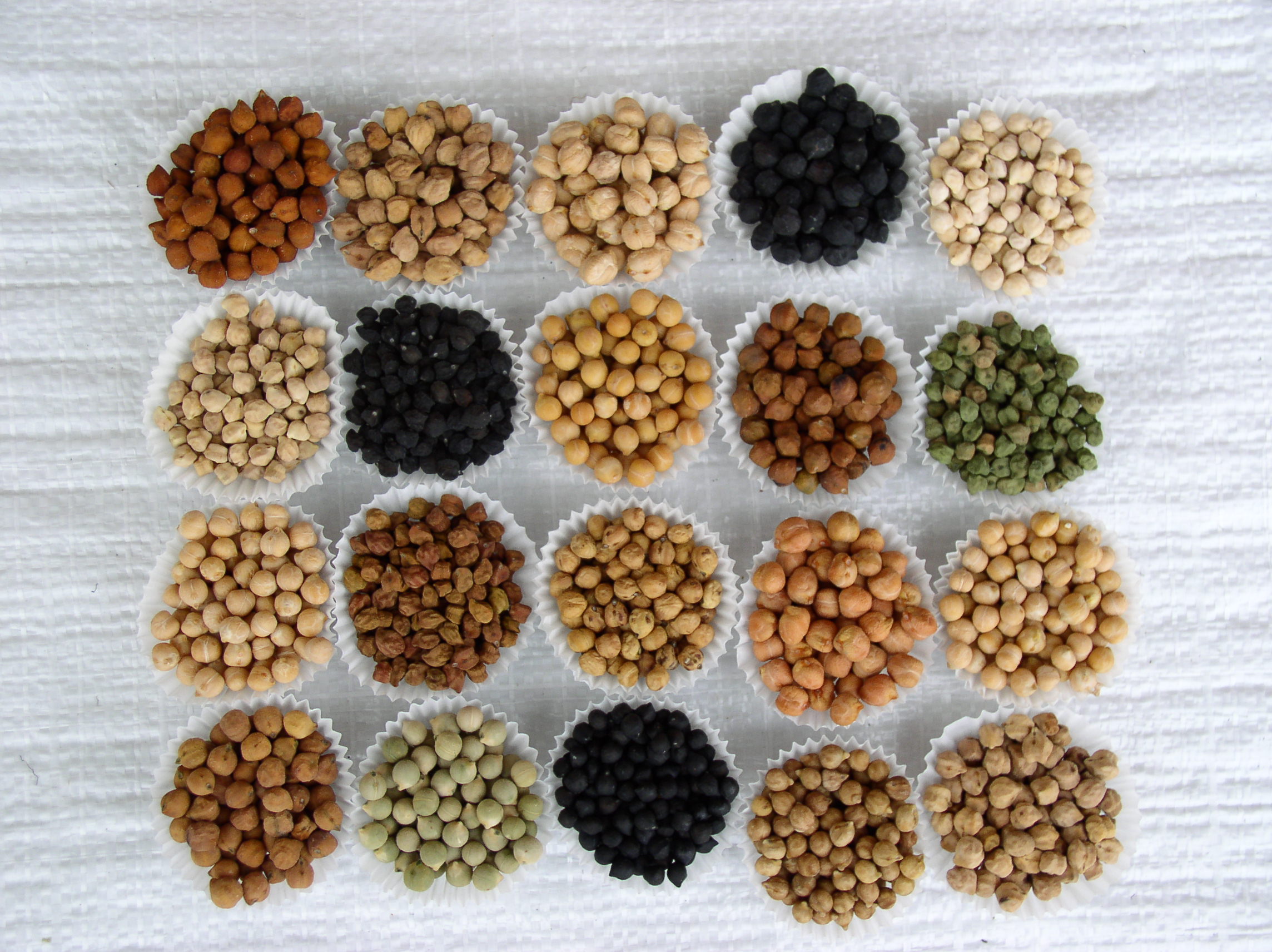
Enhancing crop resilience to abiotic factors in an increasingly unstable climate is a critical challenge, one that can be met by actively using the existing gene pool of the crops. A total of 26 new chickpea lines with diverse ancestry were selected from the Ukrainian genebank with the objective of widening the genetic base and creating varieties that are more adaptable to the prevailing climatic conditions in Ukraine. The research was conducted between 2019 and 2021 at four distinct locations: dry forest-steppe, Kharkiv region (Elitne); wet forest-steppe, Poltava region (Ustymivka) and hyper-humid Polissya, Vinnytsia region (Bokhonyky); and the extremely arid conditions of the Odesa region (Khlibodarske, 2020). A GGE-biplot analysis was utilized to assess the adaptability of the chickpea lines to diverse environmental conditions. New breeding lines with an elevated degree of adaptability to the Ukrainian forest-steppe zone were identified. Furthermore, three new sources with potential resistance to hyper-humidity were identified (genotypes 2072, 2067 and 2065). Genotypes 2068 and 2088 have been registered in the NCPGRU as sources of complex valuable traits, and genotype 2087 has been registered as a source of high adaptability. New and existing chickpea accessions from the genebank of Ukraine can serve as the basis for the development of new breeding materials, thus helping solve modern challenges facing breeders.
Article Details

This work is licensed under a Creative Commons Attribution 4.0 International License.
Authors retain copyright of the articles published in Genetic Resources and grant the journal right of first publication with open access. All articles published in Genetic Resource are licensed under Creative Commons Attribution 4.0 International License (CC BY 4.0) that allows others to download, share and adapt the work for commercial and non-commercial purposes as long as proper attribution to the original article is given. Genetic Resources permits and encourages authors to post items submitted to the journal (including the publisher's final layout) on personal websites or institutional repositories after acceptance and/or publication, while providing bibliographic details that credit their publication in Genetic Resources.




Berrada, A.F., Shivakumar, B.G., Yaduraju, N.T. (2007). Chickpea in cropping systems. In: Yadav S.S., Redden R.J., Chen W. & Sharma B., eds. Chickpea Breeding and Management. Pondicherry, India: CAB. International, 193-212. DOI: https://doi.org/10.1079/9781845932138.009
Bushulian, O.V., Stelmach, A.F., Lamari, N.P., Fait, V.I. (2018). Genotype reaction and stability of crop production of chickpea (Cicer arietinum L.) in years of testing. Factors of Experimental Evolution of Organisms, 23, 35-39. (In Ukrainian). DOI: https://doi.org/10.7124/FEEO.v23.986
Chernik, I. V., Tryhuba, O. V. (2023). Common chickpea (Cicer arietinum L.) – a prospective legume culture of the Western Forest Steppe of Ukraine. Scient. not. Ternop. national. pedagogical. un. Ser. Biol (Nauk. Zap. Ternop. nat. ped. univ. Ser. Biol.), 83(3–4), 118-126. (In Ukrainian). DOI: https://doi.org/10.25128/2078-2357.23.3-4.13
Dron, N., Simpfendorfer, S., Sutton, T., Pengilley, G., Hobson, K. (2022). Cause of Death: Phytophthora or Flood? Effects of Waterlogging on Phytophthora medicaginis and Resistance of Chickpea (Cicer arietinum). Agronomy, 12(1), 89. https://doi.org/10.3390/agronomy12010089 DOI: https://doi.org/10.3390/agronomy12010089
FAOSTAT (2023). https://www.fao.org/faostat/en/#data/QCL [Accessed 07 mai 2025].
Farshadfar, E., Rashidi, M., Jowkar, M., Zali, H. (2013). GGE Biplot analysis of genotype × environment interaction in chickpea genotypes. Europ. J.l of Exp. Biol., 3, 417–423.
Finlay, K.W., Wilkinson, G.N. (1963). The Analysis of Adaptation in a Plant-Breeding Programme. Australian Journal of Agricultural Research, 14 (6). CSIRO PUBLISHING: 742. https://doi.org/10.1071/AR9630742 DOI: https://doi.org/10.1071/AR9630742
Fritsche-Neto, R., Resende, R. T., Olivoto, T., Garcia-Abadillo, J., Nascimento, M., Bahia, M. A. M., Jarquin, D., & Vieira, R. A. (2025). Prediction-based breeding: Modern tools to optimize and reshape programs. Crop Science, 65, e70175. https://doi.org/10.1002/csc2.70175 DOI: https://doi.org/10.1002/csc2.70175
Gan, Y., Zentner, R. P., McDonald, C. L., Warkentin, T., Vandenberg, A. (2009). Adaptability of chickpea in northern high latitude areas—Maturity responses. Agric. For. Meteor., 149, 711-720. https://doi.org/10.1016/j.agrformet.2008.10.026 DOI: https://doi.org/10.1016/j.agrformet.2008.10.026
Gaur, P.M., Gowda, C.L.L., Knights, E.J., Warkentin, T., Açikgoz, N., Yadav, S. S., Kumar, J. (2007). Breeding achievements. In: Yadav, S.S., Redden, R.J., Chen, W., Sharma, B., eds. Chickpea Breeding and Management. Pondicherry, India: CAB. International, 391-416. DOI: https://doi.org/10.1079/9781845932138.019
Genesys-PGR. International Plant Genetic Resources for Food and Agriculture (PGRFA) information platform. https://www.genesys-pgr.org [Accessed 26.11.2025].
Henry, L., Wickham, H. (2023). rlang: Functions for Base Types and Core R and 'Tidyverse' Features. R package version 1.1.1. https://CRAN.R-project.org/package=rlang
Hijmans, R. (2025). terra: Spatial Data Analysis. R package version 1.8-60. https://CRAN.R-project.org/package=terra
Hristov, J., Toreti, A., Pérez Domínguez, I., Dentener, F., Fellmann, T., Elleby, C., Ceglar, A., Fumagalli, D., Niemeyer, S., Cerrani, I., Panarello, L., Bratu, M. (2020). Analysis of climate change impacts on EU agriculture by 2050: JRC PESETA IV project: Task 3. Publications Office https://publications.jrc.ec.europa.eu/repository/handle/JRC119632
Khan, M. N., Wahab, S., Wahid, N., Shah, S. N., Ullah, B., Kaplan, A., Razzaq, A., Bibi, M., Suleman, F., Ali, B. (2024). Chapter 4 - Impact of climate change on yield and quality of legumes. In: Fahad S., Adnan M., Munir I., Lal R., Nawaz T. & Shah S., eds. Challenges and Solutions of Climate Impact on Agriculture. Academic Press, 85-111. https://doi.org/10.1016/B978-0-443-23707-2.00004-0 DOI: https://doi.org/10.1016/B978-0-443-23707-2.00004-0
Kobyzeva, L. N., Bezugla, O. M., Silenko, S. I., Kolotilov, V. V., Sokol, T. V., Dokukina, K. I., Vasylenko, A. O., Bezugliy, I. M., Vus, N. (2016). Methodical recommendations for the study of genetic resources of leguminous crops. Kharkiv: NAAS, Plant Production Institute V. Ya. Yuryev. (In Ukrainian).
Lampkin, N.H., Pearce, B.D., Leake, A.R., Creissen, H., Gerrard, C.L., Girling, R., Lloyd, S., Padel, S., Smith, J., Smith, L.G., Vieweger, A., Wolfe, M.S. (2015). The role of agroecology in sustainable intensification. Report for the Land Use Policy Group. Organic Research Centre, Elm Farm and Game & Wildlife Conservation Trust. 163 p
Makarchuk, M. A. (2021). The economically and valuable feature of selection number of chickpea (Cicer arietinum L.) in the condition of the Right-Bank Forest-Steppe. Journal of Uman NUH, 98(1), 210-219. https://doi.org/10.31395/2415-8240-2021-98-1-210-219 DOI: https://doi.org/10.31395/2415-8240-2021-98-1-210-219
Mohammadi, S., Rydgren, K., Bakkestuen, V., Gellespie, M.A. (2023). Impacts of recent climate change on crop yield can depend on local conditions in climatically diverse regions of Norway. Scientific Reports, 13, 3633. https://doi.org/10.1038/s41598-023-30813-7 DOI: https://doi.org/10.1038/s41598-023-30813-7
Olivoto, T. (2023). Analyzing multienvironment trials using GGE. https://tiagoolivoto.github.io/metan/articles/vignettes_gge.html
Olivoto, T., Lúcio, A. D. (2020). metan: an R package for multi-environment trial analysis. Meth. in Ecol. and Evol., 11, 783–789. https://doi.org/10.1111/2041-210X.13384 DOI: https://doi.org/10.1111/2041-210X.13384
Pedersen, T. (2024). patchwork: The Composer of Plots. R package version 1.3.0. https://CRAN.R-project.org/package=patchwork
Pixley, K. V., Cairns, J. E., Lopez-Ridaura, S., Ojiewo, C. O., Dawud, M. A., Drabo, I., Mindaye, T., Nebie, B., Asea, G., Das, B., Daudi, H., Desmae, H., Batieno, B. J., Boukar, O., Mukankusi, C.T.M., Nkalubo, S.T., Hearne, S. J., Dhugga, K. S., Gandhi, H., Snapp, S., Zepeda-Villarreal, E. A. (2023). Redesigning crop varieties to win the race between climate change and food security. Molecular Plant, 16(10), 1590-1611. https://doi.org/10.1016/j.molp.2023.09.003. DOI: https://doi.org/10.1016/j.molp.2023.09.003
Rakshit, S., Ganapathy, K.N., Gomashe, S.S., Rathore, A., Ghorade, R., Kumar, N., Ganesmurthy, K., Jain, Sk., Kamatar, M., Sachan, J., Ambekar, S., Ranwa, B., Kanawade, D., Balusamy, M., Kadam, D., Sarkar, A., Tonapi, V., Patil, J. (2012). GGE biplot analysis to evaluate genotype, environment and their interactions in sorghum multi-location data. Euphytica, 185, 465–479 https://doi.org/10.1007/s10681-012-0648-6 DOI: https://doi.org/10.1007/s10681-012-0648-6
Rani Das, R., Laporte, M.-A., Valette, L., Hazekamp, T., Arnaud, E., Rathore, A. (2024). Planteome/CO_338-chickpea-traits: CO_338-chickpea-traits ontology (V1.0) [Data set]. Zenodo. https://doi.org/10.5281/zenodo.11471775 / https://cropontology.org/term/CO_338:ROOT.
Raza, A., Razzaq, A., Mehmood, S.S., Zou, X., Zhang, X., Lv, Y., Xu, J. (2019). Impact of climate change on crops adaptation and strategies to tackle its outcome: A Review. Plants (Basel), 8(2), 34. https://doi.org/10.3390/plants8020034 DOI: https://doi.org/10.3390/plants8020034
R Core Team (2023). R: A Language and Environment for Statistical Computing. R Foundation for Statistical Computing, Vienna, Austria. https://www.R-project.org/
Rebollo, I., Aguilar, I., Pérez de Vida, F., Molina, F., Gutiérrez, L., & Rosas, J. E. (2023). Genotype by environment interaction characterization and its modeling with random regression to climatic variables in two rice breeding populations. Crop Science, 63, 2220–2240. https://doi.org/10.1002/csc2.21029 DOI: https://doi.org/10.1002/csc2.21029
Segherloo, A. E., Sabaghpour, S. H., Dehghani, H., Kamrani, M. (2010). Screening of superior chickpea genotypes for various environments of Iran using genotype plus genotype × environment (GGE) biplot analysis. J. of Plant Breed. and Crop Sci., 2(9), 286–292. https://doi.org/10.5897/JPBCS.9000115
Schauberger, P., Walker, A. (2022). openxlsx: Read, Write and Edit xlsx Files_. R package version 4.2.5.1. https://CRAN.R-project.org/package=openxlsx
Sloat, L.L., Davis, S.J., Gerber, J.S., Moore, F. C., Ray, D. K., West, P. C., Mueller, N. D. (2020). Climate adaptation by crop migration. Nature Communication, 11, 1243. https://doi.org/10.1038/s41467-020-15076-4 DOI: https://doi.org/10.1038/s41467-020-15076-4
Slowikowski, K. (2024). ggrepel: Automatically Position Non-Overlapping Text Labels with 'ggplot2'. R package version 0.9.6. https://CRAN.R-project.org/package=ggrepel.
Sylenko, S., Vus, N., Andrushchenko, O., Bezugla, O., Kobyzeva, L. (2024a). Certificate No. 2519 of registration of accession of plant gene pool. Cicer arietinum. L 261-18, UD0502245. Chickpea. Application No. 0050096. 23.03.2023. Authors: Sylenko S., Vus N., Andrushchenko O., Bezugla O., Kobyzeva L. Kharkiv, Ukraine. National Center of Plant Genetic Resources of Ukraine (in Ukrainian).
Sylenko, S., Vus, N., Andrushchenko, O., Bezugla O., Kobyzeva L. (2024b). Certificate No. 2520 of registration of accession of plant gene pool. Cicer arietinum. L 272-18, UD0502251. Chickpea. Application No. 0050097. 23.03.2023. Authors: Sylenko S., Vus N., Andrushchenko O., Bezugla O., Kobyzeva L. 28.03.2024. Kharkiv, Ukraine. National Center of Plant Genetic Resources of Ukraine (in Ukrainian).
Sylenko, S., Vus, N., Andrushchenko, O., Bezugla, O., Kobyzeva, L. (2024c). Certificate No. 2521 of registration of accession of plant gene pool. Cicer arietinum. L 290-18, UD0502262. Chickpea. Application No. 0050098. 23.03.2023. Authors: Sylenko S., Vus N., Andrushchenko O., Bezugla O., Kobyzeva L. 28.03.2024. Kharkiv, Ukraine. National Center of Plant Genetic Resources of Ukraine (in Ukrainian).
The Plant Breeding and Genetics Institute – National Center of Seed and Cultivar Investigation, 2024. Official page. https://sgi.in.ua/ [Accessed 07 May 2025].
Vaissie, P., Monge, A., Husson, F. (2023). Factoshiny: Perform Factorial Analysis from 'FactoMineR' with a Shiny Application. R package version 2.5. https://CRAN.R-project.org/package=Factoshiny
Varshney, R. K., Roorkiwal, M., Sun, S., Bajaj, P., Chitikineni, A., Thudi, M., Singh, N. P., Du, X., Upadhyaya, H. D., Khan, A. W., Wang, Y., Garg, V., Fan, G., Cowling, W. A., Crossa, J., Gentzbittel, L., Voss-Fels, K. P., Valluri, V. K., Sinha, P., Singh, V. K., Liu, X. (2021). A chickpea genetic variation map based on the sequencing of 3,366 genomes. Nature, 599(7886), 622–627. https://doi.org/10.1038/s41586-021-04066-1 DOI: https://doi.org/10.1038/s41586-021-04066-1
Vus, N., Kobyzeva, L. N., Bezuglaya, O. N. (2020). Determination of the breeding value of collection chickpea (Cicer arietinum L.) accessions by cluster analysis. Vavilov J. of Genetics and Breed., 24(3), 244–251. https://doi.org/10.18699/VJ20.617 DOI: https://doi.org/10.18699/VJ20.617
Vus, N. (2024). Certificate No. 2612 of registration of accession of plant gene pool. Cicer arietinum L. CIR 289-18, UD0502261. Chickpea. Application No. 0053000. 29.10.2024. Author: Vus N. Collectors: Sylenko S., Sichkar V, Bezugla O. 25.11.2024. Kharkiv, Ukraine. National Center of Plant Genetic Resources of Ukraine.
Watson, C. A., Reckling, M., Preissel, S., Bachinger, J., Bergkvist, G., Kuhlman,T., Lindström, K., Nemecek, T., Topp, C. F.E., Vanhatalo, A., Zander, P., Murphy-Bokern, D., Stoddard, F. L. (2017). Chapter 4. - Grain Legume Production and Use in European Agricultural Systems. In: Sparks D. L., eds. Advances in Agronomy. Academic Press, 144, 235-303. https://doi.org/10.1016/bs.agron.2017.03.003 DOI: https://doi.org/10.1016/bs.agron.2017.03.003
von Wettberg, E. J. B., Chang, P. L., Başdemir, F., Carrasquila-Garcia, N., Korbu, L. B., Moenga, S. M., Bedada, G., Greenlon, A., Moriuchi, K. S., Singh, V., Cordeiro, M. A., Noujdina, N. V., Dinegde, K. N., Shah Sani, S. G. A., Getahun, T., Vance, L., Bergmann, E., Lindsay, D., Mamo, B. E., Warschefsky, E. J., Dacosta-Calheiros, E., Marques, E., Yilmaz, M. A., Cakmak, A., Rose, J., Migneault, A., Krieg, C. P., Saylak, S., Temel, H., Friesen, M. L., Siler, E., Akhmetov, Z., Ozcelik, H., Kholova, J., Can, C., Gaur, P., Yildirim, M., Sharma, H., Vadez, V., Tesfaye, K., Woldemedhin, A.F., Tar'an, B., Aydogan, A., Bukun, B., Penmetsa, R. V., Berger, J., Kahraman, A., Nuzhdin, S. V., Cook, D. R. (2018). Ecology and genomics of an important crop wild relative as a prelude to agricultural innovation. Nat. communic., 9(1), 649. https://doi.org/10.1038/s41467-018-02867-z DOI: https://doi.org/10.1038/s41467-018-02867-z
Wickham, H. (2016). ggplot2: Elegant Graphics for Data Analysis. New York: Springer-Verlag. DOI: https://doi.org/10.1007/978-3-319-24277-4_9
Worku, W. (2016). Waterlogging effects on growth, nodulation and productivity of Desi and Kabuli chickpea (Cicer arietinum L.). Ethiopian Journal of Biological Sciences, 15(1), 55–77.
Yan, W., Kang, M. S., Ma, B., Woods, S., Cornelius, P. L. (2007). "GGE Biplot vs. AMMI Analysis of Genotype-by-Environment Data". Crop Science, 47 (2): 641–53. https://doi.org/10.2135/cropsci2006.06.0374 DOI: https://doi.org/10.2135/cropsci2006.06.0374
Yan, W., Tinker, N. A. (2006). Biplot analysis of multi-environment trial data: Principles and applications. Can. Journ. Plant Sci., 86(3), 623–645. https://doi.org/10.4141/P05-169 DOI: https://doi.org/10.4141/P05-169
Yan, W., Rajcan, I. (2002). Biplot analysis of test sites and trait relations of soybean in Ontario. Crop Sci., 42(1), 11–20. https://doi.org/10.2135/cropsci2002.1100 DOI: https://doi.org/10.2135/cropsci2002.1100
Zaparniuk, O.F., Sherepitko, V.V. (2011). Genotypic differences in the manifestation of morphobiological signs of chickpea plants (Cicer arietinum. L.). Collection of scientific works of Vinnytsia National Agrarian University (Zbirnyk naukovykh prats’ Vinnyts’koho natsional’noho ahrarnoho universytetu), 7(47), 79-83. (In Ukrainian).
Zaparniuk, O.F., Sherepitko, V.V. (2012). Manifestation of economically valuable traits of chickpea plants (Cicer arietinum L.) under soil and climatic conditions of the Podolsk region. Collection of scientific papers of the Institute of Bioenergy Crops and Sugar Beet (Zbirnyk naukovykh prats’ Instytutu bioenerhetychnykh kul’tur i tsukrovykh buryakiv), 14, 430-434. (In Ukrainian).
 This journal has been conceived as part of the