
Implementing safety duplication of Malaysian crop germplasm at the Svalbard Global Seed Vault: Workflow, outcomes and lessons learned
Article Sidebar
Main Article Content
Abstract
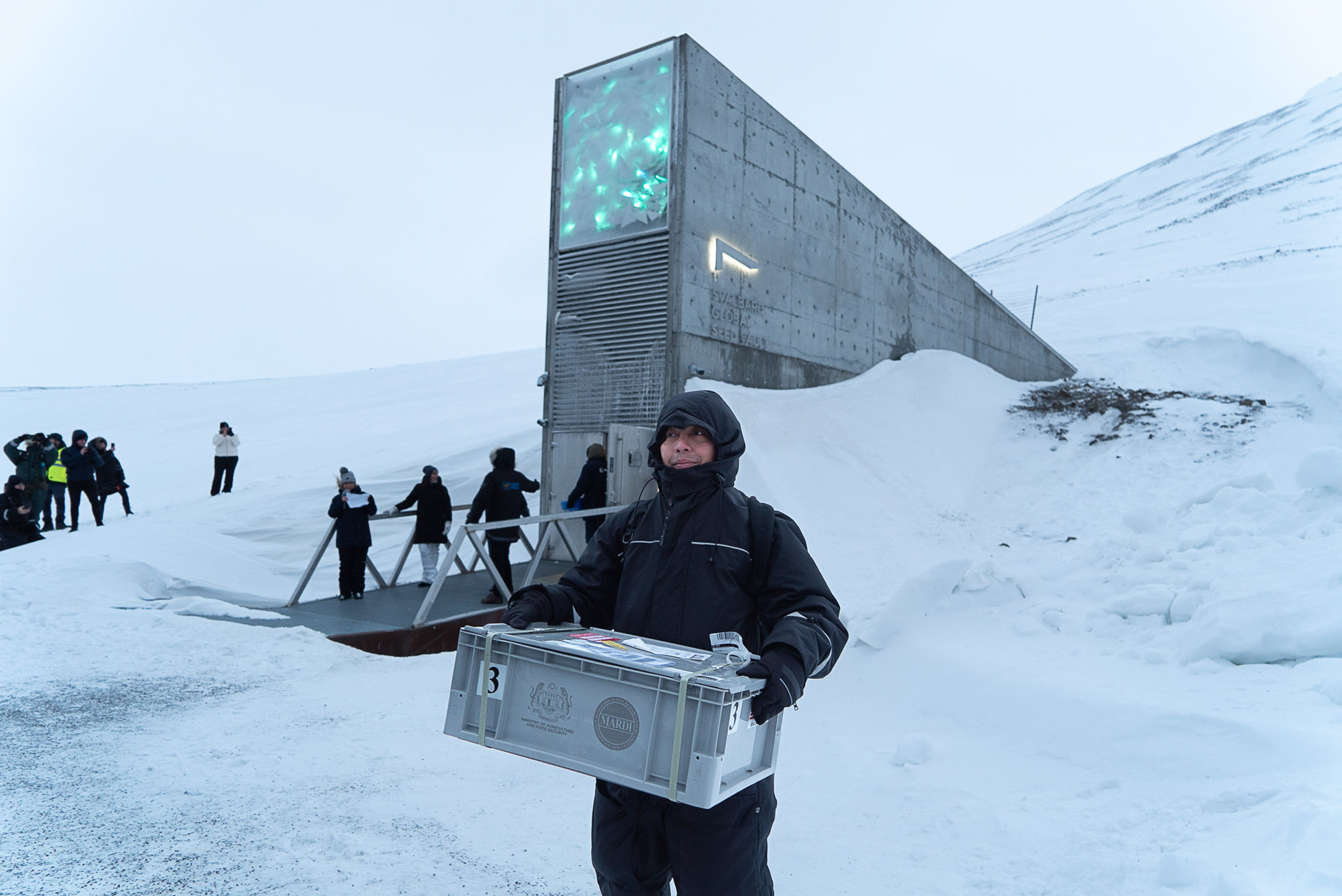
Conserving plant genetic resources for food and agriculture is essential for agricultural resilience and long-term food security. Safety duplication – the storage of duplicate seed samples in geographically separate facilities – is essential for genebank quality management and for safeguarding valuable germplasm against catastrophic loss. This study presents Malaysia's first national safety duplication initiative to the Svalbard Global Seed Vault (Seed Vault), describing operational processes, selection criteria and lessons learned. A total of 774 accessions of traditional rice (Oryza sativa) and its wild relatives (O. officinalis, O. rufipogon, O. meyeriana and O. ridleyi), traditional varieties of eggplant and its wild relatives (Solanum spp.) and cowpea (Vigna unguiculata) maintained by the Malaysian Agricultural Research and Development Institute (MARDI) were evaluated for duplication. Candidate accessions underwent germination testing, regeneration, seed processing, quality assurance and documentation following FAO Genebank Standards and Seed Vault depositor requirements. After regeneration and quality assessment, 725 accessions (93.7%) satisfied the required standards and were deposited under the Seed Vault black-box storage arrangement. The initiative demonstrated that successful safety duplication extends beyond seed physical transfer and requires coordinated seed viability improvement, regeneration of ageing accessions, accurate documentation and adherence to internationally recognized conservation standards. The initiative provided a secure off-site backup for Malaysia's priority germplasm collections and supported routine genebank management by renewing seed stocks, improving documentation and strengthening long-term conservation capacity. The phased implementation described here provides a practical model for national genebanks seeking to establish or expand safety duplication programmes while contributing to global efforts to safeguard crop genetic diversity.
Article Details

This work is licensed under a Creative Commons Attribution 4.0 International License.
Authors retain copyright of the articles published in Genetic Resources and grant the journal right of first publication with open access. All articles published in Genetic Resource are licensed under Creative Commons Attribution 4.0 International License (CC BY 4.0) that allows others to download, share and adapt the work for commercial and non-commercial purposes as long as proper attribution to the original article is given. Genetic Resources permits and encourages authors to post items submitted to the journal (including the publisher's final layout) on personal websites or institutional repositories after acceptance and/or publication, while providing bibliographic details that credit their publication in Genetic Resources.




Asdal, Å. (2025). The Svalbard Global Seed Vault – conserving plant genetic resources for European and global food security. Genetic Resources, 49–57. https://doi.org/10.46265/genresj.EBBB2856
Asdal, Å., & Guarino, L. (2018). The svalbard global seed vault: 10 Years - 1 million samples. In Biopreservation and Biobanking (Vol. 16, Number 5, pp. 391–392). Mary Ann Liebert Inc. https://doi.org/10.1089/bio.2018.0025
Engels, J. M. M., & Ebert, A. W. (2021). A Critical Review of the Current Global Ex situ Conservation System for Plant Agrobiodiversity. II. Strengths and Weaknesses of the Current System and Recommendations for Its Improvement. Plants (Basel, Switzerland), 10(9). https://doi.org/10.3390/PLANTS10091904
FAO. (2014). Genebank Standards for Plant Genetic Resources for Food and Agriculture. FAO. www.fao.org/publications
Khoury, C. K., Brush, S., Costich, D. E., Curry, H. A., de Haan, S., Engels, J. M. M., Guarino, L., Hoban, S., Mercer, K. L., Miller, A. J., Nabhan, G. P., Perales, H. R., Richards, C., Riggins, C., & Thormann, I. (2022). Crop genetic erosion: understanding and responding to loss of crop diversity. In New Phytologist (Vol. 233, Number 1, pp. 84–118). John Wiley and Sons Inc. https://doi.org/10.1111/nph.17733
Muhammad Shafie, M. S., Khadijah, A., Site Noorzuraini, A. R., Gerten, D., Izlamira, R., & Rosliza, J. (2020). MyGeneBank: Preparedness of plant genetic resources for food and agriculture (PGRFA) as a potential food crop to supply shortage during pandemic outbreak and climate change in the future. Buletin Teknologi MARDI (BTM), 21, 27–33.
NordGen. (2026). Nordgen Annual Review 2025. NordGen. https://doi.org/10.53780/ZTDS9225
Svalbard Global Seed Vault. (n.d.). Retrieved July 18, 2026, from https://seedvault.nordgen.org/Information/DepositorGuidelines
Westengen, O. T., Jeppson, S., & Guarino, L. (2013). Global Ex-Situ Crop Diversity Conservation and the Svalbard Global Seed Vault: Assessing the Current Status. PLoS ONE, 8(5). https://doi.org/10.1371/journal.pone.0064146
Westengen, O. T., Lusty, C., Yazbek, M., Amri, A., & Asdal, Å. (2020). Safeguarding a global seed heritage from Syria to Svalbard. Nature Plants 2020 6:11, 6(11), 1311–1317. https://doi.org/10.1038/s41477-020-00802-z
 This journal has been conceived as part of the