

Multivariate analysis of morpho-biometric diversity in indigenous chickens from two zones of Oromia Regional State, Ethiopia
Article Sidebar
Main Article Content
Abstract
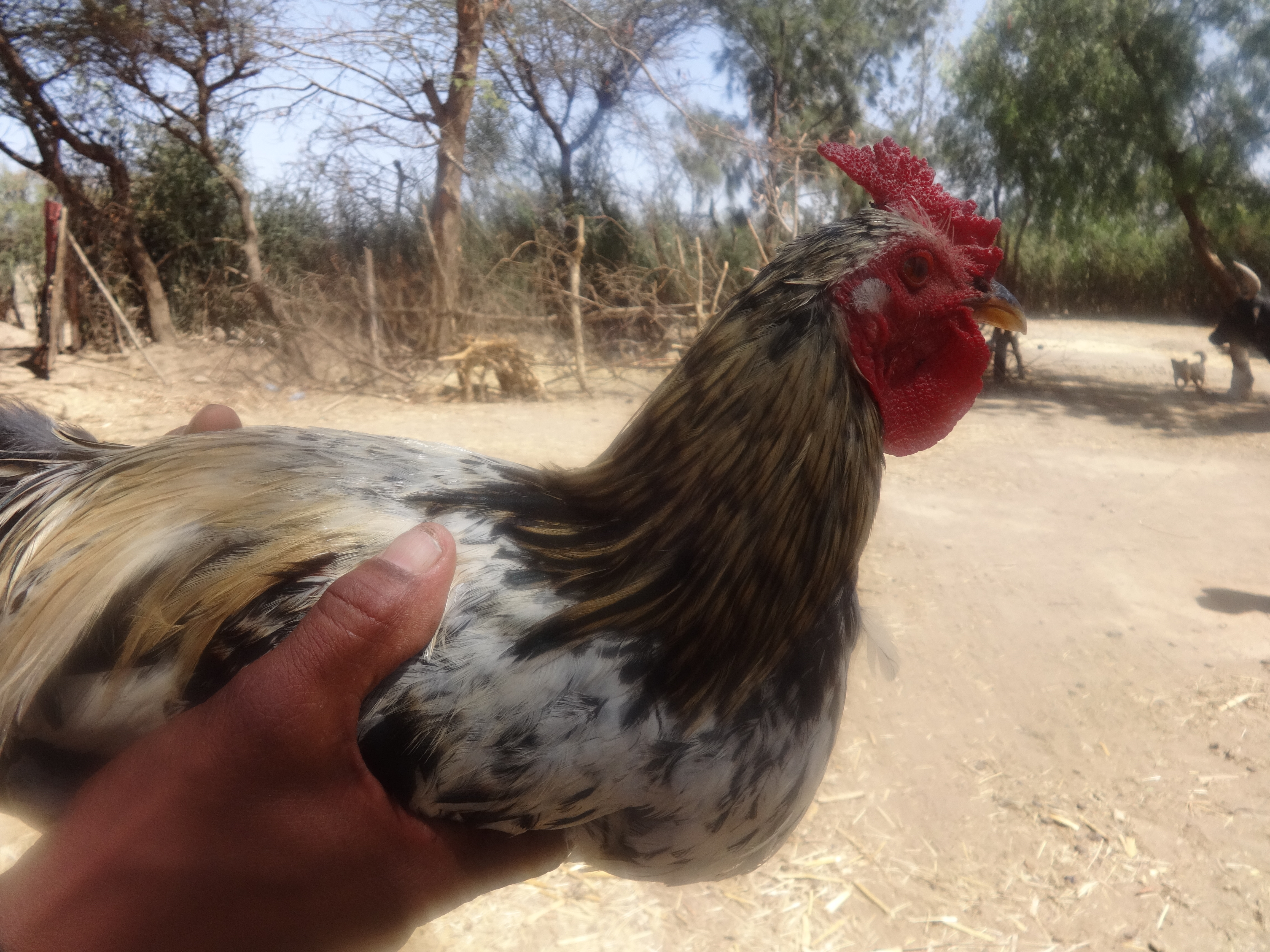
This study characterized the morpho-biometric features of indigenous chickens across six districts of West Arsi and East Shoa zones of Oromia Region State, Ethiopia, using multivariate techniques. Data were collected from 621 mature chickens (134 males, 487 females). Univariate analysis revealed significant district-level variation in morphometric traits (p < 0.001), with Lume chickens exhibiting the highest values, and Siraro and Shashemene the lowest. Shank length and body weight had the highest model explanatory power (R2: 0.58–0.64). Qualitative traits displayed distinct patterns, with red and brown plumage predominating in males and females, respectively, while rose and single combs, white–red earlobes, white skin, plain head shapes, and yellow shanks were the most prevalent. Multiple correspondence analysis highlighted associations between qualitative traits and districts, with the first two dimensions explaining 70.23% of the variance. Quadratic discriminant analysis classified chickens into their districts of origin with 41.80–91.30% accuracy, which was highest for Bora and Lume. Stepwise discriminant analysis identified seven traits (females) and four (males) as key discriminators, while canonical discriminant analysis revealed that the first two functions explained 98% of the variance in both female and male chickens, with strong between-district differentiation. Biplots confirmed that East Shoa chickens (larger in size) clustered separately from West Arsi populations. These findings underscore the phenotypic diversity of Ethiopian indigenous chickens, which is likely shaped by genetic, environmental and cultural factors. This diversity offers opportunities for targeted breeding and conservation programmes. Future studies should integrate genetic analyses to elucidate admixture and enhance breeding strategies.
Article Details

This work is licensed under a Creative Commons Attribution 4.0 International License.
Authors retain copyright of the articles published in Genetic Resources and grant the journal right of first publication with open access. All articles published in Genetic Resource are licensed under Creative Commons Attribution 4.0 International License (CC BY 4.0) that allows others to download, share and adapt the work for commercial and non-commercial purposes as long as proper attribution to the original article is given. Genetic Resources permits and encourages authors to post items submitted to the journal (including the publisher's final layout) on personal websites or institutional repositories after acceptance and/or publication, while providing bibliographic details that credit their publication in Genetic Resources.




Abdi, H., Valentin, D. (2007). Multiple correspondence analysis. Encyclopedia of Measurement and Statistics 2(4), 651–657. https://doi.org/10.4135/9781412952644.n299. DOI: https://doi.org/10.4135/9781412952644.n299
Achenef, Z. T., Ali, T. M., Mohammed, N. (2023). Phenotypic characterization of local chicken ecotypes in selected districts of North Wollo zone, Ethiopia. East African Journal of Veterinary and Animal Sciences 7(1), 47–56. https://doi.org/10.20372/eajvas.v7i1.473.
Ajayi, O. O., Adeleke, M. A., Sanni, M. T., Yakubu, A., Peters, S. O., Imumorin, I. G., Ozoje, M. O., Ikeobi, C. O. N., Adebambo, O. A. (2012). Application of principal component and discriminant analyses to morpho-structural indices of indigenous and exotic chickens raised under intensive management system. Tropical Animal Health and Production 44, 1247–1254. https://doi.org/10.1007/s11250-011-0065-1. DOI: https://doi.org/10.1007/s11250-011-0065-1
Aklilu, E., Kebede, K., Dessie, T., Banerjee, A. K. (2013). Phenotypic characterization of indigenous chicken population in Ethiopia. International Journal of Interdisciplinary and Multidisciplinary Studies 1(1), 24–32.
Alebachew, H., Abebe, A., Begna, F., Ahmed, K., Tarekegn, A., Abera, D., Mijana, D. (2019). Phenotypic characterization of local chicken ecotypes of Benishangul-Gumuz region, Western Ethiopia. Journal of Biology, Agriculture and Healthcare 9(7), 15–21. https://doi.org/10.7176/JBAH/9-7-03. DOI: https://doi.org/10.7176/JBAH/9-7-03
Assefa, H., Melesse, A. (2018). Morphological and morphometric characterization of indigenous chicken populations in Sheka Zone, South Western Ethiopia. Poultry, Fisheries and Wildlife Sciences 6(2), 200. https://doi.org/10.4172/2375-446X.1000200. DOI: https://doi.org/10.4172/2375-446X.1000200
Balcha, Z., Baye, M., Masho, W., Admasu, Z. (2022). Morphological and morphometric features of indigenous chicken in Southwest Ethiopia. Online Journal of Animal and Feed Research 12(3), 132–146. https://dx.doi.org/10.51227/ojafr.2022.18. DOI: https://doi.org/10.51227/ojafr.2022.18
Bayou, Y., Bayou, E., Genzebu, D., Assefa, H. (2022). Phenotypic characterization of indigenous chicken ecotypes in selected districts of Bench Maji Zone, South West Ethiopia. International Journal of Food Science and Agriculture 6(3), 293–300. http://dx.doi.org/10.26855/ijfsa.2022.09.009. DOI: https://doi.org/10.26855/ijfsa.2022.09.009
Begna, D., Bacha, T., Boki, S., Bekana, K. (2025). Characterization of indigenous chicken phenotypes in Liban Jawi District, Ethiopia: A qualitative and quantitative analysis. PloS ONE 20(1), e0307793. https://doi.org/10.1371/journal.pone.0307793. DOI: https://doi.org/10.1371/journal.pone.0307793
Bekele, B., Melesse, A., Esatu, W., Dessie, T. (2022). Multivariate analysis of morphometric traits to differentiate the indigenous chicken reared under different agro-ecologies of Ethiopia. Veterinary Integrative Sciences 20(3): 775–791. https://doi.org/10.12982/VIS.2022.060. DOI: https://doi.org/10.12982/VIS.2022.060
Bekele, G., Goshu, G., Melesse, A., Esatu, W., Dessie, T. (2021). On-farm phenotypic and morphological characterization of indigenous chicken populations in Gambella Region, Ethiopia. International Journal of Poultry Science 20(1), 27–38. https://doi.org/10.3923/ijps.2021.27.38. DOI: https://doi.org/10.3923/ijps.2021.27.38
Belay, S., Belay, G., Resom, M. (2024). Morphometric and morphologic traits of indigenous chicken ecotypes of Tigray, northern Ethiopia. The Scientific World Journal 2024(1), 5537827. https://doi.org/10.1155/tswj/5537827. DOI: https://doi.org/10.1155/tswj/5537827
Besbes, B. (2009). Genotype evaluation and breeding of poultry for performance under sub-optimal village conditions. World's Poultry Science Journal 65, 260–271. https://doi.org/10.1017/S0043933909000221. DOI: https://doi.org/10.1017/S0043933909000221
Bibi, S., Noreen, S., Rehman, A., Mehmood, S., Shah, M. (2021). Morphological characteristics of native chicken of village Chhajjian, Haripur Pakistan. Poultry Science 100(3), 100843. https://doi.org/10.1016/j.psj.2020.11.022. DOI: https://doi.org/10.1016/j.psj.2020.11.022
Birteeb, P. T., Boakye, T. (2020). Variant forms of qualitative traits of indigenous chickens reared under extensive system in Tolon District, Ghana. Animal Production Science 60(5), 705–712. https://doi.org/10.1071/AN19118. DOI: https://doi.org/10.1071/AN19118
Buranawit, K., Chailungka, C., Wongsunsri, C., Laenoi, W. (2016). Phenotypic characterization of Thai native black-bone chickens indigenous to northern Thailand. The Thai Journal of Veterinary Medicine 46(4), 547–554. https://doi.org/10.56808/2985-1130.2773. DOI: https://doi.org/10.56808/2985-1130.2773
Cabarles Jr, J. C., Lambio, A. L., Vega, S. A., Capitan, S. S., Mendioro, M. S. (2012). Distinct morphological features of traditional chickens (Gallus gallus domesticus L.) in Western Visayas, Philippines. Animal Genetic Resources 51, 73–87. https://doi.org/10.1017/S2078633612000410. DOI: https://doi.org/10.1017/S2078633612000410
Camiz, S., Gomes, G. C. (2016). Alternative methods to multiple correspondence analysis in reconstructing the relevant information in a Burt's table. Pesquisa Operacional 36(1), 23–44. https://doi.org/10.1590/0101-7438.2016.036.01.0023. DOI: https://doi.org/10.1590/0101-7438.2016.036.01.0023
Chebo, C., Melesse, A., Betsha, S. (2024). Quantifying phenotypic variability of indigenous chickens using morphometric traits by applying multivariate analysis: Input for sustainable rural chicken farming. Heliyon 10(21), e39850. https://doi.org/10.1016/j.heliyon.2024.e39850. DOI: https://doi.org/10.1016/j.heliyon.2024.e39850
Chebo, C., Melesse, A., Betsha, S. (2023). Morphological descriptors of indigenous chickens: As a selection guide. Journal of Applied Animal Research 51(1), 729–742. https://doi.org/10.1080/09712119.2023.2274956. DOI: https://doi.org/10.1080/09712119.2023.2274956
Conte, G., Dimauro, C., Serra, A., Macciotta, N. P. P., Mele, M. (2018). A canonical discriminant analysis to study the association between milk fatty acids of ruminal origin and milk fat depression in dairy cows. Journal of Dairy Science 101(7), 6497–6510. https://doi.org/10.3168/jds.2017-13941. DOI: https://doi.org/10.3168/jds.2017-13941
Daikwo, I. S., Okpe, A. A., Ocheja, J. O. (2011). Phenotypic characterization of local chickens in Dekina. International Journal of Poultry Science 10(6), 444–447. https://doi.org/10.3923/ijps.2011.444.447. DOI: https://doi.org/10.3923/ijps.2011.444.447
Daikwo, S. I., Dike, U. A., Dim, N. I. (2015). Discriminant analysis of morphometric differences in the normal feathered and frizzle feathered chickens of north central Nigeria. Agro-Science: Journal of Tropical Agriculture, Food, Environment and Extension 14(3), 12–15. http://dx.doi.org/10.4314/as.v14i3.3.
Dana, N., Dessie, T., Van der Waaij, L. H., van Arendonk, J. A. M. (2010). Morphological features of indigenous chicken populations of Ethiopia. Animal Genetic Resources 46, 11–23. https://doi.org/10.1017/S2078633610000652. DOI: https://doi.org/10.1017/S2078633610000652
Dessie, T., Taye, T., Dana, N., Ayalew, W., Hanotte, O. (2011). Current state of knowledge on phenotypic characteristics of indigenous chickens in the tropics. World's Poultry Science Journal 67(3), 507–516. https://doi.org/10.1017/S0043933911000559. DOI: https://doi.org/10.1017/S0043933911000559
Desta, T. T. (2021). The genetic basis and robustness of naked neck mutation in chicken. Tropical Animal Health and Production 53(1), 95. https://doi.org/10.1007/s11250-020-02505-1. DOI: https://doi.org/10.1007/s11250-020-02505-1
Desta, T. T., Dessie, T., Bettridge, J., Lynch, S. E., Melese, K., Collins, M., Christley, R. M., Wigley, P., Kaiser, P., Terfa, Z., Mwacharo, J. M. (2013). Signature of artificial selection and ecological landscape on morphological structures of Ethiopian village chickens. Animal Genetic Resources 52, 17–29. https://doi.org/10.1017/S2078633613000064. DOI: https://doi.org/10.1017/S2078633613000064
Duguma, R. (2006). Phenotypic characterization of some indigenous chicken ecotypes of Ethiopia. Livestock Research for Rural Development 18, 131.
Egahi, J. O., Dim, N. I., Momoh, O. M., Gwaza, D. S. (2010). Variations in qualitative traits in the Nigerian local chicken. International Journal of Poultry Science 9(10), 978–979. https://doi.org/10.3923/ijps.2010.978.979. DOI: https://doi.org/10.3923/ijps.2010.978.979
Eriksson, J., Larson, G., Gunnarsson, U., Bed'Hom, B., Tixier-Boichard, M., Strömstedt, L., Wright, D., Jungerius, A., Vereijken, A., Randi, E., Jensen, P. (2008). Identification of the yellow skin gene reveals a hybrid origin of the domestic chicken. PLoS Genetics 4(2), e1000010. https://doi.org/10.1371/journal.pgen.1000010. DOI: https://doi.org/10.1371/journal.pgen.1000010
FAO (2012). Phenotypic characterization of animal genetic resources. FAO Animal Production and Health Guidelines No. 11. Rome, Italy.
FAO (2024). FAOSTAT Statistical database. https://www.fao.org/faostat/en/#data/QCL.
Fithian, W., Josse, J. (2017). Multiple correspondence analysis and the multi-logit bilinear model. Journal of Multivariate Analysis 157, 87–102. http://dx.doi.org/10.1016/j.jmva.2017.02.009. DOI: https://doi.org/10.1016/j.jmva.2017.02.009
Getachew, F., Abegaz, S., Assefa, A., Misganaw, M., Emshaw, Y., Hailu, A., Tessema, M., Okore, C. (2016). Multivariate analyses of morphological traits in indigenous chicken populations of Metekel zone, Northwestern Ethiopia. Animal Genetic Resources 59, 15–25. https://doi.org/10.1017/S2078633616000084. DOI: https://doi.org/10.1017/S2078633616000084
Getu, A., Melaku, M., Alemayehu, Y. (2014). Phenotypic characterization of indigenous chicken ecotypes in the eastern Amahara region, Ethiopia. Global Journal of Animal Breeding and Genetics 2(4), 79–85.
Habimana, R., Ngeno, K., Mahoro, J., Ntawubizi, M., Shumbusho, F., Manzi, M., Hirwa, C. A., Okeno, T. O. (2021). Morphobiometrical characteristics of indigenous chicken ecotype populations in Rwanda. Tropical Animal Health and Production 53, 24. https://doi.org/10.1007/s11250-020-02475-4. DOI: https://doi.org/10.1007/s11250-020-02475-4
Hassen, H., Neser, F. W. C., van Marle-Koster, E., De Kock, A. (2007). Phenotypic variation of native chicken populations in northwest Ethiopia. Tropical Animal Health and Production 39, 507–513. https://doi.org/10.1007/s11250-007-9032-2. DOI: https://doi.org/10.1007/s11250-007-9032-2
Ige, A. O., Salako, A. E., Yakubu, A., Adeyemi, S. A. (2012). Qualitative traits characterization of Yoruba and Fulani ecotype indigenous chickens in derived savannah zone of Nigeria. International Journal of Poultry Science 11(10), 616–620. https://doi.org/10.3923/ijps.2012.616.620. DOI: https://doi.org/10.3923/ijps.2012.616.620
JMP Statistical Discovery LLC. (2022). JMP® 17 Documentation Library. Cary, NC.
Kefelegn, K. K, Feyera, B., Negassi, A. (2016). Morphometric differentiation of indigenous chicken populations of Ethiopia using discriminant analysis. In Presentation at international research on food security, natural resource management and rural development, Vienna, Austria.
Khangar, N. V., Kamalja, K. K. (2017). Multiple correspondence analysis and its applications. Electronic Journal of Applied Statistical Analysis 10(2), 432–462. http://dx.doi.org/10.1285/i20705948v10n2p432.
Lawal, R. A., Hanotte, O. (2021). Domestic chicken diversity: Origin, distribution, and adaptation. Animal Genetics 52(4), 385–394. https://doi.org/10.1111/age.13091. DOI: https://doi.org/10.1111/age.13091
Liswaniso, S., Mwambilwa, K., Odubote, K., Tyasi, T. L., Mweni, M., Sun, X., Xu, R., Qin, N. (2024). Zambian indigenous chicken genetic resources: phenotypic characteristics and their production systems among small-scale farmers. Frontiers in Veterinary Science 11, 1429869. https://doi.org/10.3389/fvets.2024.1429869. DOI: https://doi.org/10.3389/fvets.2024.1429869
Liyanage, R. P., Dematawewa, C. M. B., Silva, G. L. L. P. (2015). Comparative study on morphological and morphometric features of village chicken in Sri Lanka. Tropical Agricultural Research 26(2), 261–273. https://doi.org/10.4038/tar.v26i2.8090. DOI: https://doi.org/10.4038/tar.v26i2.8090
Maharani, D., Mustofa, F., Sari, A. P. Z., Fathoni, A., Sasongko, H., Hariyono, D. N. H. (2021). Phenotypic characterization and principal component analyses of indigenous chicken breeds in Indonesia. Veterinary World 14(6), 1665–1676. https://doi.org/10.14202/vetworld.2021.1665-1676. DOI: https://doi.org/10.14202/vetworld.2021.1665-1676
Markos, S., Belay, B., Dessie, T. (2024). Morphometric differentiation of three chicken ecotypes of Ethiopia using multivariate analysis. PLoS ONE 19(2), e0295134. https://doi.org/10.1371/journal.pone.0295134. DOI: https://doi.org/10.1371/journal.pone.0295134
McLean, D. J., Froman, D. P. (1996). Identification of a sperm cell attribute responsible for subfertility of roosters homozygous for the rose comb allele. Biology of reproduction 54(1), 168–172. https://doi.org/10.1095/biolreprod54.1.168. DOI: https://doi.org/10.1095/biolreprod54.1.168
Mekonnen, K. T., Lee, D. H., Cho, Y. G., Son, A. Y., Seo, K. S. (2023). Biometric trait characterization and multivariate discriminant analysis of traditionally bred autochthonous chickens in Ethiopia. Agriculture 13(11), 2142. https://doi.org/10.3390/agriculture13112142. DOI: https://doi.org/10.3390/agriculture13112142
Melesse, A., Negesse, T. (2011). Phenotypic and morphological characterization of indigenous chicken populations in southern region of Ethiopia. Animal Genetic Resources 49, 19–31. https://doi.org/10.1017/S2078633611000099. DOI: https://doi.org/10.1017/S2078633611000099
Melesse, A., Tadele, A., Assefa, H., Taye, K., Kebede, T., Taye, M., Betsha, S. (2021). Assessing the morphological diversity of Ethiopian indigenous chickens using multivariate discriminant analysis of morphometric traits for sustainable utilization and conservation. Poultry Science Journal 9(1): 61–72. https://doi.org/10.22069/psj.2021.18469.1644.
Moreda, E., Singh, H., Sisaye, T., Johansson, A. M. (2014). Phenotypic characterization of indigenous chicken population in South West and South part of Ethiopia. British Journal of Poultry Sciences 3(1), 15–19. https://doi.org/10.5829/idosi.bjps.2014.3.1.8370.
Moto, E., Rubanza, C. D. (2023). Phenotypic characterization of indigenous chicken in the central zone of Tanzania. Open Agriculture 8(1), 20220218. https://doi.org/10.1515/opag-2022-0218. DOI: https://doi.org/10.1515/opag-2022-0218
Moula, N., Farnir, F., Salhi, A., Iguer-Ouada, M., Leroy, P., Antoine-Moussiaux, N. (2012). Backyard poultry in Kabylie (Algeria): from an indigenous chicken to a local poultry breed? Animal Genetic Resources 50, 87–96. https://doi.org/10.1017/S207863361200001X. DOI: https://doi.org/10.1017/S207863361200001X
Muluneh, B., Taye, M., Dessie, T., Wondim, D. S., Kebede, D., Tenagne, A. (2023). Morpho-biometric characterization of indigenous chicken ecotypes in north-western Ethiopia. PLoS ONE 18(6), e0286299. https://doi.org/10.1371/journal.pone.0286299. DOI: https://doi.org/10.1371/journal.pone.0286299
Mustefa, A., Kenfo, H., Belayhun, T., Hailu, A., Assefa, A. (2021). Morphometric and morphological characterization of chicken resources adapted to pastoral and agropastoral areas of southern Ethiopia. Genetic Resources 2(4), 72–84. https://doi.org/10.46265/genresj.NDFM2712. DOI: https://doi.org/10.46265/genresj.NDFM2712
Navara, K. J., Anderson, E. M., Edwards, M. L. (2012). Comb size and color relate to sperm quality: A test of the phenotype-linked fertility hypothesis. Behavioral Ecology 23(5), 1036–1041. https://doi.org/10.1093/beheco/ars068. DOI: https://doi.org/10.1093/beheco/ars068
Negassa, D., Melesse, A., Banerjee, S. (2014). Phenotypic characterization of indigenous chicken populations in Southeastern Oromia Regional State of Ethiopia. Animal Genetic Resources 55, 101–113. https://doi.org/10.1017/S2078633614000319. DOI: https://doi.org/10.1017/S2078633614000319
Ngeno, K., Vander Waaij, E. H., Kahi, A. K. (2014). Indigenous chicken genetic resources in Kenya: Their unique attributes and conservation options for improved use. World's Poultry Science Journal 70, 173–184. https://doi.org/10.1017/S0043933914000154. DOI: https://doi.org/10.1017/S0043933914000154
Nigussie, H., Kebede, K., Ameha, N. 2015. Phenotypic and morphological characterization of indigenous chicken populations in southern zone of Tigray, Ethiopia. Journal of Biology, Agriculture and Healthcare 5(21), 132–141.
Otecko, N. O., Ogali, I., Mauki, D. H., Ogada, S., Moraa, G. K., Lichoti, J., Agwanda, B., Peng, M. S., Ommeh, S. C., Zhang, Y. P. (2019). Phenotypic and morphometric differentiation of indigenous chickens from Kenya and other tropical countries augments perspectives for genetic resource improvement and conservation. Poultry Science 98(7), 2747–2755. http://dx.doi.org/10.3382/ps/pez097. DOI: https://doi.org/10.3382/ps/pez097
Owens, I. P., Hartley, I. R. (1998). Sexual dimorphism in birds: Why are there so many different forms of dimorphism? Proceedings of the Royal Society B: Biological Sciences 265(1394), 397–407. https://doi.org/10.1098/rspb.1998.0308. DOI: https://doi.org/10.1098/rspb.1998.0308
Picardal, J. P., Afable, F. A., Lagman, M. C. A., Campoto, E. A., Palada, E. P., Valdez Jr, M. B. (2015). Phenotypic characterization of native chickens (Gallus gallus domesticus) in Eastern Samar, Philippines. IAMURE International Journal of Ecology and Conservation 15, 242–265. http://dx.doi.org/10.7718/ijec.v15i1.1005. DOI: https://doi.org/10.7718/ijec.v15i1.1005
Price-Waldman, R., Stoddard, M. C. (2021). Avian coloration genetics: Recent advances and emerging questions. Journal of Heredity 112(5), 395–416. https://doi.org/10.1093/jhered/esab015. DOI: https://doi.org/10.1093/jhered/esab015
Rotimi, E. A., Egahi, J. O., Adeoye, A. A. (2016). Phenotypic characterization of indigenous chicken population in Gwer-West, Benue State, Nigeria. World Scientific News 3(53), 343–353.
Sarker, N. R., Hoque, A., Faruque, S., Islam, N., Bhuiyan, F. H. (2014). An ex situ study on body characteristics and effect of plumage color on body weight of indigenous chicken (Gallus domesticus) in Bangladesh. Acta Scientiarum. Animal Sciences 36, 79–84. https://doi.org/10.4025/actascianimsci.v36i1.20118. DOI: https://doi.org/10.4025/actascianimsci.v36i1.20118
SAS Institute Inc. (2022). JMP® Pro Version 17.0.0. Cary, NC.
Semakula, J., Lusembo, P., Kugonza, D. R., Mutetikka, D., Ssennyonjo, J., Mwesigwa, M. (2011). Estimation of live body weight using zoometrical measurements for improved marketing of indigenous chicken in the Lake Victoria basin of Uganda. Livestock Research for Rural Development 23(8), 170.
Sourial, N., Wolfson, C., Zhu, B., Quail, J., Fletcher, J., Karunananthan, S., Bandeen-Roche, K., Béland, F., Bergman, H. (2010). Correspondence analysis is a useful tool to uncover the relationships among categorical variables. Journal of Clinical Epidemiology 63(6), 638–646. https://doi.org/10.1016/j.jclinepi.2009.08.008. DOI: https://doi.org/10.1016/j.jclinepi.2009.08.008
Suyatno, S., Sujono, S., Winaya, A., Zalizar, L., Pangestu, M. (2023). Characterization of qualitative and quantitative traits of four types of Indonesian native chickens as ancestor of new strains of local super laying hens. Jordan Journal of Biological Sciences 16(2), 71–179. https://doi.org/10.54319/jjbs/160201. DOI: https://doi.org/10.54319/jjbs/160201
Tadese, D., Bekele, B., Hailemesikel, D., Wolde, B., Esatu, W., Dessie, T. (2024). On-farm phenotypic characterization of indigenous chicken populations and their productive and reproductive performances in central Ethiopia. Journal of Livestock Science 15(15), 181–189. https://doi.org/10.33259/JLivestSci.2024.181-189. DOI: https://doi.org/10.33259/JLivestSci.2024.181-189
Tamirat, D., Getachew, T., Masho, W., Admasu, Z. (2023). Morphological and morphometric features of indigenous chicken in North Shewa zone, Oromia regional state, Ethiopia. The Scientific Temper 14(3), 609–617. https://doi.org/10.58414/SCIENTIFICTEMPER.2023.14.30.07. DOI: https://doi.org/10.58414/SCIENTIFICTEMPER.2023.14.30.07
Tareke, M., Assefa, B., Abate, T., Tekletsadik, E. (2018). Evaluation of morphometric differences among indigenous chicken populations in Bale zone, Oromia Regional State, Ethiopia. Poultry Science Journal 6(2), 181–190. https://doi.org/10.22069/psj.2018.14974.1329.
Terfa, Z. G., Garikipati, S., Kassie, G. T., Dessie, T., Christley, R. M. (2019). Understanding farmers’ preference for traits of chickens in rural Ethiopia. Agricultural Economics 50(4), 451–463. https://doi.org/10.1111/agec.12502. DOI: https://doi.org/10.1111/agec.12502
Tixier-Boichard, M., Ayalew, W., Jianlin, H. (2008). Inventory, characterization and monitoring. Animal Genetic Resources Information 42, 29–44. https://doi.org/10.1017/S1014233900002534. DOI: https://doi.org/10.1017/S1014233900002534
Toalombo Vargas, P. A., Navas Gonzalez, F. J., Landi, V., Leon Jurado, J. M., Delgado Bermejo, J. V. (2019). Sexual dimorphism and breed characterization of Creole hens through biometric canonical discriminant analysis across Ecuadorian agroecological areas. Animals 10(1), 32. https://doi.org/10.3390/ani10010032. DOI: https://doi.org/10.3390/ani10010032
Traoré, G. F., Tapsoba, A. S. R., Bayala, B., Soudré, A., Traore, A., Dayo, G. K., Ávarez, I., Fernández, I., Sanou, M., Tamboura, H. H., Goyache, F. (2018). Multivariate analyses of morphological traits characterize the Guinea fowl (Numida meleagris) of Burkina Faso as a homogeneous population. European Poultry Science 82, 1–13. https://doi.org/10.1399/eps.2018.251. DOI: https://doi.org/10.1399/eps.2018.251
Udeh, I., Ugwu, S. O. C., Ogagifo, N. L. (2011). Predicting semen traits of local and exotic cocks using linear body measurements. Asian Journal of Animal Sciences 5(4), 268–276. https://doi.org/10.3923/ajas.2011.268.276. DOI: https://doi.org/10.3923/ajas.2011.268.276
Veflen, N., Storstad, O., Samuelsen, B., Langsrud, S., Hagtvedt, T., Ueland, Ø., Gregersen, F., Scholderer, J. (2017). Food scares: Reflections and reactions. International Journal on Food System Dynamics 8(2), 155–164. http://dx.doi.org/10.18461/ijfsd.v8i2.826. DOI: https://doi.org/10.18461/ijfsd.v8i2.826
Wario, D. D., Tadesse, Y., Yadav, S. B. S. (2021). On-Farm phenotypic characterization of indigenous chicken, in Dire and Yabello districts, Borena zone, Oromia Regional State, Ethiopia. Journal of Genetic Resources 7(1), 36–48. https://doi.org/10.22080/jgr.2020.19954.1211.
Yaemkong, S., Phromnoi, S., Mingchai, C., Jongjitvimol, T. (2024). Characterization of phenotypic variation in indigenous chicken populations in lower Northern Thailand to improve chicken breeding. International Journal of Zoology 2024(1), 9985076. https://doi.org/10.1155/2024/9985076. DOI: https://doi.org/10.1155/2024/9985076
Yakubu, A., Ari, M. M. (2018). Principal component and discriminant analyses of body weight and conformation traits of Sasso, Kuroiler and indigenous Fulani chickens in Nigeria. The Journal of Animal and Plant Sciences 28(1), 46–55.
Yussif, I., Kugonza, D. R., Okot, M. W., Amuge, P. O., Costa, R., Dos Anjos, F. (2023). Uganda chicken genetic resources: I. phenotypic and production characteristics. Frontiers in Genetics 13, 1033031. https://doi.org/10.3389/fgene.2022.1033031. DOI: https://doi.org/10.3389/fgene.2022.1033031
 This journal has been conceived as part of the