
Phenotypic variability of tarwi (Lupinus mutabilis S.) in Peruvian germplasm collections
Article Sidebar
Main Article Content
Abstract
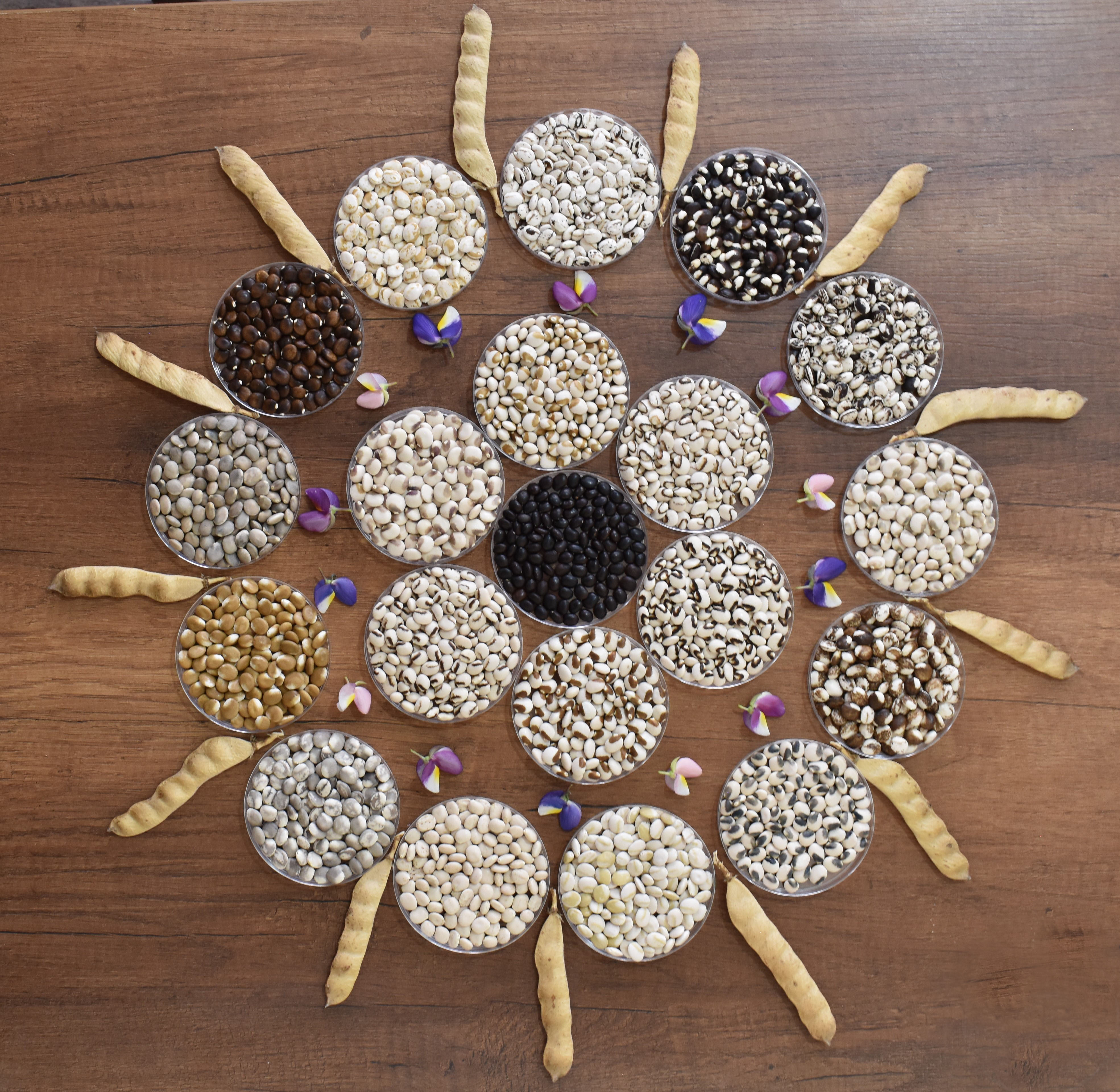
The growing global loss of genetic diversity, phenotypic characterization becomes essential for identifying resilient varieties capable of diversifying and strengthening the agricultural production of underutilized crops such as tarwi (Lupinus mutabilis S.). This study aimed to characterize the phenotypic variability of 41 tarwi accessions conserved in the germplasm bank of the National Institute of Agricultural Innovation (INIA) of Peru. The accessions were evaluated over two consecutive agricultural seasons at the Santa Ana Agrarian Experimental Station under local conditions. Thirty morphological descriptors (17 qualitative and 13 quantitative) were used following IBPGR guidelines. Data were analyzed using descriptive statistics, principal component analysis, hierarchical clustering and correlation analysis for quantitative descriptors, as well as frequency tables and the Shannon-Weaver diversity index for qualitative descriptors. The results revealed high phenotypic variability, particularly in traits related to yield, plant architecture and floral attributes. The accessions were grouped into three morpho-agronomic types: (1) highly productive accessions, (2) accessions with vigorous vegetative development, and (3) short-cycle plants with moderate yields. Yield per plant was significantly associated with the total pod number, total seed mass in hundred seeds and seed thickness. The study revealed considerable phenotypic diversity, characterized by significant correlations among key agronomic traits, the delineation of three distinct phenotypic clusters, and the identification of valuable qualitative attributes, which reinforces their potential for conservation and breeding programmes. However, expanded germplasm evaluation and multi-environment trials are required to validate genotype stability and refine selection criteria. However, additional accessions and further analyses are needed to validate the observed patterns.
Article Details

This work is licensed under a Creative Commons Attribution 4.0 International License.
Authors retain copyright of the articles published in Genetic Resources and grant the journal right of first publication with open access. All articles published in Genetic Resource are licensed under Creative Commons Attribution 4.0 International License (CC BY 4.0) that allows others to download, share and adapt the work for commercial and non-commercial purposes as long as proper attribution to the original article is given. Genetic Resources permits and encourages authors to post items submitted to the journal (including the publisher's final layout) on personal websites or institutional repositories after acceptance and/or publication, while providing bibliographic details that credit their publication in Genetic Resources.




Aguilar Angulo, L. (2015). Evaluación del rendimiento de grano y capacidad simbiótica de once accesiones de tarwi (Lupinus mutabilis S.), bajo condiciones de Otuzco - La Libertad [Undergraduate thesis, Universidad Nacional Agraria La Molina]. https://hdl.handle.net/20.500.12996/1626.
Azam, M. G., Sarker, U., Hossain, M. A., Mahabubul Alam, A. K. M., Islam, M. R., Hossain, N., & Alamri, S. (2024). Phenotypic diversity in qualitative and quantitative traits for selection of high yield potential field pea genotypes. Scientific Reports, 14(1), 1–24. https://doi.org/10.1038/s41598-024-69448-7.
Blum, A. (2011). Plant breeding for water-limited environments. Plant Breeding for Water-Limited Environments, 1–255. https://doi.org/10.1007/978-1-4419-7491-4.
Bustos-Korts, D., Boer, M. P., Malosetti, M., Chapman, S., Chenu, K., Zheng, B., & van Eeuwijk, F. A. (2019). Combining crop growth modeling and statistical genetic modeling to evaluate phenotyping strategies. Frontiers in Plant Science, 10. https://doi.org/10.3389/FPLS.2019.01491.
Caligari, P. D. S., Römer, P., Rahim, M. A., Huyghe, C., Neves-Martins, J., & Sawicka-Sienkiewicz, E. J. (2000). The potential of Lupinus mutabilis as a crop. In Knight, R. (eds) Linking Research and Marketing Opportunities for Pulses in the 21st Century (pp. 569–573). Springer, Dordrecht. https://doi.org/10.1007/978-94-011-4385-1_54.
Camarena Mayta, F., Huaringa Joaquín, A., Jiménez Dávalos, J., & Mostacero Neyra, E. (2012). Revaloración de un cultivo subutilizado: chocho o tarwi (Lupinus mutabilis S.) (Vol. 1). CONCYTEC. https://hdl.handle.net/20.500.12390/3789.
Cano, A. F. S., Dávalos, J. J., Bonilla, C. F. L., Espinoza, E. R., & Oblitas, Y. F. A. (2022). Caracterización intragenotípica de siete accesiones de tarwi (Lupinus mutabilis S.) usando marcadores moleculares ISSR. Hatun Yachay Wasi, 1(2), 69–82. https://doi.org/10.57107/HYW.V1I2.25.
Chalampuente, D., Tapia, C., & Sorensen, M. (2021). The Andean Lupine-‘El Chocho’ or ‘Tarwi’ (Lupinus mutabilis S.). Biodiversity Online Journal, 1(4). https://doi.org/10.31031/BOJ.2021.01.000520.
Chalampuente-Flores, D., Mosquera-Losada, M. R., Ron, A. M. D., Tapia Bastidas, C., & Sørensen, M. (2023). Morphological and ecogeographical diversity of the Andean lupine (Lupinus mutabilis S.) in the high Andean region of Ecuador. Agronomy, 13(8), 2064. https://doi.org/10.3390/agronomy13082064.
Clements, J. C., & Cowling, W. A. (1994). Patterns of morphological diversity in relation to geographical origins of wild Lupinus angustifolius from the Aegean region. Genetic Resources and Crop Evolution, 41(2), 109–122. https://doi.org/10.1007/BF00053055.
Delgado, H., Tapia, C., Manjarres-Hernández, E. H., Borja, E., Naranjo, E., & Martín, J. P. (2024). Phenotypic diversity of quinoa landraces cultivated in the Ecuadorian Andean region: In situ conservation and detection of promising accessions for breeding programs. Agriculture, 14(3), 336. https://doi.org/10.3390/agriculture14030336.
Enrique Quispe, E. (2022). Evaluación de las propiedades fisicoquímicas de la harina de Lupinus mutabilis S. (tarwi) desamargado [Undergraduate thesis, Universidad Nacional de Huancavelica]. https://hdl.handle.net/20.500.14597/4826.
Enriquez, L., Ortega, K., Ccopi, D., Rios, C., Urquizo, J., Patricio, S., Alejandro, L., Oliva-Cruz, M., Barboza, E., & Pizarro, S. (2025). Detecting changes in soil fertility properties using multispectral UAV images and machine learning in central Peru. AgriEngineering, 7(3), 70. https://doi.org/10.3390/agriengineering7030070.
Eticha, F., Bekele, E., Belay, G., & Börner, A. (2005). Phenotypic diversity in tetraploid wheats collected from Bale and Wello regions of Ethiopia. Plant Genetic Resources, 3(1), 35–43. https://doi.org/10.1079/pgr200457.
Everitt, B. S., Landau, S., Leese, M., & Stahl, D. (2011). Cluster Analysis (5th ed.), 1–330. https://doi.org/10.1002/9780470977811.
Food and Agriculture Organization of the United Nations (FAO). (2010). The contribution of plant genetic resources for food and agriculture to food security and sustainable agricultural development. The Second Report on the State of the World’s Plant Genetic Resources for Food and Agriculture (pp. 182–201). https://www.fao.org/4/i1500e/i1500e08.pdf
Food and Agriculture Organization of the United Nations (FAO). (2019). The state of the world’s biodiversity for food and agriculture (J. Bélanger & D. Pilling, Eds.). FAO Commission on Genetic Resources for Food and Agriculture Assessments. http://www.fao.org/3/CA3129EN/CA3129EN.pdf.
Flores, H. E., Walker, T. S., Guimarães, R. L., Bais, H. P., & Vivanco, J. M. (2003). Andean root and tuber crops: Underground rainbows. HortScience, 38(2), 161–167. https://doi.org/10.21273/HORTSCI.38.2.161.
Galloni, M., Podda, L., Vivarelli, D., & Cristofolini, G. (2007). Pollen presentation, pollen-ovule ratios, and other reproductive traits in Mediterranean Legumes (Fam. Fabaceae - Subfam. Faboideae). Plant Systematics and Evolution, 266(3), 147–164. https://doi.org/10.1007/S00606-007-0526-1.
Gresta, F., Wink, M., Prins, U., Abberton, M., Capraro, J., Scarafoni, A., & Hill, G. (2017). Lupins in European cropping systems. Legumes in Cropping Systems, 88–108. https://doi.org/10.1079/9781780644981.0088.
Guilengue, N., Alves, S., Talhinhas, P., & Neves-Martins, J. (2019). Genetic and genomic diversity in a tarwi (Lupinus mutabilis S.) germplasm collection and adaptability to Mediterranean climate conditions. Agronomy, 10(1), 21. https://doi.org/10.3390/agronomy10010021.
Gulisano, A., Alves, S., Martins, J. N., & Trindade, L. M. (2019). Genetics and breeding of Lupinus mutabilis: An emerging protein crop. Frontiers in Plant Science, 10, 1385. https://doi.org/10.3389/fpls.2019.01385.
Gulisano, A., Alves, S., Rodriguez, D., Murillo, A., van Dinter, B. J., Torres, A. F., Gordillo-Romero, M., Torres, M. de L., Neves-Martins, J., Paulo, M. J., & Trindade, L. M. (2022). Diversity and agronomic performance of Lupinus mutabilis germplasm in European and Andean environments. Frontiers in Plant Science, 13, 903661. https://doi.org/10.3389/fpls.2022.903661.
International Board for Plant Genetic Resources (IBPGR). (1981). Lupin descriptors (Vol. 1). https://hdl.handle.net/10568/73417.
Jacobsen, S.-E., & Mujica, A. (2006). El tarwi (Lupinus mutabilis S.) y sus parientes silvestres. In M. Moraes R., B. Øllgaard, L. P. Kvist, F. Borchsenius, & H. Balslev (Eds.), Botánica Económica de Los Andes Centrales, (pp. 458–482). Universidad Mayor de San Andrés.
Jollife, I. T., & Cadima, J. (2016). Principal component analysis: A review and recent developments. Philosophical Transactions of the Royal Society A: Mathematical, Physical and Engineering Sciences, 374(2065). https://doi.org/10.1098/RSTA.2015.0202.
Kassambara, A., & Mundt, F. (2020). factoextra: Extract and visualize the results of multivariate data analyses [version 1.0.7]. CRAN: Contributed Packages. https://doi.org/10.32614/CRAN.PACKAGE.FACTOEXTRA.
Lê, S., Josse, J., & Husson, F. (2008). FactoMineR: An R package for multivariate analysis. Journal of Statistical Software, 25(1), 1–18. https://doi.org/10.18637/JSS.V025.I01.
Lizarazo, C., Stoddard, F., Mäkelä, P., & Santanen, A. (2010). Genetic variability in the physiological responses of Andean lupin to drought stress. Suomen Maataloustieteellisen Seuran Tiedote, 26, 1–5. https://doi.org/10.33354/smst.76862.
Massawe, F. J., Mayes, S., Cheng, A., Chai, H. H., Cleasby, P., Symonds, R., Ho, W. K., Siise, A., Wong, Q. N., Kendabie, P., Yanusa, Y., Jamalluddin, N., Singh, A., Azman, R., & Azam-Ali, S. N. (2015). The Potential for underutilised crops to improve food security in the face of climate change. Procedia Environmental Sciences, 29, 140–141. https://doi.org/10.1016/j.proenv.2015.07.228.
Mohammadi, S. A., & Prasanna, B. M. (2003). Analysis of genetic diversity in crop plants—salient statistical tools and considerations. Crop Science, 43(4), 1235–1248. https://doi.org/10.2135/cropsci2003.1235.
Morales-Casco, L. A., & Zúniga-González, C. A. (2016). Impactos del cambio climático en la agricultura y seguridad alimentaria. Revista Iberoamericana de Bioeconomía y Cambio Climático, 2(1), 269–291. https://doi.org/10.5377/ribcc.v2i1.5700.
Mousavi-Derazmahalleh, M., Bayer, P. E., Nevado, B., Hurgobin, B., Filatov, D., Kilian, A., Kamphuis, L. G., Singh, K. B., Berger, J. D., Hane, J. K., Edwards, D., Erskine, W., & Nelson, M. N. (2018). Exploring the genetic and adaptive diversity of a pan-Mediterranean crop wild relative: narrow-leafed lupin. Theoretical and Applied Genetics, 131(4), 887–901. https://doi.org/10.1007/S00122-017-3045-7.
Mujica, Á., Chura, E., Moscoso, G., Chuquimia, D., Romero, T., Astete, A., Calandri, E., & Montoya, P. (2021). Selección de cultivares de tarwi (Lupinus mutabilis S.) por rendimiento, precocidad, contenido de aceite y proteína en Puno, Perú. Agrárias: Pesquisa e Inovação Nas Ciências Que Alimentam o Mundo VI (pp. 1–13). https://doi.org/10.37572/EDART_3004213541.
Nascimento, W. F. Do, da Silva, E. F., & Veasey, E. A. (2011). Agro-morphological characterization of upland rice accessions. Scientia Agricola, 68(6), 652–660. https://doi.org/10.1590/S0103-90162011000600008.
Ojuederie, O. B., Igwe, D. O., Ludidi, N. N., & Ikhajiagbe, B. (2023). Editorial: Neglected and underutilized crop species for sustainable food and nutritional security: prospects and hidden potential. Frontiers in Plant Science, 14, 1358220. https://doi.org/10.3389/fpls.2023.1358220.
Özkan, G., Haliloğlu, K., Türkoğlu, A., Özturk, H. I., Elkoca, E., & Poczai, P. (2022). Determining genetic diversity and population structure of common bean (Phaseolus vulgaris L.) landraces from Türkiye using SSR markers. Genes, 13(8), 1410. https://doi.org/10.3390/genes13081410.
Padulosi, S., Heywood, V., Hunter, D., & Jarvis, A. (2011). Underutilized species and climate change: current status and outlook. In S. S. Yadav, R. J. Redden, J. L. Hatfield, H. Lotze-Campen, & A. E. Hall (Eds.), Crop Adaptation to Climate Change (pp. 507–521). https://doi.org/10.1002/9780470960929.CH35.
Palacios-López, L. A. (2024). Nuevas tendencias e innovaciones para una agricultura sostenible. Horizon Nexus Journal, 2(2), 15–28. https://doi.org/10.70881/hnj/v2/n2/36.
Pasupula, K., Verma, P., Zimik, M., Kaur, C., Vasudev, S., & Khar, A. (2024). Morphological, biochemical and molecular characterization of short-day tropical Indian garlic (Allium sativum L.). Heliyon, 10(18), e37553. https://doi.org/10.1016/j.heliyon.2024.e37553.
Pearson, K. (1895). VII. Note on regression and inheritance in the case of two parents. Proceedings of the Royal Society of London, 58(347–352), 240–242. https://doi.org/10.1098/rspl.1895.0041.
Peralta I., E., Murillo I., A., Mazón, N., Villacrés, E., & Rivera M., M. (2013). Catálogo de variedades mejoradas de granos andinos: Chocho, quinua y amaranto, para la sierra de Ecuador. http://repositorio.iniap.gob.ec/handle/41000/2713.
R Core Team (2023). R: A language and environment for statistical computing. R Foundation for Statistical Computing, Vienna, Austria. url: https://www.R-project.org/.
Saxena, K. B. (2018). SyBrid - a new breeding method for food legumes. International Journal of Science and Research. http://oar.icrisat.org/id/eprint/11562.
Servicio Nacional de Meteorología e Hidrología bdel Perú (SENAMHI). (2024). SENAMHI - Estaciones. https://www.senamhi.gob.pe/main.php?dp=junin&p=estaciones.
Serhiienko, O. V., Solodovnyk, L. D., Нarbovska, T. M., & Radchenko, L. O. (2023). Assessments of structural yield indicators of cucumber genotypes using cluster analysis. Vegetable and Melon Growing, 74, 33–39. https://doi.org/10.32717/0131-0062-2023-74-33-39.
Seyedsayamdost, E. (2020). Sustainable development goals. Essential Concepts of Global Environmental Governance (pp. 251–253). https://doi.org/10.4324/9780367816681-102.
Tambussi, E. A. (2006). Fotosíntesis, fotoprotección, productividad y estrés abiótico: algunos casos de estudio [Doctoral dissertation, Universidad de Barcelona]. https://dialnet.unirioja.es/servlet/tesis?codigo=3773&info=resumen&idioma=SPA.
Tapia, M. (2015). El tarwi, lupino andino (1st ed.). Fondo Italo Peruano. https://fadvamerica.org/wp-content/uploads/2017/04/TARWI-espanol.pdf
Tohme, J., Toro, O. C., Vargas, J., & Debouck, D. G. (1995). Variability in Andean nuña common beans (Phaseolus vulgaris, Fabaceae). Economic Botany, 49(1), 78–95. https://doi.org/10.1007/BF02862280.
Vera-Vega, M., Jimenez-Davalos, J., & Zolla, G. (2022). The micronutrient content in underutilized crops: the Lupinus mutabilis S. case. Scientific Reports, 12(1). https://doi.org/10.1038/S41598-022-19202-8.
Wilkinson, L., & Friendly, M. (2009). History corner the history of the cluster heat map. American Statistician, 63(2), 179–184. https://doi.org/10.1198/TAS.2009.0033.
 This journal has been conceived as part of the