
Morphological characterization of roselle (Hibiscus sabdariffa L.) germplasm collected from the Darfur region in Sudan using qualitative traits
Article Sidebar
Main Article Content
Abstract
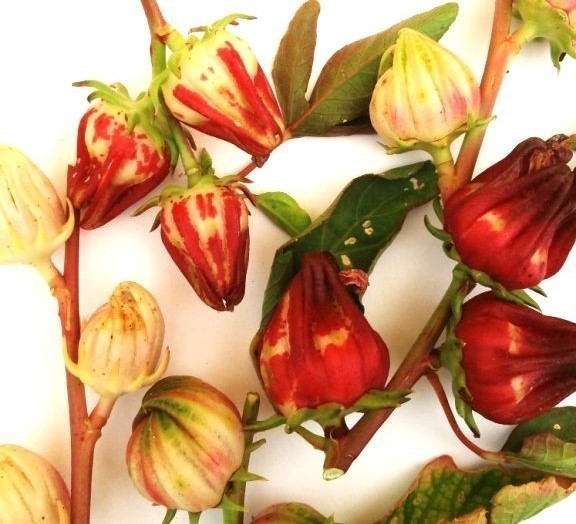
Eighty-two accessions of roselle (Hibiscus sabdariffa var. sabdariffa L.) collected from five states in the Darfur region, Sudan, were characterized during the rainy seasons of 2018, 2020 and 2021 using ten qualitative descriptors covering vegetative and inflorescence traits. Occurrence levels of descriptor states ranged from very rarely occurring in 5% or less of the accessions to abundantly occurring in more than 90%. The enlarged fleshy calyces, the main usable organs, showed five different shapes and five different colours. All accessions were grouped into two major clusters at a Euclidean distance of 3.5, with one cluster containing 11 accessions, all collected from West Darfur state, and the second cluster containing the rest of the accessions collected from all five states of Darfur. The latter were further grouped at a Euclidean distance of 3 into three subclusters. Each subcluster contained separately all accessions collected from either Central Darfur, North Darfur, or East Darfur states, indicating a high tendency of clustering according to collection site. However, those collected from West Darfur were dispersed among all clusters and subclusters. Moreover, petal colour discriminated between clusters, as did collection site. These variations of roselle accessions from Darfur make them promising for further use in improvement programmes, especially for product quality and drought tolerance. Nevertheless, further characterization and evaluation for more morpho-agronomic traits as well as genotyping are needed. As some characters were rare, close attention should be paid to avoiding their loss during seed regeneration, to ensure the best management of such diverse germplasm.
Article Details

This work is licensed under a Creative Commons Attribution 4.0 International License.
Authors retain copyright of the articles published in Genetic Resources and grant the journal right of first publication with open access. All articles published in Genetic Resource are licensed under Creative Commons Attribution 4.0 International License (CC BY 4.0) that allows others to download, share and adapt the work for commercial and non-commercial purposes as long as proper attribution to the original article is given. Genetic Resources permits and encourages authors to post items submitted to the journal (including the publisher's final layout) on personal websites or institutional repositories after acceptance and/or publication, while providing bibliographic details that credit their publication in Genetic Resources.




Abdalla, E. A, Aune, J. B., Osman, A. K. and Idris, A. M. (2018). Intensification of rain-fed groundnut production in North Kordofan State, Sudan. Journal of Agriculture and Rural Development in the Tropics and Subtropics Vol. 119 No. 1: 79–84.
Ahmed, M. I. Y, Babiker, A. Z. and Mohammed, E. I. (2025). Plant genebank of Sudan: Towards recovery from the wreckage of war to a new era of further capacity development based on lessons learnt from similar situations. Plant Genetic Resources: Characterization and Utilization 1–7. https://doi.org/10.1017/S147926212510035X
Babalola, S. O., Babalola, A. and Aworh, O. C. (2001). Compositional attributes of the calyces of roselle (Hibiscus sabdariffa L.). The Journal of Food Technology in Africa, Vol. 6, No. 4: 133- 134.
Bramel P., Hanson J. and Jamora N. (2025). Composition of ex situ collections conserved by 20 national genebanks and implications for global conservation priorities. Plant Genetic Resources: Characterization and Utilization 1–11. https://doi.org/10.1017/S1479262125100464.
Coffie, N., Tetteh, A. Y., Twumasi, P. and Cudjoe, J. A. (2025). Agromorphological evaluation and molecular genotyping reveal genetic variation in roselle (Hibiscus sabdariffa L.) of West Africa. Tropical Plant Research 12(2): 38–54
El Afry, M. M., Prinz, F. D. and Rehm, S. (1979). Morphological studies on roselle (Hibiscus sabdariffa L. var. sabdariffa). Tropenlandwirt 80: 83-93.
El Naim, A. M., Khaliefa, E. H., Ibrahim, K. A., Ismaeil, F. M., and Zaied, M. M. B. (2012). Growth and Yield of Roselle (Hibiscus sabdariffa L) as Influenced by Plant Population in Arid Tropic of Sudan under Rain-fed. International Journal of Agriculture and Forestry, 2(3): 88-91 DOI: https://:doi.org/10.5923/j.ijaf.20120203.02
El-Tahir, I. M., Babiker, A. Z., Abdalla, E. A., Ahmed, A. A. E., Goda, M. O. Y. and Elgabri, M. A. M. (2025). Overview of germplasm collecting activities for plant genetic resources for food and agriculture in Sudan from 2002 to 2022. Genetic Resources 6 (11), 24–40. doi: https://doi.org/10.46265/genresj.BWNF7962.
FAO (2004). Hibiscus: Post-Production Management for Improved Market Access Organisation: Food and Agriculture Organization of the United Nations (FAO), AGST Prepared by Anne Plotto. Edited by François Mazaud, Alexandra Röttger, Katja Steffel, Last reviewed: 22/04/2004. https://www.fao.org/fileadmin/user_upload/inpho/docs/Post_Harvest_Compendium_-_Hibiscus.pdf
Hammer, Ø., Harper, D. A. T., and Ryan, P. D. (2001). PAST: Paleontological Statistics Software Package for Education and Data Analysis. Palaeontologia Electronica 4(1): 9pp.
Islam, A. K. M., Aminul, J. T. S, and Yeasmin, S. (2016). Roselle: A Functional Food with High Nutritional and Medicinal Values. Fund. Appl. Agric. 1(2): 44-49. Fundamental and Applied Agriculture Journal. url: https://doi.org/10.5455/faa.302644242
Islam, M. M. (2019). Food and Medicinal Values of Roselle (Hibiscus sabdariffa L. Linne Malvaceae) Plant Parts: A Review. Open J Nutr Food Sci. 1(1): 1003.
Khoury, C. K., Brush, S., Costich, D. E., Curry, H. A., Haan, S., Engels. J. M. M., Guarino, L., Hoban, S., Mercer, K. L., Miller, A. J., Nabhan, G. P., Perales, H. R., Richards, C., Riggins, C. and Thormann, I. (2022). Crop genetic erosion: understanding and responding to loss of crop diversity. New Phytologist 233: 84–118. doi: https://doi.org/10.1111/nph.17733
Mahgoub, F. (2014). Current Status of Agriculture and Future Challenges in Sudan. Uppsala: Nordiska Afrikainstitutet. http://www.diva-portal.org/smash/get/diva2:712485/fulltext01.pdf
Mahunu, G. K. (2021). Breeding, genetic diversity, and safe production of Hibiscus sabdariffa under climate change. In Roselle (Hibiscus sabdariffa) Chemistry, Production, Products, and Utilization Edited by Abdalbasit Adam Mariod. Pp 1 – 14. Publisher: Nikki Levy Acquisitions, India
McClintock, N. C. and El-Tahir, I. M. (2004). Hibiscus sabdariffa L.. In Plant Resources of Tropical Africa 2. Vegetables, ed. Grubben, G. J. H. and Denton, O. A., (Wageningen, Netherlands: PROTA Foundation), 321- 326
Mohamed, B. B., Sulaiman, A. A., and Dahab, A. A. (2012). Roselle (Hibiscus sabdariffa L.) in Sudan, Cultivation and Their Uses. Bull. Environ. Pharmacol. Life Sci 1(6), 48–54.
Mohamed, E. I. and El Gabri, M.A.M. (2013). Morphoagronomic variation within local genetic resources of roselle (Hibiscus sabdariffa var sabdariffa L.) in Sudan. Scholarly J. Agric. Sci., 3(8): 317-324.
Osei-Kwarteng, M., Gweyi-Onyango, J.P. and Mahunu, G.K., 2021. Harvesting, storage, postharvest management, and marketing of Hibiscus sabdariffa. In Roselle (Hibiscus sabdariffa) (pp. 15-31). Academic Press. https://doi.org/10.1016/B978-0-12-822100-6.00010-0
Park, S. H., Ginibun, F. C, Roh, M. S, Li, M., Suh, J. K., Joung, Y. H. (2015). Evaluation of roselle based on the internal transcribed spacer sequence of rRNA gene. Emirates Journal of Food and Agriculture. 2015. 27(8): 659-661 doi: https://doi.org/10.9755/ejfa.2015.04.062
Purseglove, J.W. (1974). Tropical crops: Dicotyledons. Longman, London. 719 p. Tropical crops, dicotyledons : Purseglove, J. W. (John William), 1912- : Free Download, Borrow, and Streaming : Internet Archive.
Satyanarayana, N. H., Mukherjee, S., Sarkar, K. K., Visalakshmi, V. and Roy, S. K. (2022). Morphological Characterization of Roselle (Hibiscus sabdariffa L.) Germplasm for Qualitative Traits. Int. J. Ag. Env. Biotech., 15(Special Issue): 613-618.
Shruthi, V. H., Ramachandra, C. T., Nidoni, U., Hiregoudar, S., Naik, N. and Kurubar, A. R. (2016). Roselle (Hibiscus sabdariffa L.) as a source of natural colour: a review. Plant Archives Vol. 16 No. 2, 2016 pp. 515-522.
Solangi, A. H., Siddiqui, A. A., Junejo, S., Arain, M. Y., Ansari, M. A., Talpur. U. A. and AhadKolachi, A. (2017). Roselle (Hibiscus sabdariffa L.) a multipurpose medicinal plant and its uses: a review. Int. J. Biol. Res. 5 (1): 21-24.
Stevels, J. M. C. (1990). Légumes traditionnels du Cameroun: une étude agrobotanique. Wageningen Agricultural University Papers No 90-1: Wageningen University, Wageningen, Netherlands, 262 pp.
Tilet, T., Magule, T., Abate, B., and Lire, H. (2024). Morpho-agronomic and physiological characterization of African roselle (Hibiscus sabdariffa L.) accessions at Hawassa, Ethiopia. Research Square. DOI: https://doi.org/10.21203/rs.3.rs-4098035/v1. Preprint
Vaidya, K.R. (2000) Natural cross-pollination in roselle, Hibiscus sabdariffa L. (Malvaceae). Genetics-and-Molecular-Biology 23(3): 667-669.
van Treuren, R. and van Hintum, T. J. L. (2003). Marker-assisted reduction of redundancy in germplasm collections: genetic and economic aspects. Acta Hortic. 623, 139-149
DOI: https://doi.org/10.17660/ActaHortic.2003.623.15
Wilson, F. D. (1994). The genome biogeography of Hibiscus L. section Furcaria DC. Genet Resour Crop Evol 41, 13–25 (1994). https://doi.org/10.1007/BF00051419
Yirzagla, J. , Quandahor, P., Amoako, O. , Akologo, L., Lambon, J., Imoro, A., Santo, K. and Akanbelum, O. (2023). Yield of Roselle (Hibiscus sabdariffa L.) as Influenced by Manure and Nitrogen Fertilizer Application. American Journal of Plant Sciences, 14, 599-612. doi: https://doi.org/10.4236/ajps.2023.145040.
 This journal has been conceived as part of the