
Participatory assessment of potato landrace diversity and conservation vulnerability in northern Peru
Article Sidebar
Main Article Content
Abstract
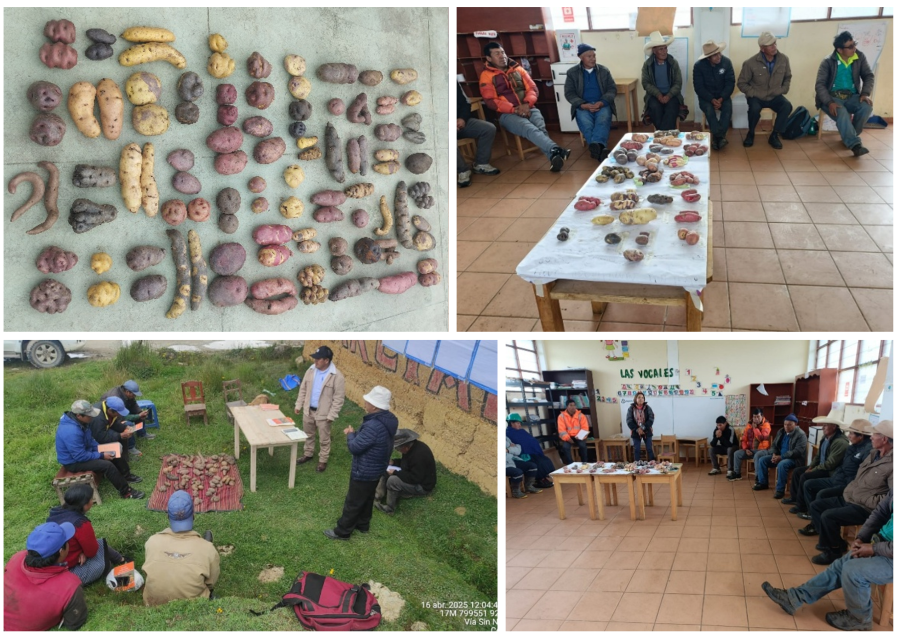
Crop genetic diversity is fundamental to the resilience and adaptive capacity of agricultural systems. However, the conservation of native potato varieties is increasingly under threat. This study assessed the diversity currently maintained, varietal vulnerability, locally lost varieties, and farmer-perceived factors associated with varietal loss in 12 high-Andean communities of Cajamarca, Peru. A participatory Four-Cell Analysis (FCA), expanded to include a fifth cell for locally lost varieties, was conducted through workshops with farmers recognized for their knowledge of potato diversity. A total of 151 potato varieties were identified, comprising 128 native and 23 modern varieties. Most varieties (97) were classified in cell D, indicating high vulnerability because they were cultivated by few households and over small areas, whereas relatively few varieties occurred in the lower-risk cells A–C. In addition, 50 locally lost varieties were recorded, including 41 native and 9 modern varieties. Farmer-perceived drivers of varietal loss included the increasing preference for modern and commercially oriented native varieties, expansion of dairy farming, government social programmes, and declining household labour availability. Despite the substantial diversity maintained in these communities, its concentration in vulnerable categories and the number of locally lost varieties indicate ongoing loss of potato varieties. Strengthening in situ conservation, complemented by periodic participatory monitoring, is therefore essential to maintain threatened native potato diversity.
Article Details

This work is licensed under a Creative Commons Attribution 4.0 International License.
Authors retain copyright of the articles published in Genetic Resources and grant the journal right of first publication with open access. All articles published in Genetic Resource are licensed under Creative Commons Attribution 4.0 International License (CC BY 4.0) that allows others to download, share and adapt the work for commercial and non-commercial purposes as long as proper attribution to the original article is given. Genetic Resources permits and encourages authors to post items submitted to the journal (including the publisher's final layout) on personal websites or institutional repositories after acceptance and/or publication, while providing bibliographic details that credit their publication in Genetic Resources.




Arce, A., de Haan, S., Juarez, H., Burra, D. D., Plasencia, F., Ccanto, R., Polreich, S., Scurrah, M. (2019). The spatial-temporal dynamics of potato agrobiodiversity in the highlands of central Peru: A case study of smallholder management across farming landscapes. Land, 8 (1), 1–30. https://doi.org/10.3390/land8110169
Brown, A. H. (2008). Indicators of genetic diversity, genetic erosion and genetic vulnerability for plant genetic resources for food and agriculture. FAO, Rome. Thematic background study. https://www.fao.org/4/i1500e/i1500e20.pdf
Cano, A., Quiñón, A. (2021). Superposición del régimen general formal y la minería artesanal informal en el Perú. Explorando las condiciones para su integración. Documento de trabajo N° 3. Centro de estudios sobre Minería y Sostenibilidad. https://cems.up.edu.pe/publicacion/superposicion-del-regimen-general-formal-y-la-mineria-artesanal-informal-en-el-peru-explorando-las-condiciones-para-su-integracion/
Christinck, A., Doka, M., Horneber, G., Rugunda, G., Palé, G., Whitney, C. (1994). From breeding to nutrition: Orange-fleshed sweetpotatoes in farming and food systems of Uganda. https://www.ccrp.org/wp-content/uploads/2019/05/ofsp_case_study.pdf.
Condori, B., Hijmans, R. J., Quiroz, R., Ledent, J. F. (2010). Quantifying the expression of potato genetic diversity in the high Andes through growth analysis and modeling. Field Crops Research, 119 (1), 135-144. https://doi.org/10.1016/j.fcr.2010.07.003
Cossio, P. (2006). Variabilidad de papas nativas en seis comunidades de Calca y Urubamba, Cusco. Asociacion Arariwa. https://es.scribd.com/document/638790755/CUSCO-VARIABILIDAD-NOMINAL-DE-PAPAS-I#google_vignette
Dansi, A., Vodouhè, R., Azokpota, P., Yedomonhan, H., Assogba, P., Adjatin, A., Loko, Y. L., Dossou-Aminon, I., Akpagana, K. (2012). Diversity of the neglected and underutilized crop species of importance in Benin. The Scientific World Journal, ID 932947. https://doi.org/10.1100/2012/932947
Dawson, T., Juarez, H., Maxted, N., de Haan, S. (2023). Identifying priority sites for the on-farm conservation of landraces and systematic diversity monitoring through an integrated multi-level hotspot analysis: the case of potatoes in Peru. Frontiers in Conservation Science, 4. https://doi.org/10.3389/fcosc.2023.1130138
Egúsquiza, R. (2015). Catálogo de papas nativas cultivadas en Huánuco. Universidad Nacional Agraria La Molina, Lima.
Egúsquiza, R. (2000). La papa. Producción, transformación y comercialización. Universidad Nacional Agraria La Molina, Asociación de exportadores. https://books.google.com.pe/s?id=6ciGbBX0uFwC&printsec=frontcover&hl=es#v=onepage&q&f=false
De Haan, S., and Thiele, G. (2004). In situ conservation and potato seed systems in the Andes. In: Jarvis DI, , Sevilla-Panizo R, Chávez-Servia JL, Hodgkin T (Eds.), Seed systems and crop genetic diversity on-farm (pp. 126–132). IPGRI (International Plant Genetic Resources Institute). https://hdl.handle.net/10568/104980
Drucker, A. G., Ramírez, M. (2022). Application of four cell method prioritisation to orient government conservation strategy and PACS interventions on potato and tuber crops in 4 Peruvian regions. https://hdl.handle.net/10568/117587
Dulloo, M. E., Estrada, N., Rana, J. C., Yadav, R., Grazioli, F. (2021). Varietal threat index for monitoring crop diversity on farms in five agro-ecological regions in India. Diversity, 13(11). https://doi.org/10.3390/d13110514
Dulloo, M.E., Rege, J.E.O., Ramirez, M., Drucker, A.G., Padulosi, S., Maxted, N., Sthapit, B., Gauchan, D., Thormann, I., Gaisberger, H., Roux, N., Sardos, J., Ruas, M., and Roward, M. (2017). Conserving agricultural biodiversity for use in sustainable food systems. In: Bioversity International, Mainstreaming agrobiodiversity in sustainable food systems: Scientific foundations for an agrobiodiversity index, 103–140. https://hdl.handle.net/10568/89049
García, O., Gómez, C. A. (2006). The economics of milk production in Cajamarca, Peru, with particular emphasis on small-scale producers. Pro-Poor Livestock Policy Initiative, FAO. https://assets.publishing.service.gov.uk/media/57a08c18e5274a27b2000f97/PPLPIexecsumm_wp34.pdf
GRC (Gobierno Regional de Cajamarca). (2024). Más de siete mil inseminaciones artificiales impulsan la ganadería de Cajamarca. Plataforma del Estado Peruano. https://www.gob.pe/institucion/regioncajamarca/noticias/1037628-mas-de-7-mil-inseminaciones-artificiales-impulsan-la-ganaderia-de-cajamarca
INDECI (Instituto Nacional de Defensa Civil). (2005). Cajamarca. Programa de Prevención y medidas de mitigación ante desastres de la ciudad de Cajamarca. INDECI. https://sigrid.cenepred.gob.pe/sigridv3/storage/biblioteca//5225_programa-de-prevencion-y-medidas-de-mitigacion-ante-desastres-de-la-ciudad-de-cajamarca.pdf
INEI (Instituto Nacional de Estadística e Informática). (2019). Encuesta Nacional de Programas Presupuestales 2011–2019. https://www.inei.gob.pe/media/MenuRecursivo/publicaciones_digitales/Est/Lib1729/libro.pdf
INEI (Instituto Nacional de Estadística e Informática. (2024). Cajamarca. Compendio estadístico 2024. https://www.gob.pe/institucion/inei/informes-publicaciones/6580481-compendio-estadistico-cajamarca-2024
INIA (Instituto Nacional de Innovación Agraria). (2021). INIA presenta programa de mejoramiento genético de ganado para la región de Cajamarca. Gobierno del Perú. https://www.gob.pe/institucion/inia/noticias/572700-inia-presenta-programa-de-mejoramiento-genetico-de-ganado-para-la-region-de-cajamarca
Khoury, C. K., Brush, S., Costich, D. E., Curry, H. A., de Haan, S., Engels, J. M. M., Guarino, L., Hoban, S., Mercer, K. L., Miller, A. J., Nabhan, G. P., Perales, H. R., Richards, C., Riggins, C., Thormann, I. (2022). Crop genetic erosion: understanding and responding to loss of crop diversity. New Phytologist 233 (1), 84–118. https://doi.org/10.1111/nph.17733
Kilwinger, F. B. M., Rietveld, A. M., Groot, J. C. J., Almekinders, C. J. M. (2019). Culturally embedded practices of managing banana diversity and planting material in central Uganda. Journal of Crop Improvement, 33(4), 456–477. https://doi.org/10.1080/15427528.2019.1610822
Kumar, R., Singh, B. (2023). Genetic diversity, conservation, and utilization of plant genetic resources. Genes 14 (1). https://doi.org/10.3390/genes14010174
Maxted, N. and Guarino, L. (2006). Genetic erosion and genetic pollution of crop wild relatives. In: Ford-Lloyd BV, Dias SR, Bettencourt E (Eds). Genetic erosion and pollution assessment methodologies. Proceedings of PGR Forum Workshop 5, Terceira Island, Autonomous Region of the Azores, Portugal, 8–11 September 2004. 35-45. https://hdl.handle.net/10568/104626
Mengistu, D. K., Jarvis, D., Fadda, C. (2022). Participatory diagnostic toolkits and crop improvement approaches: participatory methods to assess and use plant genetic diversity in the field. https://hdl.handle.net/10568/120515
MINAM (Ministerio del Ambiente). (2019). Línea de base de la diversidad genética de la papa peruana con fines de bioseguridad. https://bioseguridad.minam.gob.pe/wp-content/uploads/2019/12/Linea_base_papa_bioseguridad_lowres.pdf
Moreno, J. D., Valbuena, I. (2006). Colección central colombiana de papa: riqueza de variabilidad genética para el mejoramiento del cultivo. Innovación y Cambio Tecnológico, 4(4), 16–24. https://repository.agrosavia.co/bitstream/handle/20.500.12324/563/43711_55403.pdf?sequence=1&isAllowed=y
Mulugo, L., Ajambo, S., Kilulwe, E. (2021). User guide to the four-square method for intervening in root, tuber and banana seed systems. (T. and B. (RTB). CGIAR Research Program on Roots, Ed.). https://doi.org/10.4160/9789290605805
Nagel, M., Dulloo, M. E., Bissessur, P., Gravrilenko, P., Bamberg, J., Ellis, D., Giovannini, P. (2022). Global strategy for the conservation of potato (Global Crop Diversity Trust, Ed.). https://doi.org/10.5447/ipk/2022/29
Ochoa, C. M. (2001). Las papas de Sudamérica: Bolivia. La Paz, Bolivia: Plural Editores/Centro Internacional de la Papa.
Ortíz, O., Winters, P., Fano, H. (1999). La percepción de los agricultores sobre el problema del tizón tardío o rancha (Phytophthora infestans) su manejo: Estudio de casos en Cajamarca, Perú. https://dialnet.unirioja.es/servlet/articulo?codigo=5512080.
OXFAM. (2018). Facilitators guide on farmers field schools on participatory plant breeding. The Hague: OXFAM, CTDT, SEARICE. https://seedsforresilience.org/assets/2022/02/Facilitators-Field-Guide_Dec2018.pdf
Oyarzun, P.J., Borja, R. M., Sherwood, S., Parra, V. (2013). Making sense of agrobiodiversity, diet, and intensification of smallholder family farming in the highland Andes of Ecuador. Ecology of Food and Nutrition, 52(6), 515–541. https://doi.org/10.1080/03670244.2013.769099
Padulosi, S. and Dulloo, E. (2012). Towards a viable system for monitoring agrobiodiversity on-farm: a proposed new approach for Red Listing of cultivated plant species. In: Padulosi N, Bergamini N, Lawrence T (Eds). On-farm conservation of neglected and underutilized species: status, trends and novel approaches to cope with climate change (pp. 171–199). https://hdl.handle.net/10568/104624
Platform for Agrobiodiversity Research (PAR). (2018). Assessing agrobiodiversity. A Compendium of methods. Rome, Italy. https://www.researchgate.net/publication/340061632_Assessing_Agrobiodiversity_A_Compendium_of_Methods
Pradel, W., Hareau, G. G., Quintanilla, L., Suarez, V. (2017). Adopcion e impacto de variedades mejoradas de papa en el Peru: Resultado de una encuesta a nivel nacional (2013). https://doi.org/10.4160/9789290602118
R Core Team. (2024). R: A language and environment for statistical computing. R Foundation for Statistical Computing, Vienna, Austria. https: //www.R-project.org/
Reiss, J., Schmid-Araya, J. (2008). Existing in plenty: abundance, biomass and diversity of ciliates and meiofauna in small streams. Freshwater Biology, 53(4), 652-668. https://doi.org/10.1111/j.1365-2427.2007.01907.x
Seminario, J. F., Concha-Tupayachi, LS., Seminario-Cunya, A., Medina-Hinostrosa, T., Silva, W. (2025). Cultivar loss and conservation of genetic resources of the phureja potato (Solanum phureja L., Phureja Group) in Peru. Genetic Resources, 6(12), 1–13. https://doi.org/10.46265/genresj.JCDC4631
Seminario, J., Zarpán, L. (2011). Conservación in situ on farm-ex situ de Solanum tuberosum L. grupo Phureja en la cuenca del Llaucano y áreas adyacentes. Arnaldoa, 18(2), 103–114.
Singh, S., Sharma, D., Rana, J.C., Ahlawat, S. (2021). Study of crop diversity and seed system in tribal Northern Hilly region of Chhattisgarh. International Journal of Botany Studies, 6(1), 329–339. https://www.researchgate.net/publication/348920265_Study_of_crop_diversity_and_seed_system_in_tribal_Northern_Hilly_region_of_Chhattisgarh
Spooner, D. M., McLean, K., Ramsay, G., Waugh, R., & Bryan, G. J. (2005). A single domestication for potato based on multilocus amplified fragment length polymorphism genotyping. Proceedings of the National Academy of Sciences of the United States of America, 102(41), 14694–14699. https://doi.org/10.1073/pnas.0507400102
Sthapit, B., Rana, R., Subedi, A., Gyawali, S., Bajracharya, J., Chuadhary, P., Joshi, B. K., Sthapit, S., Joshi, K. D., and Upadhyay, M. P. (2006). Good practice 3. Participatory four-cell analysis (FCA) for understanding local crop diversity. Sthapit B. Shrestha P, Upadhyay M (Eds). On-farm management of agricultural biodiversity in Nepal. Good practices. https://www.researchgate.net/publication/348116250_On-farm_management_of_agricultural_biodiversity_in_Nepal
Valdivia-Díaz, M., La Torre-Cuadros, M.A., Polreich, S. (2014). Knowing native potatoes: finding local experts through innovative methods in the Peruvian Andes. Gaia Sciencia, Volumen especial (Populacoes tradicionais), 79–92. https://doi.org/10.21707/gs.v8i2.22425
Winters, P., Hintze, L. H., Ortiz, O. (2006). Rural Development and on-farm potato diversity in Cajamarca, Peru. Smale M. (Ed.). Valuing crop biodiversity: on-farm genetic resources and economic change, 2005. https://ssrn.com/abstract=3307460
Zevallos, E., Marmolejo, K., Alvarez, F., Paitan, R., Viza, I., Becerra, D., Rixi, G, Silva-Diaz, C, Inga, J. (2023). Screening potato landraces to cope with climate change in the Central Andes of Peru. International Journal of Plant Biology, 14(4), 1167-1179.
Zimmerer, K. S. (1991). Labor shortages and crop diversity in the Southern Peruvian Sierra. Geographical Review, 81(4), 414–432. http://www.jstor.orgURL:http://www.jstor.org/stable/215608
 This journal has been conceived as part of the